What happens when natural building meets research?
2026-08-31
What Can a 200-Year-Old Building Teach Us About Sustainability?
2026-09-14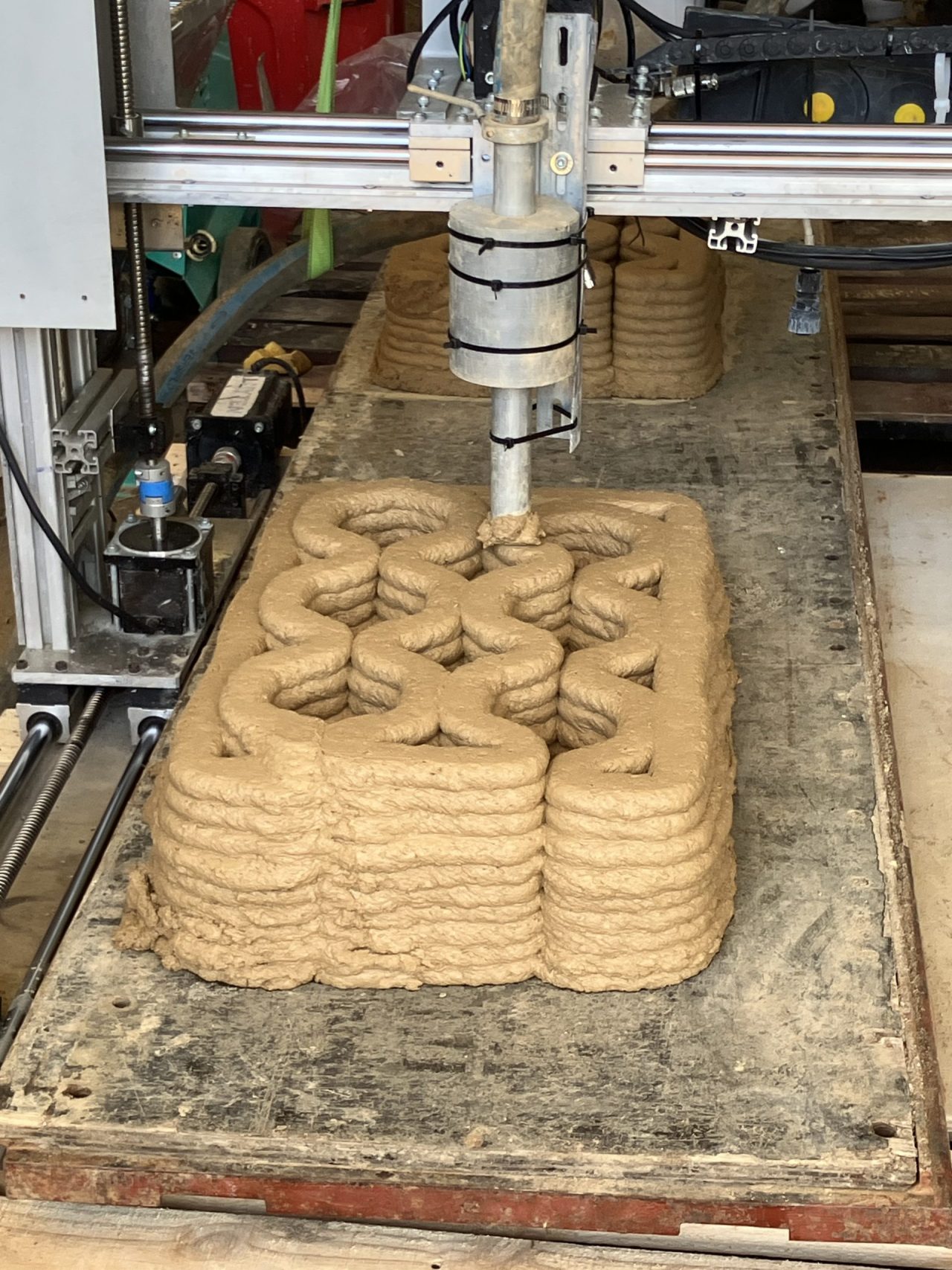
There’s something slightly strange about watching a robot build with earth.
For thousands of years, people have dug soil from the ground, mixed it with water and fibre, shaped it into bricks, packed it into walls and built homes from what was available around them. Now, researchers, architects and construction companies are asking whether that same material could be pumped through a machine and printed into a house.
3D printing is rapidly becoming part of the construction conversation, with projects underway around the world using large robotic printers to build walls and, increasingly, entire structures. Much of the attention has been on concrete and cement-based materials, but there is growing interest in using earth and other low-carbon materials instead. For natural building, that raises an interesting question: could one of our oldest building materials benefit from one of our newest construction technologies?
Why earth?
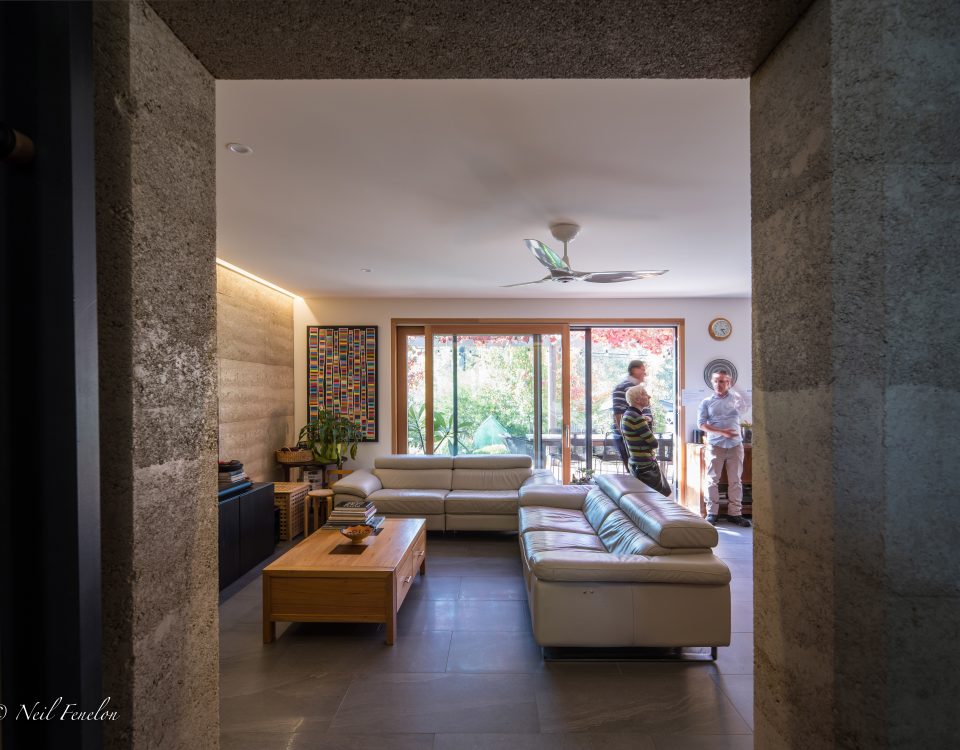
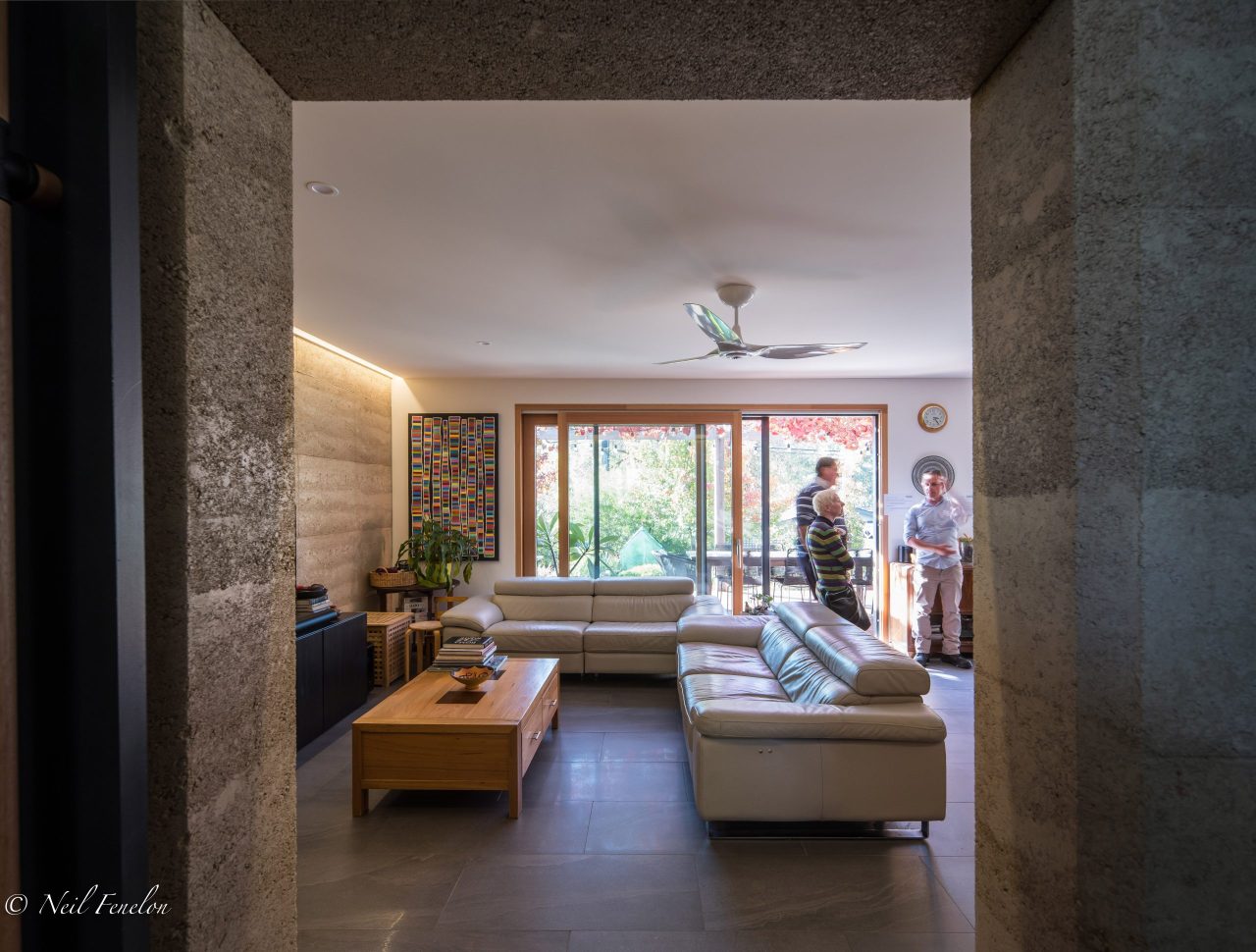
Earth already has a lot going for it. Australia has a long history of contemporary earth building, with rammed earth, compressed earth blocks and mud brick used in homes and other buildings across the country. When well designed and constructed, these systems can provide thermal mass, durability and comfortable indoor environments, while making use of relatively local materials.
The challenge is that earth building can be labour intensive. Preparing materials, forming blocks, building shuttering, compacting walls and finishing surfaces all require time and skill. For natural builders, that labour is often part of the appeal, but it is also one of the reasons earth construction can be difficult to scale.
This is where 3D printing starts to look interesting.
Instead of building a wall brick by brick or compacting earth into a formwork system, a robotic printer can deposit material layer by layer according to a digital design. The machine can control the location and thickness of the material, potentially reducing waste and allowing shapes that would be difficult or expensive to construct using conventional techniques.
The goal isn’t necessarily to make earth behave like concrete. In fact, the more interesting research is looking at how the particular qualities of earth can be retained while using digital fabrication to overcome some of the practical limitations of traditional construction.
What’s actually happening with 3D-printed homes?
3D-printed construction is already moving beyond the laboratory, although most of the buildings being printed overseas still use concrete or cement-based materials. One of the most interesting exceptions is TECLA in Italy, a house developed by 3D-printing company WASP and Mario Cucinella Architects. TECLA was printed using locally sourced raw earth, with multiple robotic printers working simultaneously to create the structure. The project was designed to demonstrate how digital fabrication could be combined with local, recyclable materials rather than relying entirely on conventional industrial products.
Other projects show how quickly the technology is developing. In the Netherlands, Project Milestone has used 3D-printed concrete to produce actual residential homes, moving the technology beyond prototypes and into occupied housing. In the United States, House Zero in Austin demonstrates another direction, combining 3D-printed walls with conventional building systems and highly energy-efficient design.
These projects aren’t earth buildings, but they show that robotic construction is already being tested at the scale of real homes. The earth-specific projects are still much more experimental, which makes the research happening in Australia particularly interesting.
Taking Earth Building into the Digital Age
One Australian researcher working across these issues is Dr Kate Dunn, a Senior Lecturer in the School of Built Environment at UNSW. Kate’s background is unusual for someone working at the intersection of construction, robotics and digital fabrication: she trained in visual arts and ceramics before completing a PhD in architecture.
That material background is important to her overall approach. Rather than treating 3D printing as simply a new way of manufacturing conventional building products, the research looks at how traditional material knowledge can be combined with emerging technologies. Kate’s work explores experimental 3D printing, digital fabrication and robotics, with a particular focus on developing new and sustainable materials for digital fabrication. Her research brings together traditional material processes and new technologies across areas including the built environment, medicine and environmental design.
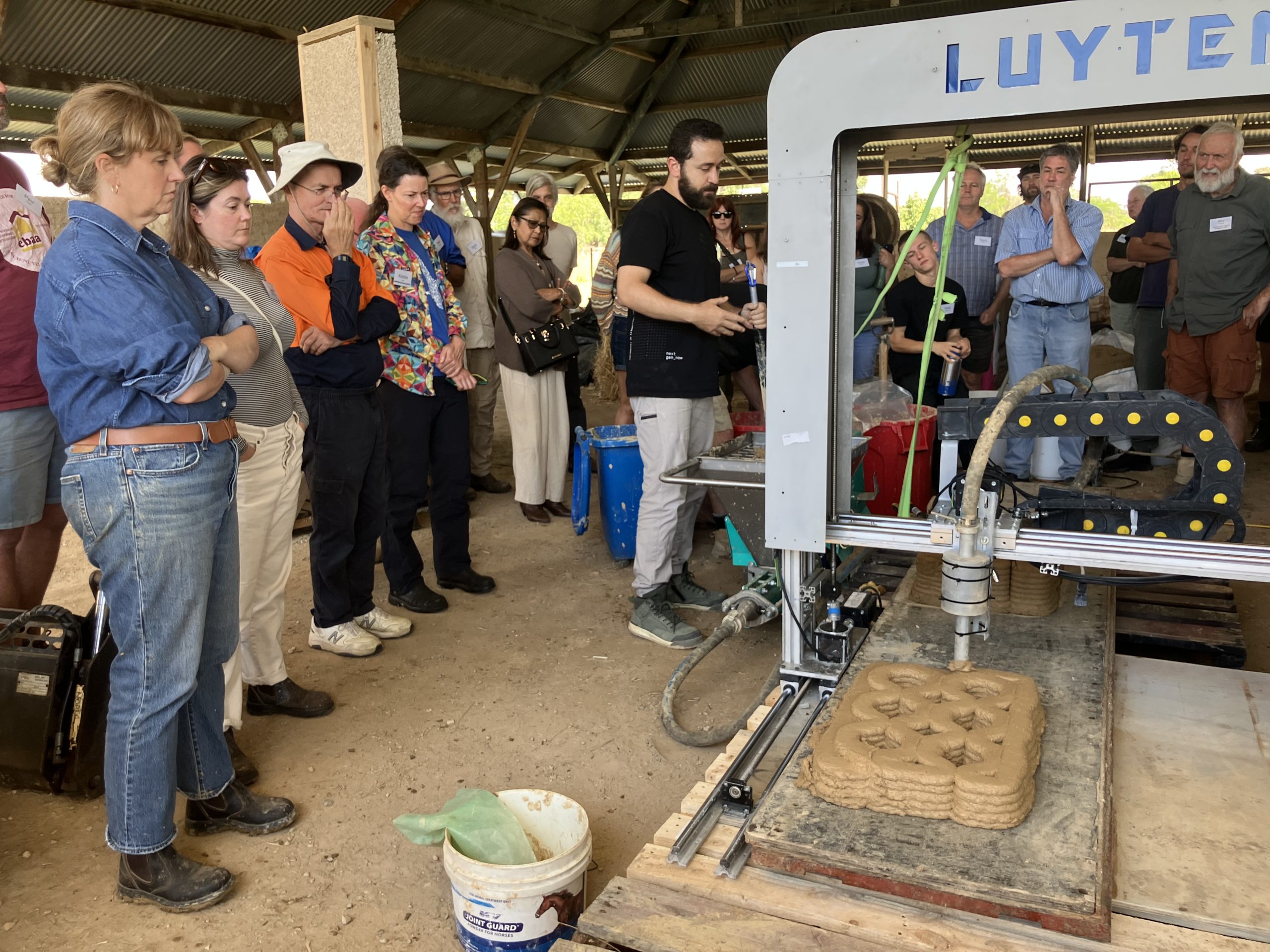
(Kate Dunn watches demonstration from the Earth Building Institute of Australia Conference 2025 in Richmond, NSW).
The earth-building research takes that idea quite literally.
Through projects including TerraFab, Kate and her collaborators have been investigating how robotic 3D printing could be combined with site-sourced earth and natural fibres such as hemp. The aim is to explore whether earth construction can be automated without losing the benefits of using local, low-impact materials.
In earlier research with UNSW and Melbourne-based 3D-printing company Luyten, Dunn and the team tested earth gathered from Fowlers Gap Arid Zone Research Station in western NSW. They looked at the soil’s clay and sand composition, shrinkage, drying time, ability to adhere to itself and capacity to hold its shape during printing. They also explored how fibres including hemp, straw and bamboo could change the material’s performance.
The idea is surprisingly simple: if suitable earth is already sitting at the building site, could we process it, put it into a printer and build with it there rather than transporting huge quantities of manufactured materials into remote locations?
That could have applications well beyond housing. The research has considered remote regional Australia, disaster zones and extreme environments, as well as the much more futuristic possibility of using similar principles to build in space.
Another interesting aspect is the involvement of students in the research process. Rather than separating university research from practical experimentation, students are involved in testing materials, developing designs and working through the failures and unexpected results that come with developing a new construction system.
It’s a good example of where natural building research is heading: not necessarily choosing between old and new, but asking what happens when traditional material knowledge is combined with robotics, computational design and digital fabrication.
What are the advantages?
The potential benefits are compelling. If a printer can use suitable soil from the building site, there could be less need to transport heavy manufactured materials long distances. Digital fabrication could reduce waste by placing material only where it is required, while allowing designers to create forms that would be difficult to construct using conventional techniques.
There is the potential for speed, too. One of the biggest attractions of construction 3D printing is its ability to automate repetitive work. For earth building, that could mean reducing some of the physical labour involved in forming walls while maintaining the use of a natural material.
It could also open up possibilities for remote construction. As we know, distance tends to add cost and complexity to projects, and the cost of getting materials and skilled trades to some locations can be significant. A system that could process suitable local earth and fabricate components on site is an intriguing proposition.
There is another potential benefit: consistency. Natural building has sometimes struggled with the perception that it is difficult to standardise. A digitally controlled process could provide detailed records of material mixes, wall dimensions and construction sequences, potentially helping researchers, engineers and regulators better understand how these systems perform.
But there are some big problems to solve
Earth is not a standardised product, and that’s one of the biggest challenges.
The soil on one site can behave completely differently from the soil on another. Clay content, sand, moisture, organic matter and particle size all influence how an earth mix behaves. A printer needs a material with predictable characteristics, so developing a printable earth mix isn’t simply a matter of putting dirt into a hopper and pressing “go”.
Researchers need to understand how the material flows through the equipment, how quickly it dries, whether individual layers bond properly, how much it shrinks and whether the finished wall can achieve the required structural and durability performance. Then there are the questions that apply to any building: moisture, weather exposure, fire, insulation, structural connections, services, finishes and building approvals.
There is also the machine itself. A large robotic printer is still a piece of technology that needs to be manufactured, transported, powered, maintained and operated. If we’re using significant machinery and energy to automate a process that could otherwise use local materials and relatively simple tools, we need to ask whether we’re actually improving the environmental outcome.
The sustainability case therefore needs to be assessed across the whole building system, rather than simply assuming that “3D printed” means low carbon.
Can it replace natural builders?
While we think AI is going to take over most fields eventually, is prefab or Modern Methods of Construction, in this case, really applicable to what we’re doing? Natural building isn’t simply the act of putting material into a wall. It involves understanding a site, reading materials, responding to climate, adapting details, solving problems and making decisions when reality inevitably differs from the drawing.
A printer can repeat a toolpath extremely accurately. It can’t replace decades of practical knowledge about how a particular soil behaves after rain, how a wall should respond to a difficult site condition, or how to design a building that actually works for the people living in it.
But perhaps it doesn’t need to.
If robotics can take on some of the repetitive, physically demanding and time-consuming parts of earth construction, it could potentially free natural builders to focus on the parts that require judgement, craft and experience.
The future might not be a choice between traditional natural building and robotic construction. It could be a combination of the two.
And that is perhaps what makes Kate Dunn’s work so interesting. The research isn’t about abandoning traditional earth building in favour of technology. It’s about asking what we could learn by putting the two together. Kate’s work is also featured in the latest issue of Sanctuary magazine, published by Renew, in an article exploring the future of 3D-printed sustainable homes using earth-based materials.
For anyone interested in where earth building might go next, it’s a fascinating example of Australian research taking an ancient material and asking some very contemporary questions.
Earth building has already proven that soil can become walls, homes and communities. Now researchers are asking whether it can also become the feedstock for a new generation of digitally fabricated buildings.
References
- WASP – TECLA: 3D Printed House Using Raw Earth
- WASP – Gaia: The First 3D Printed House with Earth
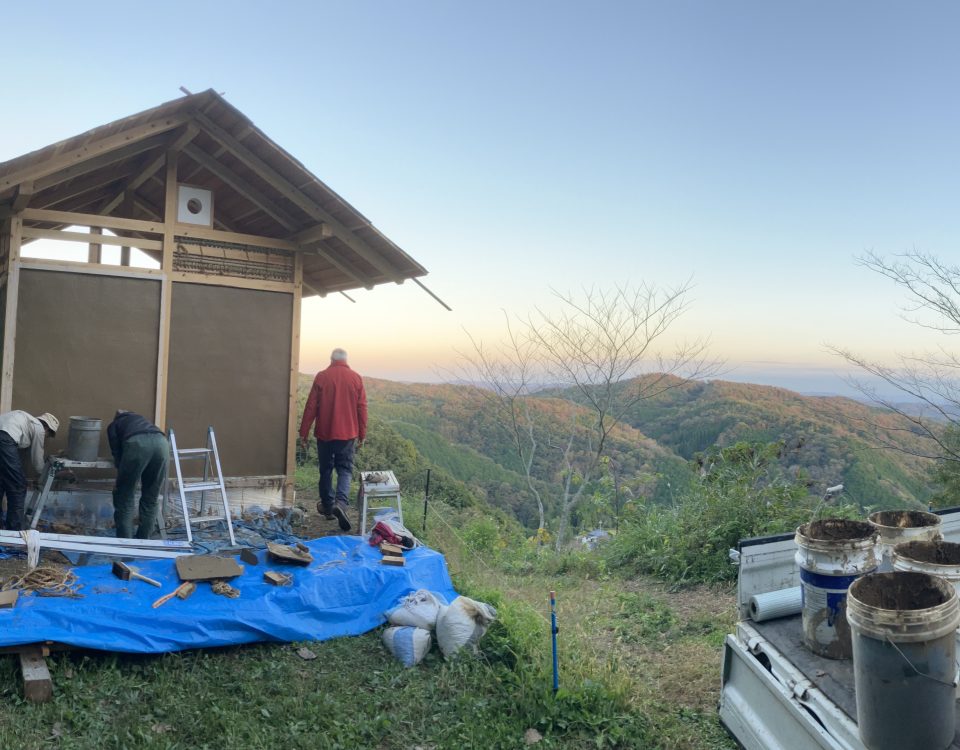
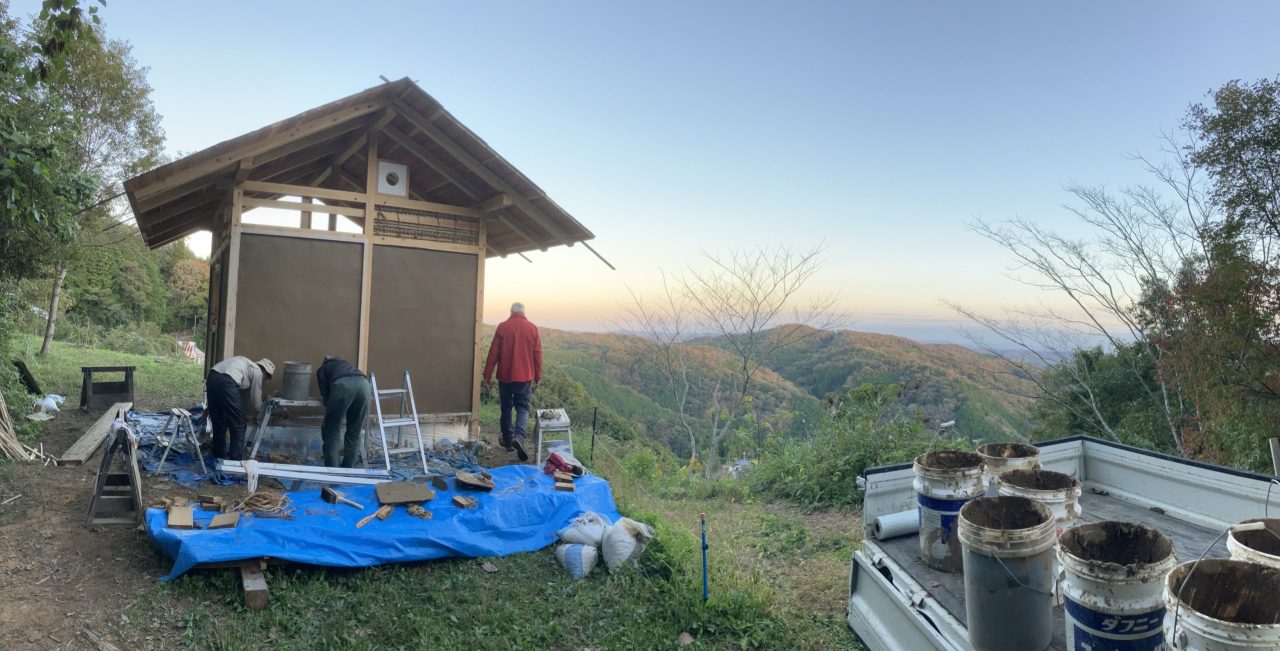
- WASP – 3D Printed Residential Earth House in Japan
- Project Milestone – 3D Printed Residential Housing
- Lake Flato – House Zero
- UNSW – 3D Printing: Expanding Sustainable Building Horizons to the Outback and Beyond
- UNSW – Dr Kate Dunn
- UNSW Research – Publications by Dr Kate Dunn
- Australian Research Council – Multi-feed System for 3D Printing of Fibrous Earth for Social Housing
- Sanctuary Magazine – Issue 76: “Printing the Homes of the Future”