Natural walls can improve health outcomes in our homes
2026-08-24
Can 3D Printing Change Earth Building?
2026-09-06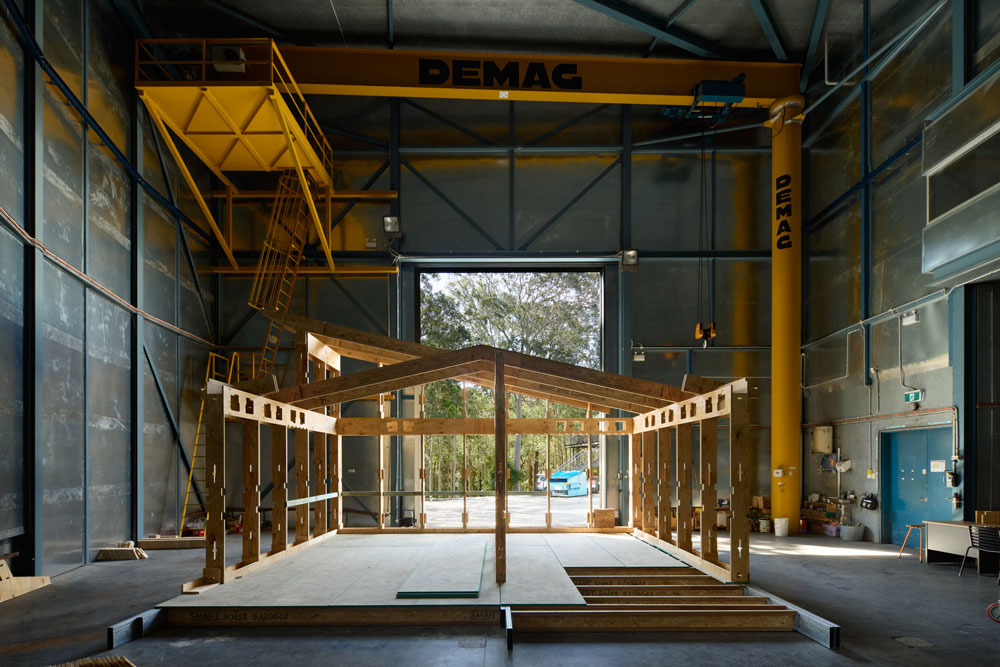
Recently, we chatted with Dr Sarah Breen Lovett about a question that sits at the heart of where natural building could be heading: how do we take the things we already know and love about natural materials and make them easier, more accessible and more practical for more people?
Sarah is a Senior Lecturer in Architecture at the University of Newcastle, working across architecture, natural building, prefabrication, wellbeing and socially engaged research. But her relationship with natural building didn’t begin in a university laboratory.
She has been attending natural building workshops for around 30 years.
That combination of hands-on experience, architectural practice, research and teaching has led Sarah to some interesting questions about how we might build differently.
Making natural building easier
For Sarah, part of the challenge is surprisingly simple: the structural side of building can be intimidating.
Many people are attracted to natural building because they want to work with their hands, use materials such as earth, straw or hemp, involve friends and community, and have a more direct relationship with the building they create.
But before you get to the fun part, there is often a structural frame to build.
Carpentry, engineering, sequencing and getting everything square and stable can be a significant barrier, particularly for people who want to build their own home but don’t have a construction background.
This was one of the ideas behind FAST SLOW.
The concept is to separate the parts of construction that can benefit from prefabrication and efficiency from the parts that people might actually want to do themselves.
The “fast” part is the prefabricated structural system.
The “slow” part is the natural material infill.
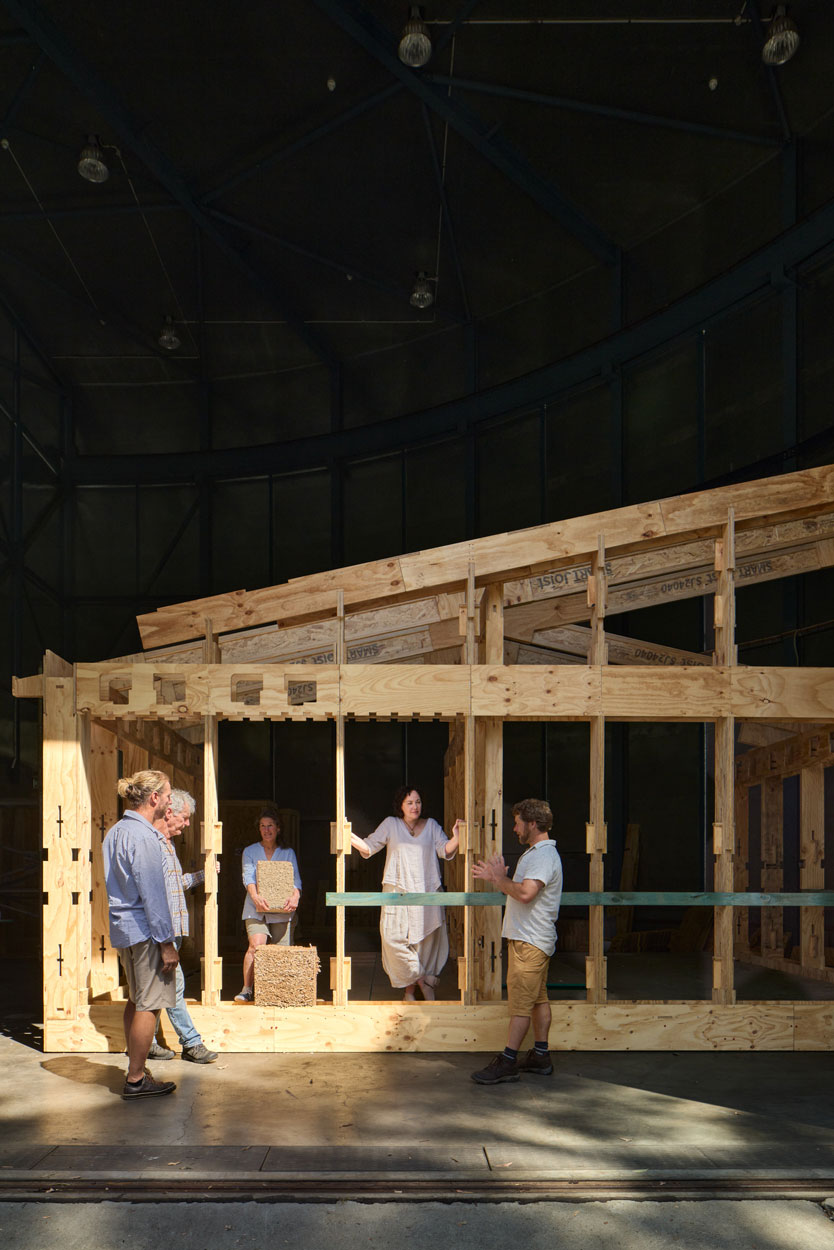
Instead of receiving a completely finished prefabricated building, the idea is to create a structural kit that can be assembled relatively quickly, then filled with natural materials on site. It is a subtle but important shift in thinking.
Rather than asking how we can make natural building completely prefabricated, FAST SLOW asks which parts should be fast, and which parts are worth slowing down for. And, importantly, how can we collaborate effectively to bring together many parts of this machine-like industry to work for something productive, and accessible.
From the university to the building site
The project has developed through collaboration between the University of Newcastle, industry partners including Mudtec, engineers, designers and students.
It has also involved a lot of making.
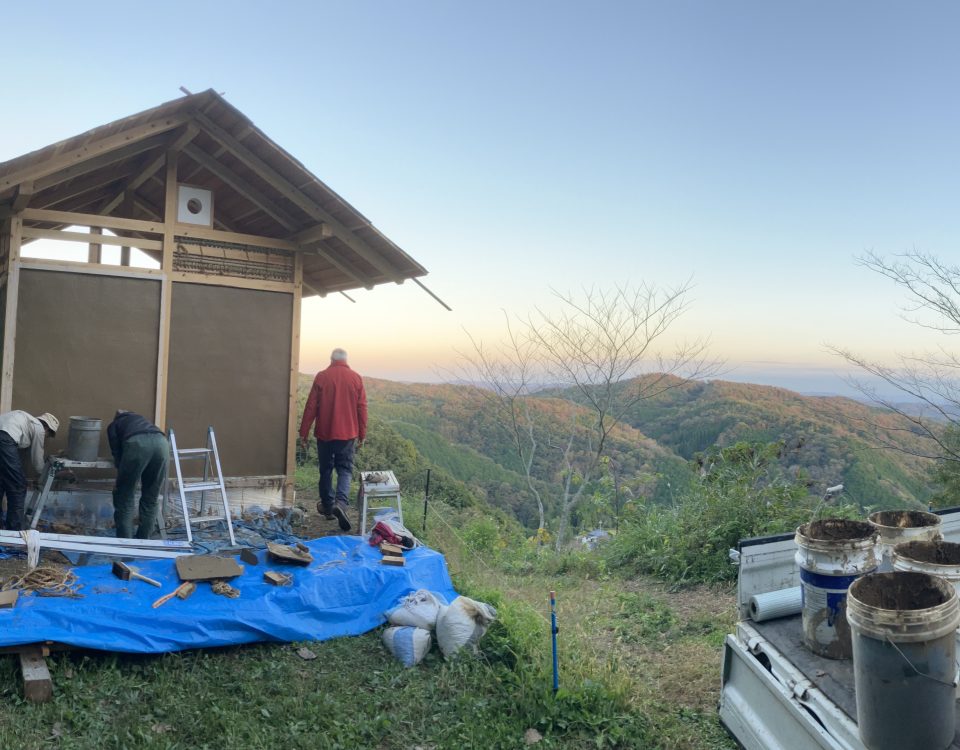
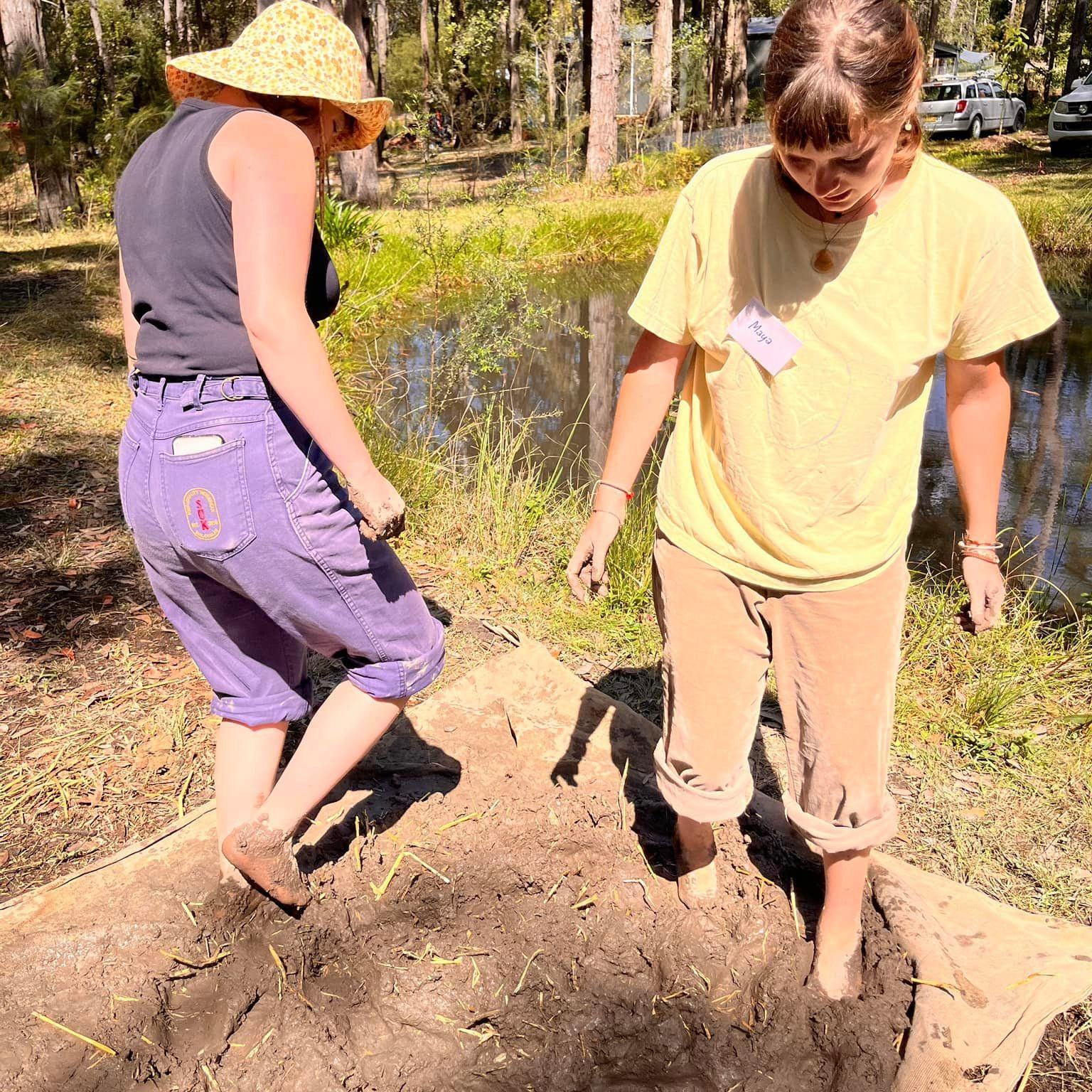
Students have been involved in constructing prototypes and working directly with natural materials, including clay slip, hemp clay and bamboo. That practical experience is an important part of the research. A drawing can tell you how something is supposed to work. Building it tells you something else entirely.
How heavy is that component?
Can one person actually lift it?
How long does that connection take?
What happens when the weather changes?
Which part of the assembly is intuitive, and which part needs better instructions?
These are the kinds of questions that become obvious when research gets out of the computer and onto the building site. And they are particularly important when the intended user isn’t a large construction company, but an individual, a family or a community wanting to participate in building their own home.
Designing for real people
One of the more memorable ideas from our conversation was Sarah’s “middle-aged woman” test. If the system is intended to be DIY-friendly, then it needs to be physically achievable for ordinary people. That means thinking about weight, sequencing, access and assembly from the beginning.
This is quite different from some conventional approaches to prefabrication, where the objective is often to complete as much of the building as possible in a factory before delivering it to site.
FAST SLOW turns that idea around.
The prefabrication is there to remove some of the difficult structural work, while leaving space for the community, the builder or the owner-builder to engage with the natural material component.
That could mean clay, hemp clay, light earth or other forms of natural infill.
It also opens up an interesting possibility: prefabrication doesn’t necessarily have to mean removing people from the building process. it can potentially be used to make participation easier. This method is all about bringing out the best bits of natural building, high performance, accessibility, low toxicity, and making it even more accessible, practical and associative for people who think its still just about hobbit houses and tyre walls.
Why testing matters
Of course, interesting ideas still need to perform.
One of the significant parts of the FAST SLOW research has therefore been structural and fire testing.
Prototype structural junctions have been tested to establish whether they can meet the requirements of Australian timber framing standards. The project has also undertaken fire testing of the wall system.
This kind of work is crucial if natural building is going to move further into mainstream construction.
Natural builders have accumulated enormous amounts of practical knowledge through workshops, owner-building and generations of experience. But translating that knowledge into contemporary construction requires another layer of evidence.
Testing can help demonstrate what a material or system can actually do.
It can help engineers, architects, certifiers and regulators understand it.
And ultimately, it can help make natural building easier to specify and approve.
The Earth Building Association of Australia has a useful research archive documenting decades of Australian research into earth construction, including work by CSIRO and government agencies: EBAA research archive.
The university as a place to experiment
This is where Sarah sees an important role for universities.
Universities can provide space for experimentation, access to laboratories and engineering expertise, research funding, and — perhaps most importantly — students who are willing to get their hands dirty.
The students aren’t simply learning about natural materials as a theoretical subject. They are learning how materials behave, how buildings go together and how design decisions translate into physical construction.
That kind of education can help create a future generation of architects, designers and builders who are comfortable working across both conventional and natural building systems.
The University of Newcastle’s work in alternative housing and natural building is one example of this growing area of research and teaching: University of Newcastle — Alternative Housing research.
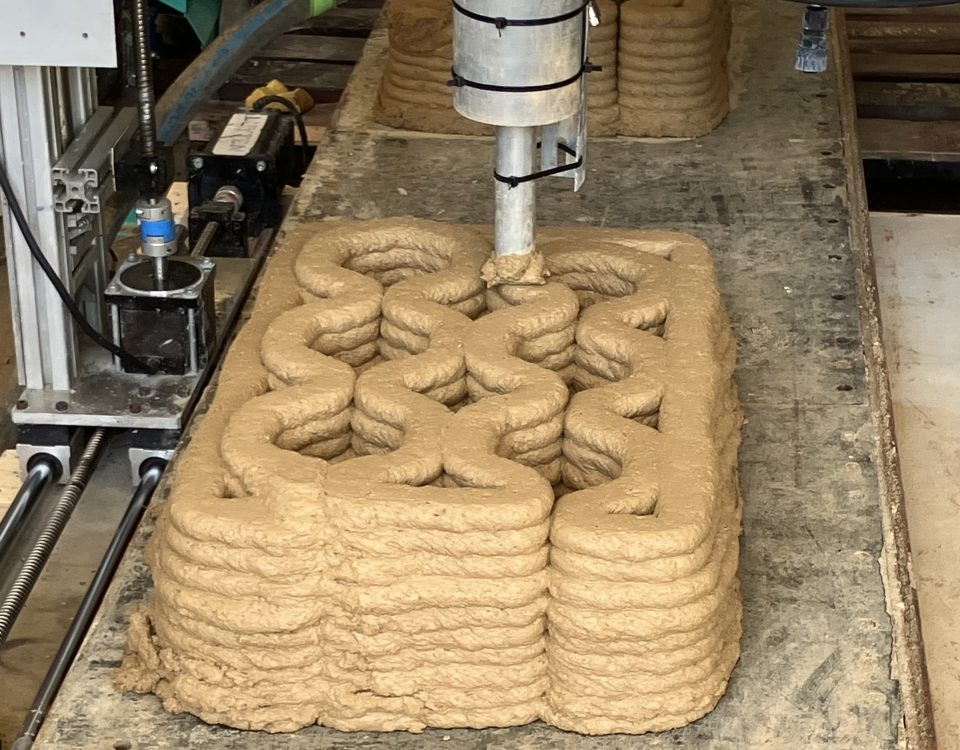
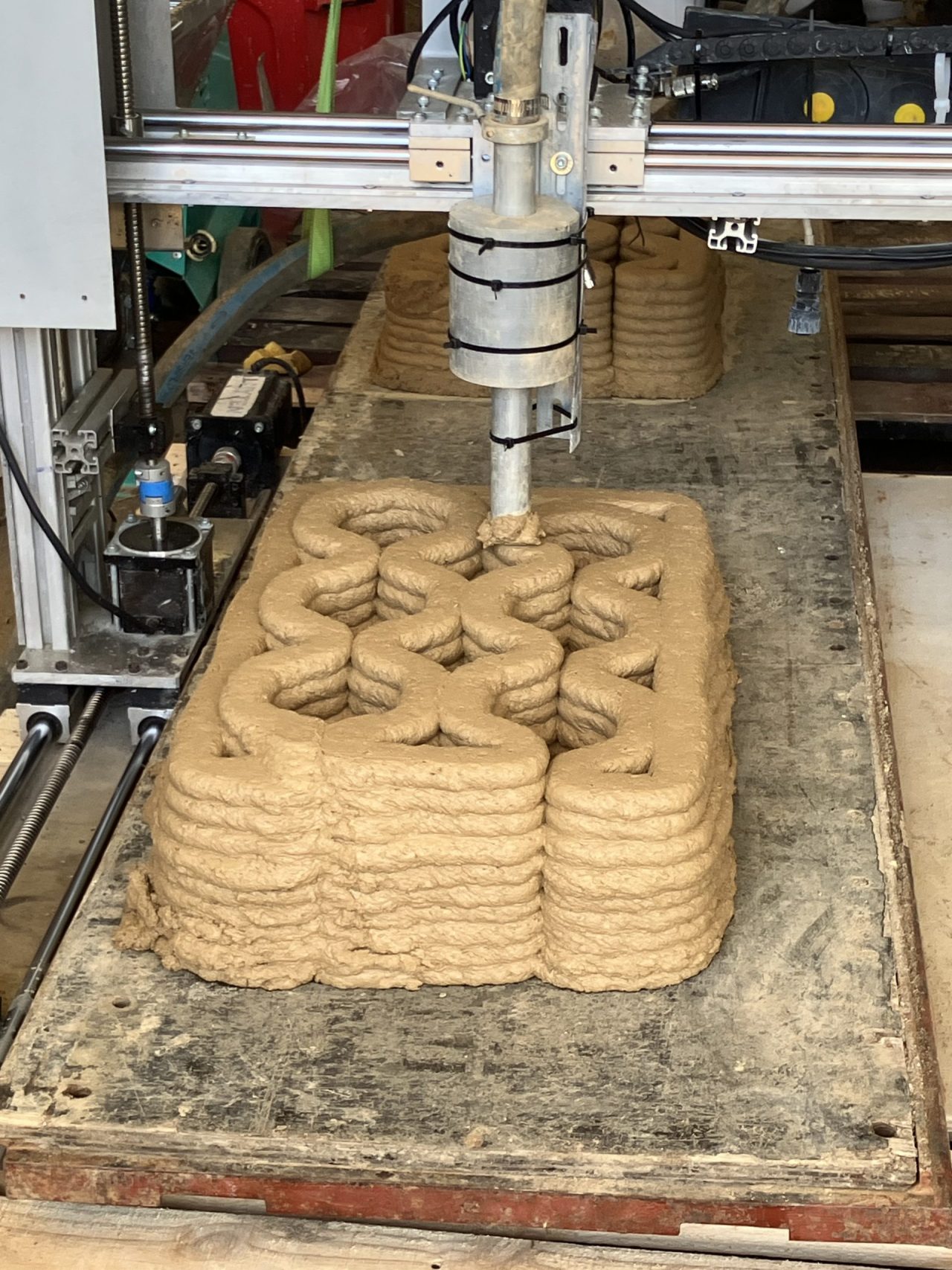
There are similar research efforts happening elsewhere in Australia. UNSW, for example, has been investigating earth-based 3D printing and plant-based construction materials, including research into clay, sand, hemp, straw and bamboo: UNSW — sustainable building materials research.
What comes next?
FAST SLOW is still developing, but the ambition extends beyond a single prototype.
The team is exploring how the system might adapt to different housing types, including two-storey and attached dwellings. There is also potential for a digital platform where people could configure building components, explore different layouts and eventually understand how design choices affect costs.
That could be a powerful development for DIY and community-led building.
Imagine being able to choose a basic structural system, adapt it to your site, understand what components are required and then decide how you want to infill it.
The technology handles some of the complexity, while people retain a connection to the materials and the process.
And perhaps that is the most interesting thing about FAST SLOW.
It isn’t trying to make natural building faster for the sake of speed.
It is asking where speed is useful — and where slowing down is actually the point.
Natural building has always been about more than materials. It can be about participation, learning, connection, climate, place and the experience of making something together.
The challenge now is figuring out how research, testing, design and industry can support those qualities rather than replacing them.
Sarah’s work offers one fascinating example of what that future might look like.
You can listen and watch the whole interview on our Masterclas page.
Further reading
- Dr Sarah Breen Lovett — University of Newcastle
- University of Newcastle — Alternative Housing research
- Earth Building Association of Australia — Research
- UNSW — Research into sustainable earth construction
- University of Melbourne — Francis Laboratory
- Natural Building Australia — University of Newcastle earth-building workshop