Earthships vs Passive Solar Design: What’s the Difference?
2026-07-20
Healthy Homes Start with the Envelope: Rethinking What Makes a High-Performance (healthy)Home
2026-08-10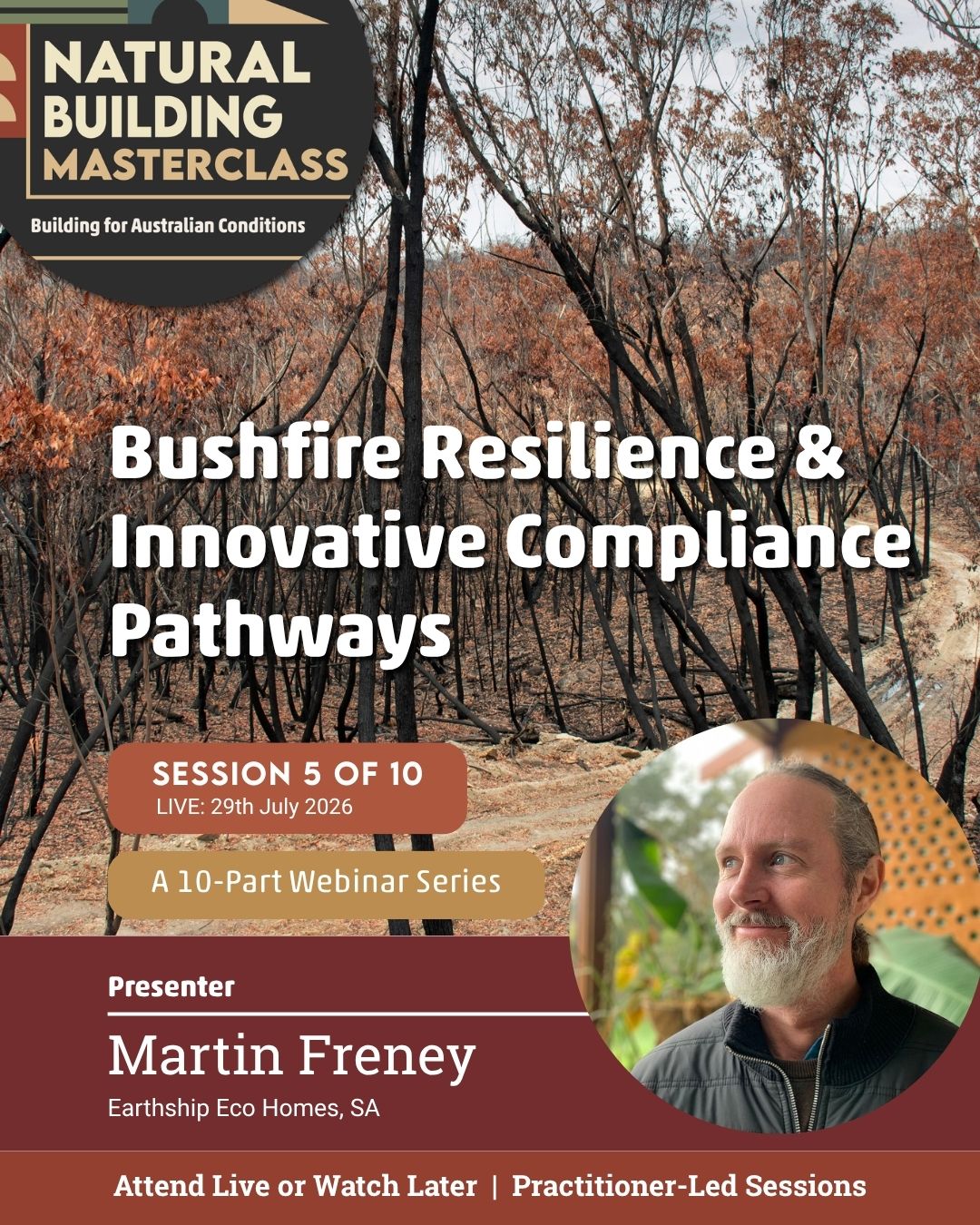
As Australia’s climate continues to change, conversations about housing can no longer focus on comfort and aesthetics alone.
Increasingly, we need homes that are resilient, energy efficient and capable of standing up to more extreme weather events.
In our latest Masterclass, we were joined by Dr Martin (Marty) Freney from Earthship Eco Homes, who generously shared decades of experience designing and building innovative passive homes across Australia. From straw bale construction to earthships, passive solar design and alternative building systems, Marty offered a fascinating look at what is possible when we rethink the way we build.
Designing Around Performance, Not Just Compliance
Marty’s journey into sustainable building began as an industrial designer before discovering permaculture and natural building techniques. That curiosity eventually led him to Earthships—homes that combine passive solar principles, thermal mass, recycled materials and integrated water systems into a remarkably resilient building model.
What stood out throughout the conversation was that great sustainable design isn’t about novelty—it’s about solving problems intelligently.
Whether designing an Earthship, a straw bale home or what Marty now calls a “straw ship”, every design decision is made with performance in mind. The goal isn’t simply to create an environmentally friendly home, but one that remains comfortable, efficient and durable over generations.
Passive Design That Works Harder
One of the most compelling discussions centred on a feature many people overlook: the humble greenhouse.
Rather than seeing a greenhouse as simply a place to grow food, Marty explained how incorporating a north-facing greenhouse into a passive solar home can dramatically improve thermal performance.
The greenhouse acts as an additional solar collector during winter, capturing warmth before it enters the living spaces. Combined with appropriate thermal mass inside the home, this extra heat storage can significantly reduce heating requirements.
Even more exciting is that these principles aren’t limited to new builds.
In many situations, adding a greenhouse to an existing passive solar home could improve its overall energy efficiency, making retrofits just as exciting as new projects.
Rethinking Bushfire Resilience
Bushfire resilience formed the heart of the discussion in our latest masterclass, and exploring ways that we can design from the getgo for a changing climate.
As Australia experiences longer fire seasons and increasingly severe weather, Marty believes resilient design will become essential—not optional.
Earth buildings naturally offer several advantages.
Materials such as rammed earth, cob, mud brick and even well-designed straw bale systems are inherently non-combustible or heavily protected. Earth-sheltered construction adds another level of defence by reducing exposed surfaces and protecting much of the building envelope from radiant heat.
Even greenhouse design may contribute to resilience.
By creating an additional glazed buffer zone between the outside environment and the home’s interior, a greenhouse potentially provides another protective layer against ember attack while housing living, moisture-rich plants rather than combustible furniture. Although further real-world testing is needed, the concept demonstrates the type of integrated thinking that sustainable design encourages.
The discussion highlighted an important shift in perspective:
Rather than designing homes that simply comply with minimum standards, perhaps we should be asking how homes can actively perform better during increasingly extreme events.
Performance Solutions Don’t Have to Be Scary
Alternative building methods often raise questions around approvals and compliance.
Marty broke down the concept of Performance Solutions—an alternative pathway within the National Construction Code that allows innovative building systems to demonstrate they meet the required performance outcomes.
While these pathways can involve additional engineering and documentation, they are far from impossible.
Instead of seeing them as barriers, Marty encouraged builders and homeowners to think of Performance Solutions as a collaborative process where engineers, designers and certifiers work together to prove that an alternative approach performs just as well—or better—than conventional construction.
As more projects are completed and documented, this growing body of knowledge continues to make innovative building methods more accessible.
The Future of Housing
Perhaps the biggest takeaway from the session was this:
The homes we build today need to solve tomorrow’s problems.
That means designing for energy efficiency, reducing operational costs, improving occupant comfort and preparing for more frequent natural disasters—all without compromising liveability.
There is no single perfect solution.
But whether it’s Earthships, straw bale homes, passive solar design or carefully considered Performance Solutions, the common thread is thoughtful design grounded in real-world performance.
As Marty demonstrated throughout the session, innovation doesn’t have to mean complexity. Often, it means applying timeless principles in smarter ways.
Continue Learning with the Masterclass Series
This conversation with Marty is just one of many practical, inspiring sessions in our Masterclass Series.
If you’re passionate about creating healthier, more resilient and sustainable homes, these masterclasses bring together leading practitioners who are generously sharing decades of hands-on experience. Rather than focusing solely on theory, each session explores the real challenges, practical solutions and lessons learned from people working at the forefront of sustainable building.
Whether you’re planning a new home, renovating, working in the building industry or simply curious about better ways to build, the Masterclass Series offers valuable insights that can help you make more informed decisions.
Join us for upcoming sessions and become part of a growing community committed to building homes that are not only better for the environment, but better prepared for the future.
Links and references from the masterclass session are available to students who sign up – on the masterclass learning platform there’s a range of resources, links and slides to refer to help you on your journey.