Rammed earth: a (not so) potted overview
2026-04-13
Pallet Cob Building in humid wet conditions (and how to incorporate lantana)
2026-05-28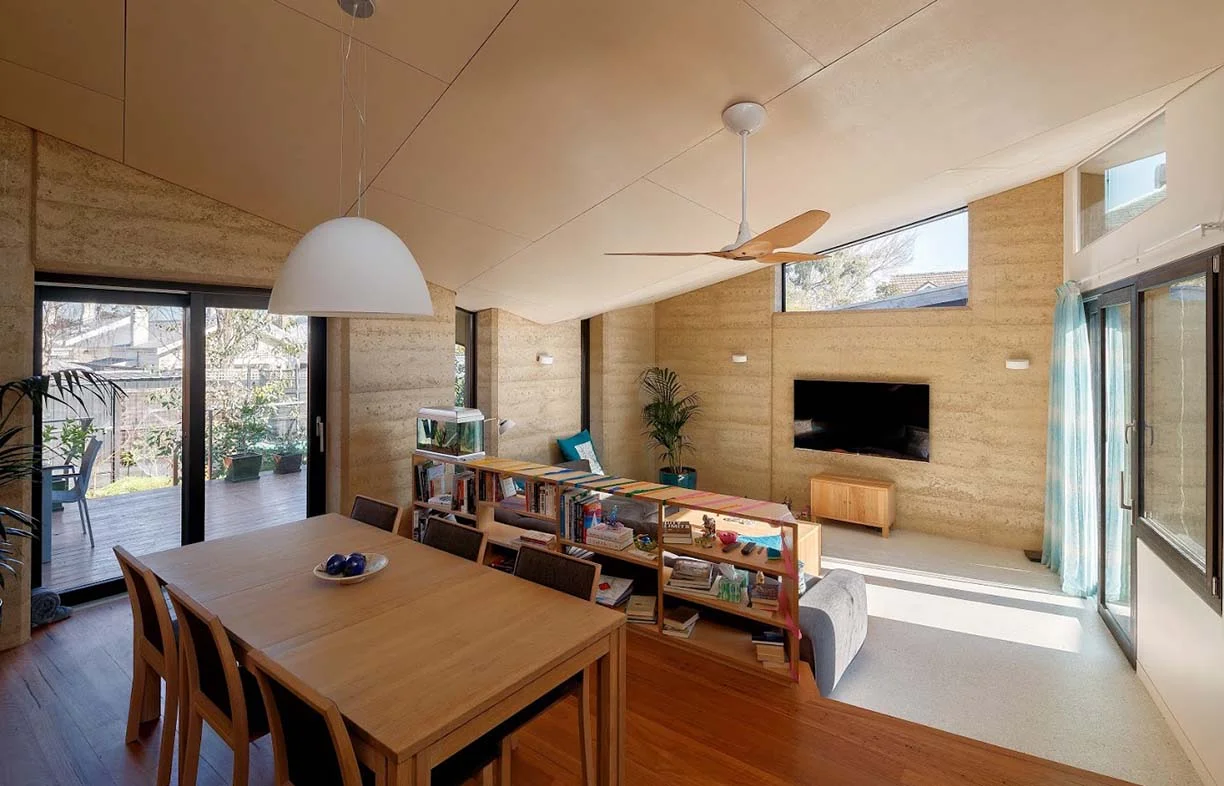
Combining earthen or natural walls with hydronic heating can work very well in Australia, but only when it is treated as part of an integrated building system rather than two separate upgrades.
In the right design it can produce highly stable, comfortable, and low-energy homes. In the wrong design it can introduce cost, sluggish response, and inefficiency that could have been avoided with better early planning.
How hydronic heating works and why people use it
Hydronic heating circulates warm water through pipes embedded in floors, walls, or radiators. The water is heated by a heat pump, gas boiler, or sometimes solar-assisted system, and then releases heat gently into the building. Unlike ducted air systems, it does not rely on blowing heated air through vents. Instead, it warms surfaces that then radiate heat into the space.
This creates a steady and even form of heating that avoids drafts, reduces air movement, and often improves comfort at lower thermostat settings. It is quiet, has fewer moving parts in the living space, and when paired with efficient heat pumps, can be relatively economical to run.
How natural and earthen materials change performance
Natural building materials such as rammed earth, cob, hempcrete, strawbale, and clay plasters introduce thermal mass. This means they absorb heat energy, store it, and release it slowly over time. This moderates temperature swings and can make indoor environments feel more stable.
When combined with hydronic heating, thermal mass can act as a buffer that smooths heat delivery and extends the effects of heating cycles. However, thermal mass is often misunderstood. It is not insulation. It does not prevent heat loss from a building; it only stores and redistributes heat. If the surrounding envelope is not properly insulated, thermal mass can contribute to heat loss as easily as it contributes to heat retention.
Passive design comes first, always
Before any discussion of heating systems, the priority should be passive design. In an ideal building, particularly in many parts of Australia, the goal is to minimise the need for imported heating or cooling altogether. Orientation, glazing design, shading, airtightness, insulation, and ventilation strategy determine most of the building’s performance.
If these fundamentals are not addressed, no heating system will perform efficiently. Hydronic heating, or any mechanical system, should be considered a support layer rather than the primary strategy for comfort. In well-designed passive homes, heating demand is significantly reduced, and in some climates almost eliminated for large parts of the year.
Why hydronic can outperform HVAC in the right context
When heating is required, hydronic systems can offer advantages over traditional HVAC systems. Ducted air systems rely on moving heated air, which can create uneven temperatures, air dryness, and energy losses through ductwork. They also tend to cycle on and off more noticeably.
Hydronic systems deliver radiant heat, which interacts more directly with surfaces and occupants. This is particularly compatible with natural materials and thermal mass, which respond slowly and benefit from steady energy input. The result is often a more stable and comfortable indoor environment, especially in homes designed with passive solar principles and good insulation.
Design timing and why it matters
One of the most common issues with hydronic systems is not the technology itself but when it is introduced into the project. Hydronic heating should be considered at concept design stage, not after plans are finalised. It influences slab design, insulation strategy, floor build-ups, zoning, and sometimes structural decisions.
In natural building projects, this sequencing is even more critical. The relationship between insulation, thermal mass, and moisture control must be resolved early. Retrofitting hydronics or adding it late often leads to compromises that reduce efficiency and increase cost.
Integration with hot water and system design
Hydronic systems can be integrated with domestic hot water systems, particularly when using heat pumps or solar thermal storage. In some configurations, a buffer tank can serve both space heating and hot water supply, improving system efficiency and allowing better use of stored thermal energy.
However, integration must be carefully designed. Poorly planned systems can become overly complex or inefficient. The goal is usually to create a balanced system where energy inputs are shared intelligently rather than duplicated unnecessarily.
How it appears in a finished natural home
In most natural buildings, hydronic systems are not visible. They are typically embedded in slabs or concealed behind finishes. The architecture remains focused on natural materials such as timber, earth, clay plaster, and stone, while the heating system operates quietly in the background.
In some designs, warmed earthen floors or radiant wall surfaces can be intentionally expressed, but more often the system is experienced rather than seen. The emphasis in natural building is usually on material honesty and comfort rather than visible mechanical infrastructure.
Overall performance and design intent
The combination of natural walls and hydronic heating works best when the entire building is designed as a single system. Passive design reduces demand, insulation controls heat flow, thermal mass stabilises temperature, and hydronic heating provides gentle top-up energy when needed.
When these layers are aligned, the result can be homes that feel stable, quiet, and highly comfortable across seasonal changes. When they are not, even high-quality systems struggle to perform as intended.
To find out more you can read content from Renew – https://renew.org.au/renew-magazine/efficient-homes/air-conditioner-vs-hydronic-heating/
Image also drawn from Renew.