Building with Cob in the Tropics: Lessons from Australia and Beyond
2026-03-09
Rammed earth: a (not so) potted overview
2026-04-13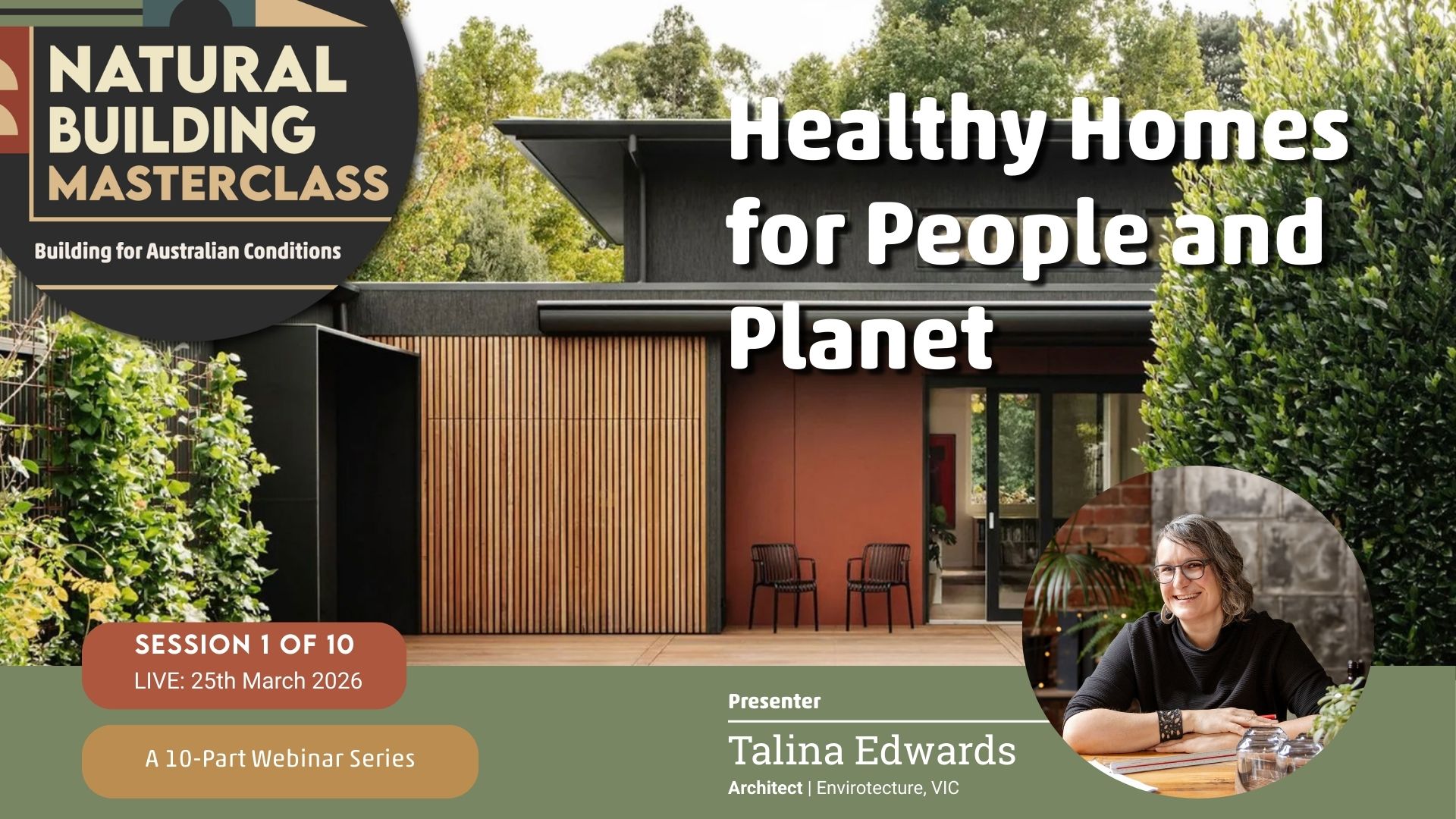
Recently we were honoured to have experienced architect and passive house designer Talina Edwards join us for the first session of the year-long Masterclass series.
In her session “Healthy Homes for People and Planet” Talina guided us through her thinking for good design that takes into account not just human well being, but planetary well being also, with a focus on climate and site specific design and what that means for all Australians long term.
We have drawn here on a graphic that Talina brought to help illustrate her thinking on how far the industry has come since it started re-thinking the function and purpose of our homes and dwellings. This blog reflects on the timeline and the changing ideas around and function of what sustainable design is and can be in an ever evolving industry.
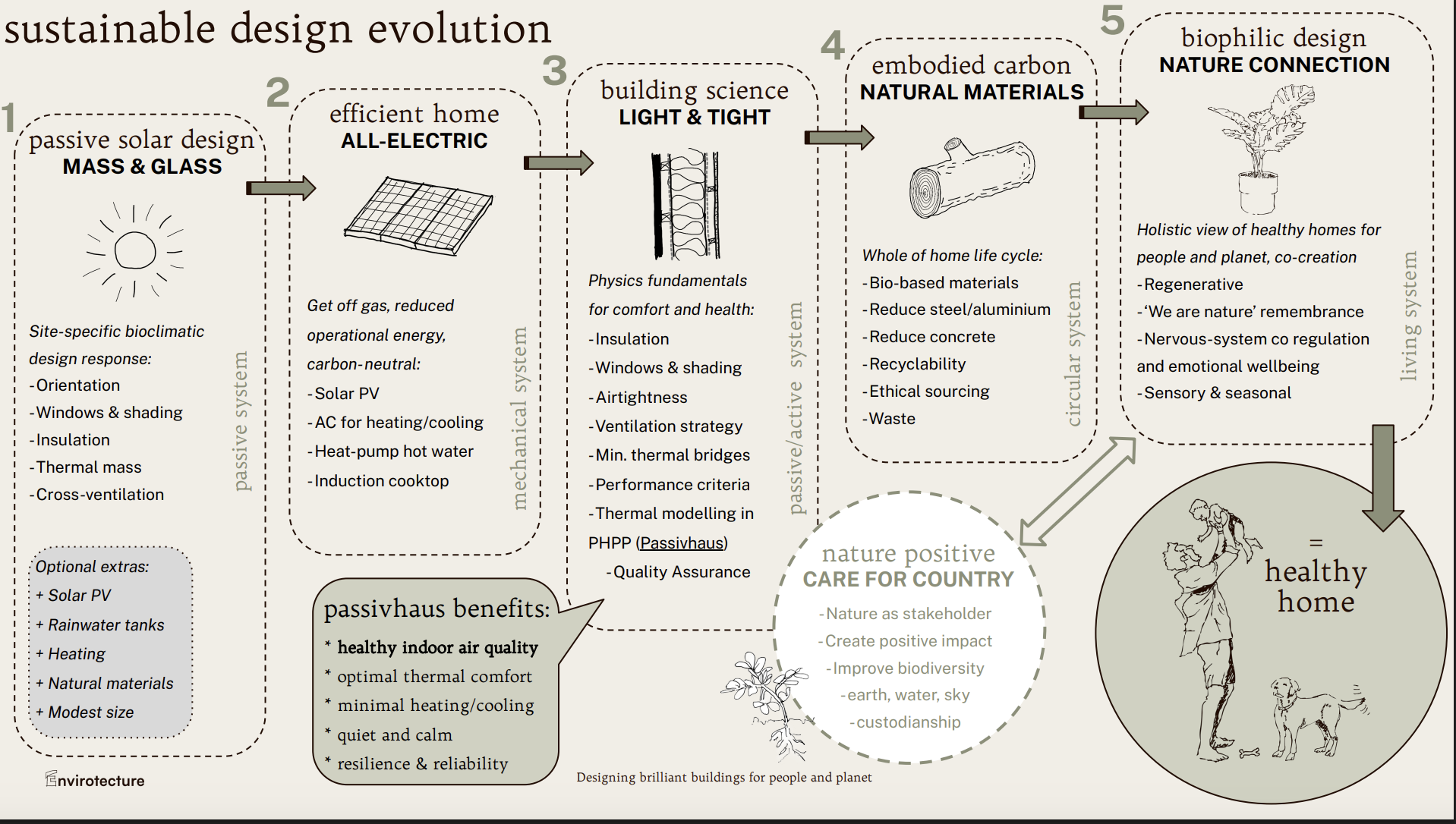
Sustainable home design has come a long way over the past few decades. What began as a focus on reducing energy use has evolved into a much broader, more holistic approach—one that considers human health, material impact, and our relationship with nature. Understanding this evolution helps homeowners, designers, and builders make better decisions for both people and the planet.
1. Passive Solar Design: Working With Nature
The foundation of sustainable design starts with passive solar principles—working with the climate rather than against it. This approach focuses on orienting a home to maximize sunlight in winter while minimizing heat gain in summer. Thoughtful placement of windows, shading devices, insulation, and thermal mass (like concrete or brick) allows a home to naturally regulate temperature.
Cross-ventilation and site-specific design are also key. By responding to local conditions—sun paths, wind patterns, and seasonal changes—homes can significantly reduce their reliance on mechanical heating and cooling. Passive solar design is often the simplest and most cost-effective way to improve performance, yet it delivers long-term benefits in comfort and energy savings.
2. Efficient All-Electric Homes: Eliminating Fossil Fuels
The next step in the evolution is moving away from fossil fuels entirely. All-electric homes replace gas systems with efficient electric alternatives, dramatically reducing operational carbon emissions.
Solar photovoltaic (PV) systems generate clean energy on-site, while reverse-cycle air conditioning and heat pumps provide efficient heating, cooling, and hot water. Induction cooktops offer a safer, cleaner alternative to gas cooking. Together, these systems enable homes to approach or achieve carbon neutrality in day-to-day operation.
This stage reflects a major shift: not just reducing energy use, but transforming how energy is sourced and consumed. Electrification also prepares homes for a future powered increasingly by renewable energy grids. Electrification has very much become the ‘fashionable’ route for many homes that want to retrofit (without gas) but it may be too appliance and not enough thermal envelope focused as a way of identifying the ways our homes are underperorming.
3. Building Science: Precision and Performance
As sustainable design matures, it becomes more precise. Building science focuses on the physics of how a home performs—ensuring it is “light and tight,” meaning well-insulated and airtight.
High-performance insulation, carefully designed windows, and minimised thermal bridges all contribute to stable indoor temperatures. Airtight construction prevents unwanted drafts, while controlled ventilation systems ensure a constant supply of fresh, filtered air. This balance is critical for both comfort and health.
Tools like thermal modeling and frameworks such as Passive House (Passivhaus) provide measurable performance targets. Quality assurance during construction ensures these standards are actually achieved. The result is a home that uses very little energy while maintaining exceptional indoor air quality, acoustic comfort, and resilience. Increasingly, more architects are looking to the high standard being set for passive houses, and applying some or all of the concepts and features to their designs.
4. Embodied Carbon: Rethinking Materials
Once operational energy is minimised, attention shifts to embodied carbon—the emissions associated with producing, transporting, and disposing of building materials. This has only recently become purview of the industry in terms of whole of home carbon use, including in the building as much as the ongoing running of our homes.
Traditional construction materials like concrete and steel have high carbon footprints. In contrast, bio-based materials such as timber can store carbon and reduce overall impact. Designing for durability, adaptability, and eventual reuse or recycling becomes essential.
This stage encourages a whole-of-life perspective. It’s not just about how a home performs during its lifetime, but also how it begins and ends. Ethical sourcing, waste reduction, and circular design principles play a key role in minimizing environmental harm.
5. Biophilic Design: Reconnecting With Nature
At the most advanced stage, sustainable design goes beyond minimizing harm—this stage seeks to actively improve wellbeing and restore natural systems. Biophilic design emphasizes our innate connection to nature and integrates it into the home environment.
This can include natural light, indoor plants, views of greenery, natural materials, and sensory experiences tied to seasons and climate. But it also extends deeper—supporting emotional wellbeing, reducing stress, and fostering a sense of belonging.
Homes are seen not just as structures, but as living systems that interact with people and ecosystems. Regenerative design approaches aim to give back more than they take, enhancing biodiversity and treating nature as a stakeholder in the design process.
From Efficiency to Regeneration
Taken together, these five stages represent a powerful shift in thinking. Early efforts focused on reducing energy demand. Over time, the scope expanded to include clean energy, building performance, material impacts, and ultimately human and ecological health.
The end goal is not just a “low-energy house,” but a healthy home—one that supports the wellbeing of its occupants, operates with minimal environmental impact, and contributes positively to the natural world.
As climate challenges intensify, this evolution offers a clear pathway forward. By combining smart design, advanced technology, and a deep respect for nature, we can create homes that are not only sustainable, but truly life-enhancing.
If you’d like to re-watch the session with Talina, you can sign up for a single masterclass or for the whole series here