Pallet Cob Building in humid wet conditions (and how to incorporate lantana)
2026-05-28
Concrete in Natural Building: Useful, Problematic, and Difficult to Replace
2026-06-15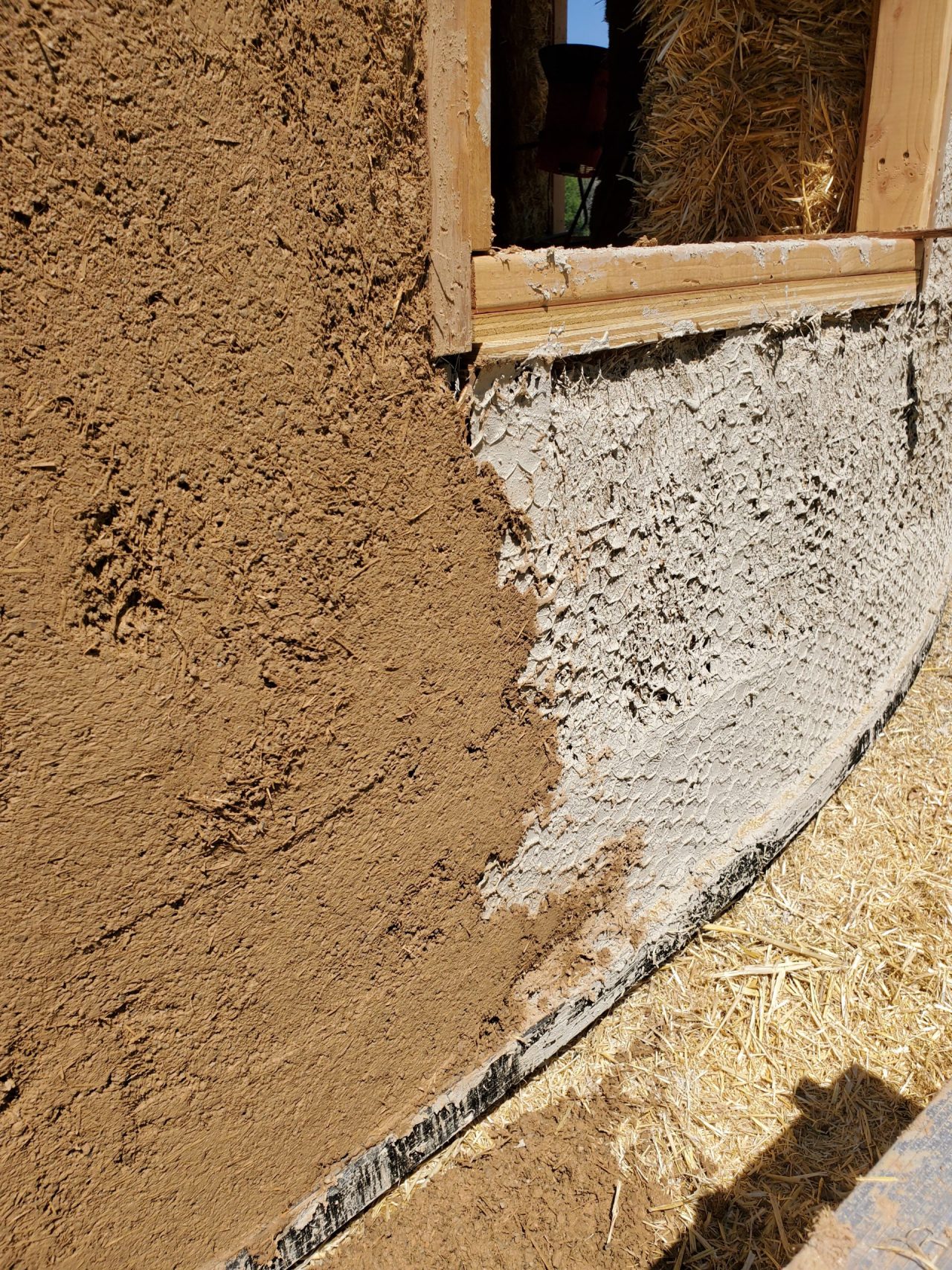
For thousands of years, builders around the world have improved clay and lime plasters using natural additives that enhanced strength, durability, flexibility, and weather resistance.
Long before synthetic construction chemicals existed, traditional cultures developed ingenious methods to create walls that could withstand the elements while remaining breathable and repairable.
One of the most fascinating examples comes from Mesoamerica, where Indigenous builders, including the Aztecs, used nopal cactus to improve earthen and lime plasters. Today, natural builders are rediscovering these techniques and combining them with other time tested additives such as casein, fibers, and plant extracts to create high performance natural finishes.
The Power of Nopal Cactus
Nopal, also known as prickly pear cactus, contains a thick gel known as mucilage. This slippery substance is rich in natural polysaccharides that act as a binding agent when mixed into plaster.
Historically, cactus pads were chopped and soaked in water, allowing the mucilage to dissolve into a thick liquid. This liquid was then used instead of plain water when mixing plaster.
The results were remarkable.
Nopal mucilage improves particle adhesion within the plaster, helping clay, sand, and lime bind together more effectively. Walls finished with cactus enhanced plaster often exhibit less dusting and surface degradation over time.
Another major advantage is moisture resistance. The mucilage creates a microscopic film throughout the plaster matrix that helps repel rainwater while still allowing water vapor to escape. This breathability is essential for preventing trapped moisture, mold growth, and internal wall damage.
Nopal also slows the drying process. Rapid drying is one of the primary causes of cracking in earthen plasters. By retaining moisture and releasing it gradually, cactus mucilage allows the plaster to cure more evenly, reducing shrinkage cracks and improving overall durability.
Builders also appreciate the improved workability. The gel increases the plasticity of the mix, making it smoother and easier to apply. Troweling becomes easier, and the finished surface can achieve a more refined appearance.
Some traditional building communities also believe that cactus additives make walls less attractive to insects and termites, although results may vary depending on local conditions.
How to Prepare Nopal Mucilage
Preparing nopal mucilage is relatively simple.
Cut fresh cactus pads into small pieces and place them in a container at roughly one part cactus to five parts water.
Allow the mixture to soak for one to two days. During this time, the cactus releases its gel into the water, creating a thick, viscous liquid.
Once the fermentation period is complete, strain out the plant material and use the remaining liquid as part or all of the water in your plaster mix.
Many builders begin testing with approximately one part nopal liquid to three parts water, adjusting according to the desired consistency and performance.
As with any natural building technique, creating small test panels before committing to a full project is highly recommended.
Casein: Nature’s Ancient Binder
Another powerful traditional additive is casein, the primary protein found in milk.
Casein has been used in paints, mortars, plasters, and adhesives for centuries. When combined with lime, it forms a strong and durable binder that significantly improves plaster performance.
Casein helps increase compressive strength and surface hardness. Lime plasters modified with casein often become more resistant to abrasion and wear, making them ideal for interior and exterior finishes.
It also improves adhesion between plaster layers and substrates. This enhanced bonding reduces the risk of delamination and surface failure.
Traditionally, builders created casein additives using skim milk, curdled milk, or cottage cheese mixed with hydrated lime. The chemical reaction produces a highly durable natural glue that becomes increasingly water resistant as it cures.
Many historic European buildings owe part of their longevity to the use of casein modified lime finishes.
Natural Fibers for Reinforcement
Fibers have been used in earthen construction for thousands of years because they help control cracking and improve tensile strength.
Straw remains one of the most common choices. Its long fibers bridge small cracks and distribute stresses throughout the plaster.
Other effective natural fibers include hemp, flax, coconut coir, sisal, and animal hair. Horsehair was particularly common in traditional lime plasters throughout Europe and North America.
These fibers function much like modern reinforcement materials by helping the plaster resist shrinkage and movement.
Plant Based Additives
Many traditional cultures incorporated plant extracts into their plaster recipes.
Cooked starches made from wheat flour, rice, or corn can improve adhesion and workability. Natural gums from trees and plants can increase flexibility while enhancing water resistance.
Some builders use aloe vera gel for similar reasons to nopal mucilage. Like cactus gel, aloe contains natural polysaccharides that improve cohesion and moisture retention.
Linseed oil has also been added in small quantities to lime finishes to increase water shedding properties while maintaining breathability.
Pozzolans for Strength and Durability
Volcanic ash, brick dust, and other pozzolanic materials have been used since Roman times to strengthen lime based construction.
When pozzolans react with lime, they form additional cementitious compounds that increase strength and durability. This process can dramatically improve resistance to moisture and weathering.
Crushed fired clay, ceramic dust, and finely ground brick are commonly used pozzolanic additives in modern natural building projects.
Testing and Experimentation
One of the most important principles in natural building is testing. Soil composition, climate, humidity, and local materials vary widely from region to region.
A recipe that performs perfectly in one location may behave differently elsewhere. Small sample panels allow builders to evaluate cracking, adhesion, hardness, and weather resistance before applying a finish to an entire structure.
The combination of nopal mucilage, casein, fibers, and pozzolanic materials demonstrates that some of the most effective building technologies are not modern inventions at all. They are traditional solutions refined through centuries of observation and experience.
By rediscovering these natural additives, today’s builders can create stronger, more resilient, and more sustainable plasters while preserving valuable construction knowledge from the past.
References and Further Reading
Traditional Organic Additives Improve Lime Mortars: New Old Materials for Restoration and Building Natural Stone Fabrics
https://www.sciencedirect.com/science/article/pii/S0950061811000663
Natural Building Alliance : Plastering page https://natural-building-alliance.org/natural-plaster/
On the Possible Role of Opuntia ficus indica Mucilage in Lime Mortar Performance in the Protection of Historical Buildings
https://www.jpacd.org/jpacd/article/view/161
Crystallization and Colloidal Stabilization of Calcium Hydroxide in the Presence of Nopal Juice
https://pubs.acs.org/doi/10.1021/acs.langmuir.7b02423
Cactus Mucilage: A Review of Its Rheological and Physicochemical Properties and Use as Bio Admixture in Building Materials
https://ouci.dntb.gov.ua/en/works/7PGMZ219/
Nopal Mucilage as Hydration Agent for Quicklime: Extraction Methods
https://revista.ge-iic.com/index.php/revista/article/view/475
The Functions of Vegetable Mucilage in Lime and Earth Mortars: A Review
https://www.researchgate.net/publication/271842538_The_functions_of_vegetable_mucilage_in_lime_and_earth_mortars_-_A_Review
Pañetes de Tierra Estabilizada con Nopal (Earth Plasters Stabilized with Nopal Cactus)
https://revistas.uan.edu.co/index.php/nodo/article/view/167
Lime Casein: Historical Uses and Preparation Methods
https://cameo.mfa.org/wiki/Lime_casein
Pozzolans for Lime Mortars
https://www.buildingconservation.com/articles/pozzo/lime-pozzolans.htm
Pozzolan: History and Chemistry of Natural Cementing Materials
https://en.wikipedia.org/wiki/Pozzolan
The Natural Plaster Book
https://www.chelseagreen.com/product/the-natural-plaster-book/
Building With Lime
https://www.routledge.com/Building-with-Lime-Holmes-Wingate/p/book/9781853395477
Earth Construction Handbook
https://www.witpress.com/books/9781845640950
Image credits https://natural-building-alliance.org/natural-plaster/
Blog post was inspired by the socials of Buildswithclay check them out.