Navigating the NCC: A Practical Guide to Performance Solutions in Innovative Building
2026-07-03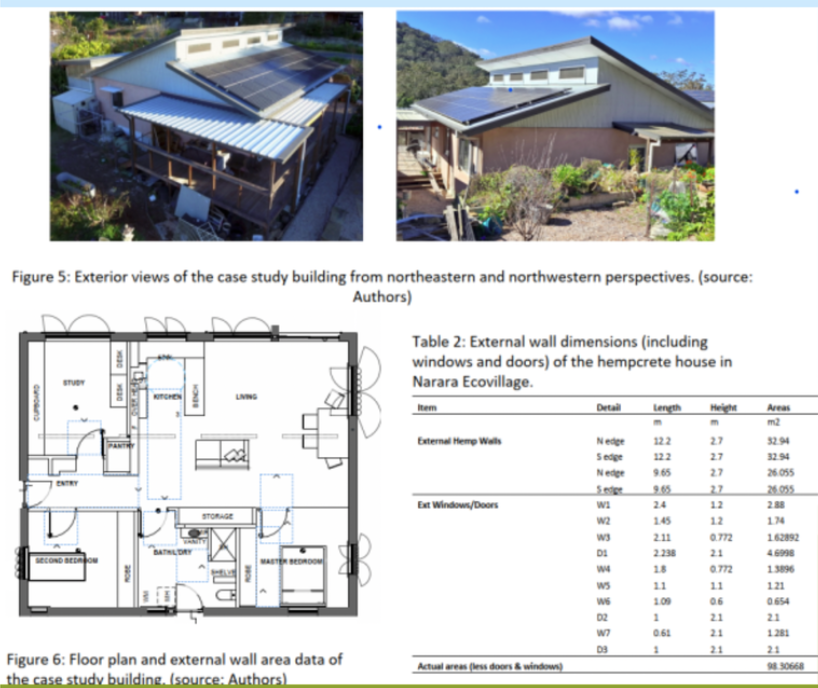
Australia’s built environment is responsible for a significant proportion of the nation’s greenhouse gas emissions, with increasing attention now being paid not only to operational energy but also to embodied carbon—the emissions generated through extracting, manufacturing, transporting and constructing building materials.
A recently published case study by the Materials & Embodied Carbon Leaders’ Alliance (MECLA) demonstrates how one home at Narara Ecovillage is helping to change that conversation. Through a collaborative research partnership between Western Sydney University, The University of Melbourne, Australian Hemp Masonry Pty Ltd, and the Narara Ecovillage community, the project provides compelling evidence that hempcrete can substantially reduce the embodied carbon of Australian homes. MECLA’s case study library showcases projects from around Australia that demonstrate measurable carbon reductions through innovation, research and collaboration.
Narara Ecovillage: A Living Laboratory
Located on the Central Coast of New South Wales, Narara Ecovillage has become one of Australia’s best-known examples of regenerative community development.
More than simply a residential subdivision, the ecovillage is designed around ecological restoration, renewable energy, water-sensitive design, local food production and community governance. Homes are encouraged to exceed conventional sustainability standards, with the community actively rewarding projects that minimise embodied carbon alongside operational energy use.
This commitment has made Narara an ideal place to trial innovative natural building materials such as hempcrete and to demonstrate their performance through rigorous academic research.
The Hempcrete Home
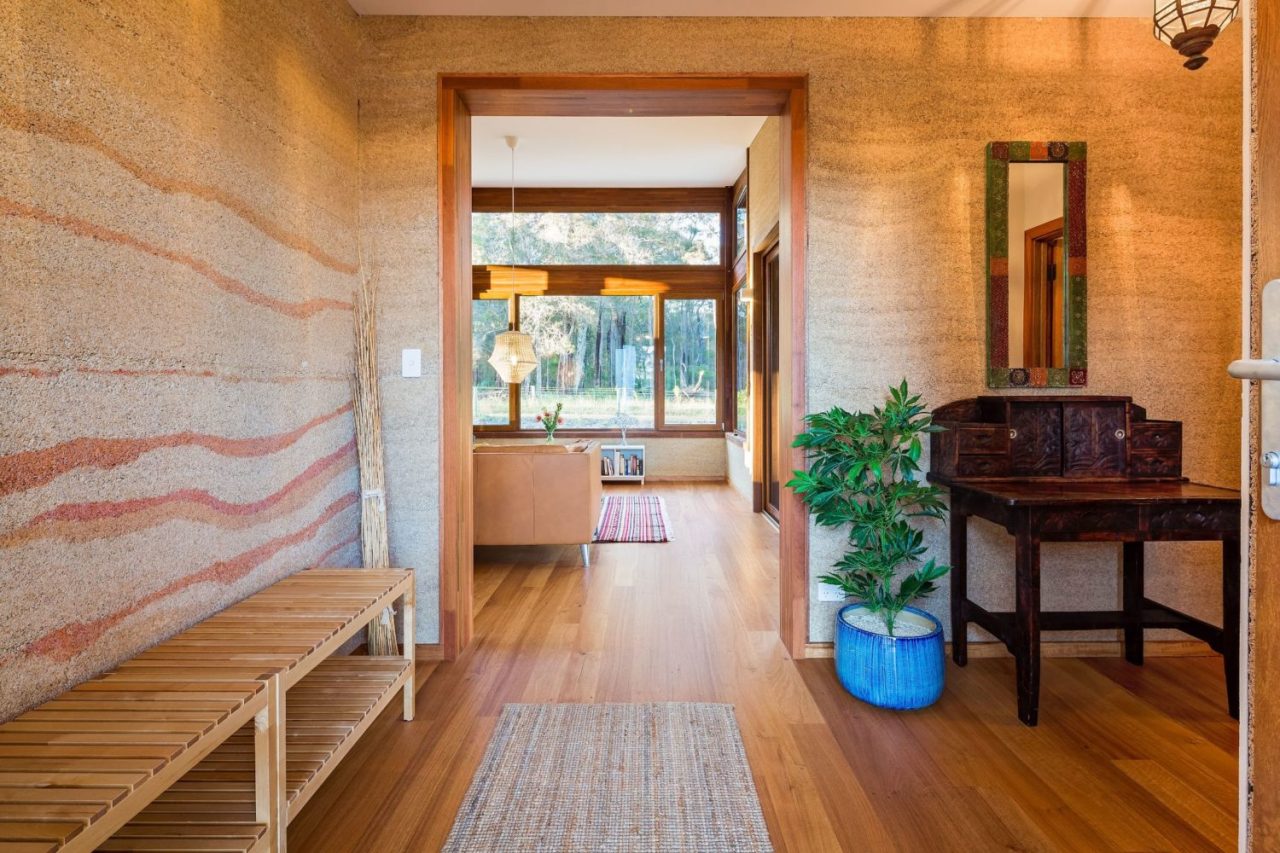
One of the first hempcrete homes constructed within Narara Ecovillage, supported by NBA member Australian Hemp Masonry Co, became the focus of the MECLA case study.
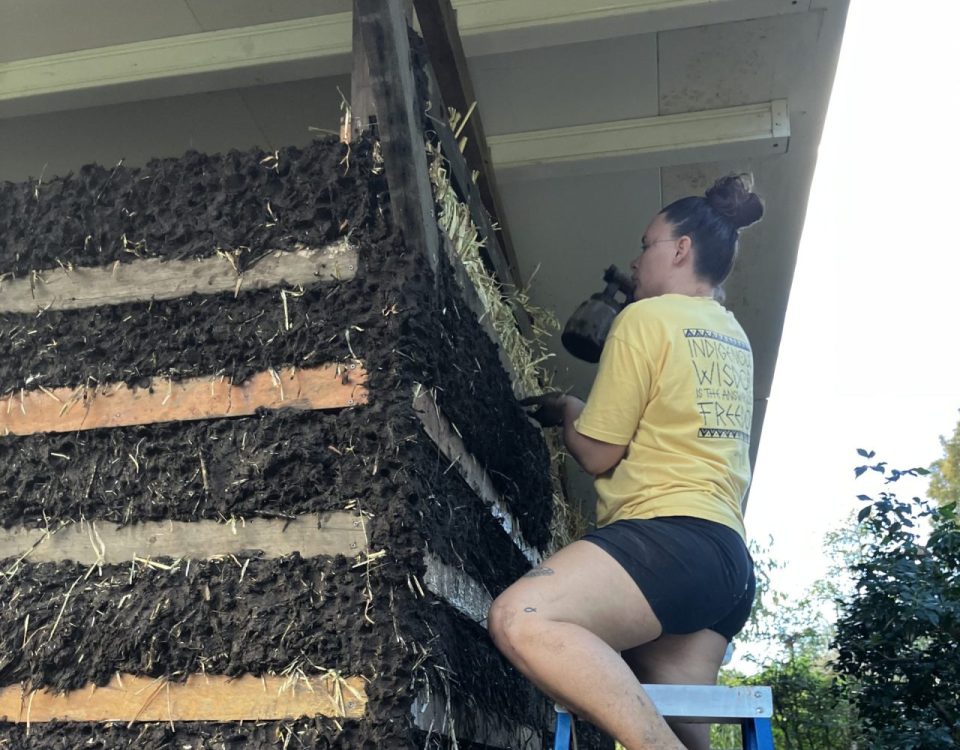
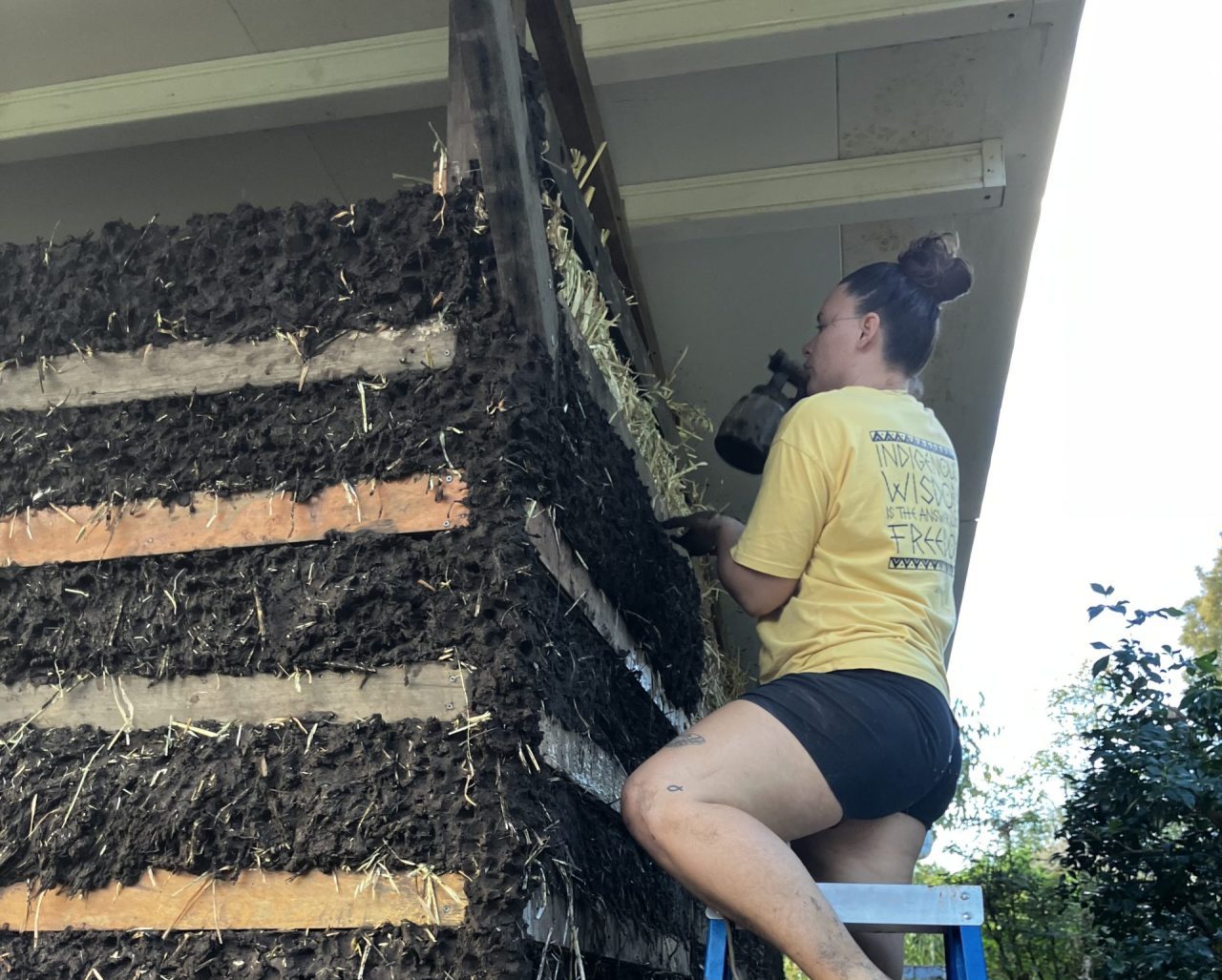
The home uses cast-in-place hempcrete walls built around a timber structural frame, creating a high-performance building envelope with excellent thermal and moisture-regulating properties. The construction process is similar to rammed earth, with temporary timber formwork erected around the frame before a hemp-lime mixture is placed in lifts and carefully tamped to achieve consistent density.
The construction process included:
- pouring a reinforced concrete slab foundation;
- erecting the timber structural frame;
- installing reusable timber formwork;
- mixing locally sourced hemp hurd and lime binder with water;
- placing the hempcrete into the wall cavities by hand;
- compacting each layer to achieve uniform density; and
- progressively lifting the formwork until the full wall height was completed.
The hemp and lime binder used in the project were sourced from near Muswellbrook, New South Wales, demonstrating the growing capability of Australian supply chains to support natural building materials.
While cast-in-place hempcrete is labour-intensive compared with conventional masonry, it produces a seamless, breathable wall system that delivers outstanding thermal performance while significantly reducing embodied carbon.
Research That Quantifies the Benefits
The Narara project is significant because it moves beyond anecdotal claims and provides robust, research-backed evidence of hempcrete’s environmental performance.
Using a detailed bottom-up life cycle assessment aligned with EN 15978 principles, researchers evaluated emissions across the entire building life cycle, including raw material extraction, manufacturing, transport, construction, use, end-of-life and beyond-life-cycle stages.
The study found that replacing conventional brick veneer construction with hempcrete walls reduced the home’s embodied carbon by approximately 20%.
The total embodied carbon for the hempcrete home was calculated at 49.6 tonnes CO₂-e, compared with 61.8 tonnes CO₂-e for an equivalent brick veneer home—an overall saving of 12.2 tonnes of CO₂-equivalent emissions for a single dwelling.
Why These Results Matter
The implications extend well beyond one house.
Around 80% of Australia’s approximately 200,000 new homes constructed each year use brick veneer construction. The researchers estimate that replacing these wall systems with hempcrete could avoid approximately 1.9 million tonnes of CO₂-equivalent emissions annually for typical 110 m² homes.
When based on the current average Australian home size of approximately 245 m², the potential savings increase to almost 2.9 million tonnes of CO₂-equivalent every year.
These findings suggest that material substitution alone—without changing the function of our homes—could make a substantial contribution to Australia’s emissions reduction targets.
Lessons from the Project
As one of the earliest hempcrete homes constructed at Narara Ecovillage, the project has had an influence well beyond its own walls.
The success of the home encouraged additional hempcrete projects within the ecovillage and attracted widespread interest from industry and academia. Representatives from NSW BASIX, Western Sydney University, RMIT University, UNSW Sydney, the University of Newcastle and the University of Sydney have all visited the ecovillage to study its low-carbon housing initiatives.
The project also identified important opportunities for improving future construction practices.
Researchers found that maintaining consistent hempcrete density during installation is critical to achieving predictable performance. Because cast-in-place hempcrete requires reusable formwork similar to rammed earth construction, the building process is slower than conventional framing systems.
To address this, several manufacturers are now developing prefabricated hempcrete wall panels, which have the potential to reduce construction time, improve quality control, minimise waste and make hempcrete more commercially viable for mainstream housing.
The researchers also identified future opportunities to reduce embodied carbon even further by sourcing hemp and lime binder closer to construction sites, adopting electric transport and expanding the use of prefabricated systems.
A Model for Australia’s Housing Future
The Hempcrete Home at Narara Ecovillage demonstrates what can be achieved when innovative materials are combined with collaborative research and ambitious sustainability goals.
By bringing together industry, universities and a forward-thinking community, the project has produced one of Australia’s most detailed assessments of hempcrete’s embodied carbon performance. More importantly, it provides practical evidence that natural building materials can deliver measurable environmental benefits today while helping shape the future of low-carbon housing.
References
- Materials & Embodied Carbon Leaders’ Alliance (MECLA). https://mecla.org.au/
- MECLA Case Studies. https://mecla.org.au/case-studies/
- Narara Ecovillage. https://nararaecovillage.com/
- Australian Hemp Masonry Pty Ltd. https://www.hempmasonry.com.au/
- Envirotecture – Narara Hempcrete House. https://www.envirotecture.com.au/projects/project/narara-hempcrete-house-2
- University of Melbourne. Embodied emissions of hempcrete wall systems in residential buildings: A comparative case study from Australia. https://minerva-access.unimelb.edu.au/server/api/core/bitstreams/6d440e56-6f35-4e60-b19b-be9f6c022333/content