Concrete in Natural Building: Useful, Problematic, and Difficult to Replace
2026-06-15
Navigating the NCC: A Practical Guide to Performance Solutions in Innovative Building
2026-07-03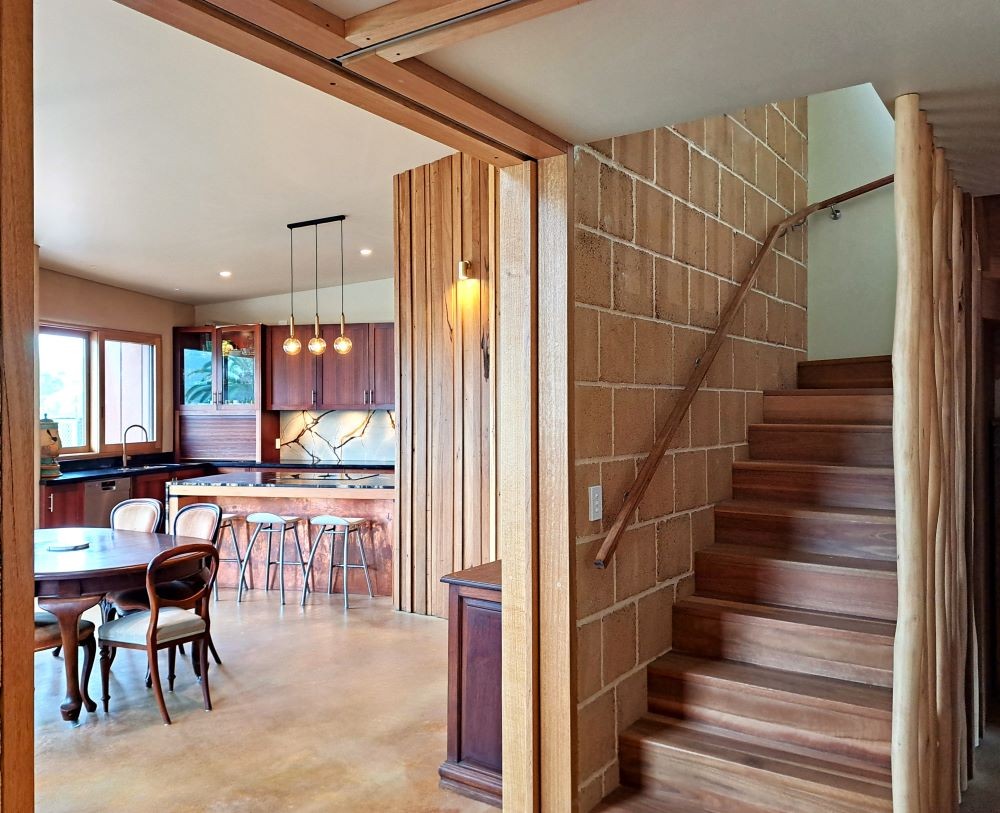
One of the most common questions people ask when planning a straw bale home isn’t about the external walls—it’s about what goes inside.
We saw an excellent discussion recently and thought we’d pick it up and continue to discuss all options presented to this curly problem, below.
If your external walls are thick straw bales rendered with clay or lime, should your internal walls follow the same philosophy? Or is a conventional timber frame with plasterboard perfectly acceptable?
There isn’t one right answer. Instead, it comes down to understanding what you want your internal walls to do. Are they simply room dividers? Do you want additional insulation? More thermal mass? Better acoustics? Or perhaps you simply want the natural beauty and handcrafted feel that attracted you to straw bale building in the first place.
Understanding the Difference: Insulation vs Thermal Mass
Before choosing materials, it’s worth understanding one of the biggest misconceptions in natural building.
Straw is an excellent insulator. It slows the movement of heat through a wall, helping maintain comfortable indoor temperatures.
Earth, on the other hand, isn’t a great insulator—it is valuable because of its thermal mass.
Materials such as cob, rammed earth, adobe and compressed earth blocks absorb heat during the day and slowly release it as temperatures drop. In a well-designed home, this creates a more stable indoor temperature and reduces temperature swings.
In a super-insulated straw bale house, adding strategic internal thermal mass can significantly improve comfort by storing warmth from winter sun or passive heating and releasing it slowly throughout the evening.
The key is balance. Too much insulation inside can isolate rooms from one another, while carefully positioned thermal mass can help regulate temperatures throughout the home.
Conventional Timber Frame with Plasterboard
This remains the most common solution.
It is affordable, quick to build and familiar to most trades. Services such as plumbing and electrical wiring are straightforward, and structural walls can easily support mezzanines or upper floors.
However, plasterboard contributes very little thermal mass. It also lacks the texture and warmth that many people associate with natural homes.
Many owners overcome this by applying a clay or lime plaster finish over suitable wall linings, giving the appearance and breathability of earthen walls while retaining conventional construction methods.
Pros
Cost effective
Fast construction
Easy to service
Structural
Cons
Minimal thermal mass
Less character unless finished with natural plasters
Timber Frame Filled with Light Earth or Straw
One increasingly popular alternative is filling a conventional timber stud wall with a light earth mix, slip straw or light straw-clay.
These systems combine chopped straw with a clay slip before packing it into timber framing. Once dry, the wall is rendered with clay or lime plaster.
The result is a breathable wall with improved acoustic performance and a handcrafted appearance that blends beautifully with straw bale construction.
While it doesn’t provide the thermal mass of solid earth, it performs better than conventional plasterboard and maintains the natural aesthetic throughout the home.
The trade-off is time. These systems are labour-intensive and require drying time before finishing.
Cob Internal Walls
Cob is often thought of as an external wall material, but it can make an outstanding internal feature wall.
Built from clay, sand and straw, cob walls offer substantial thermal mass while creating sculptural forms that simply aren’t possible with conventional construction.
A cob wall positioned where winter sunlight reaches it can absorb solar heat throughout the day and slowly release it overnight, improving comfort without mechanical heating.
Because cob walls are thick and heavy, they generally require adequate foundations and careful structural planning.
They are best used selectively rather than throughout an entire house.
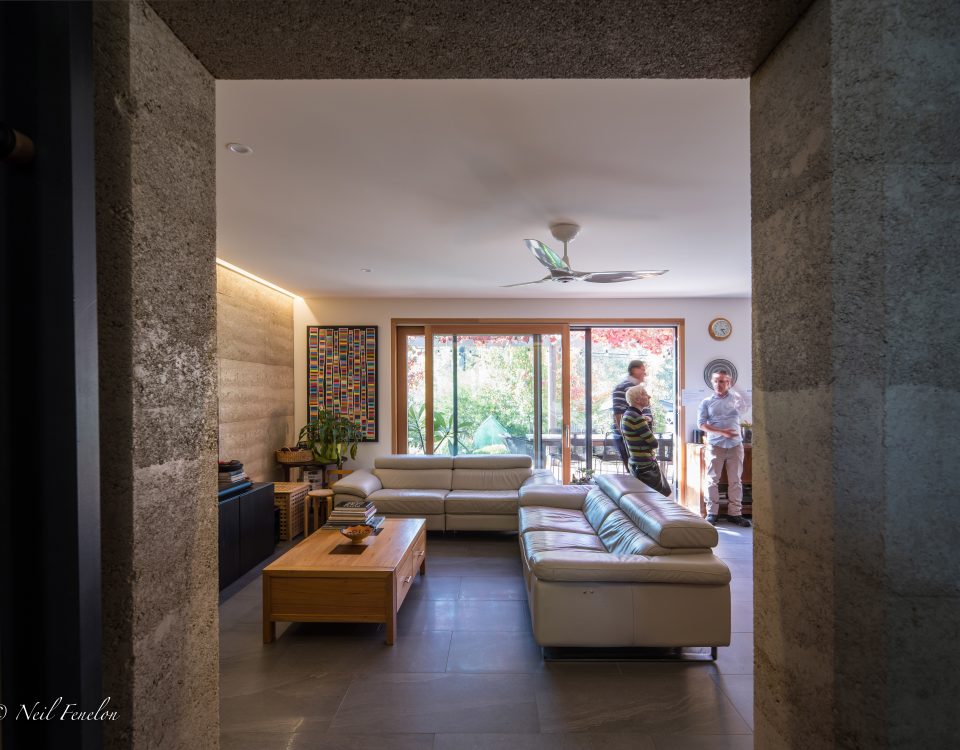
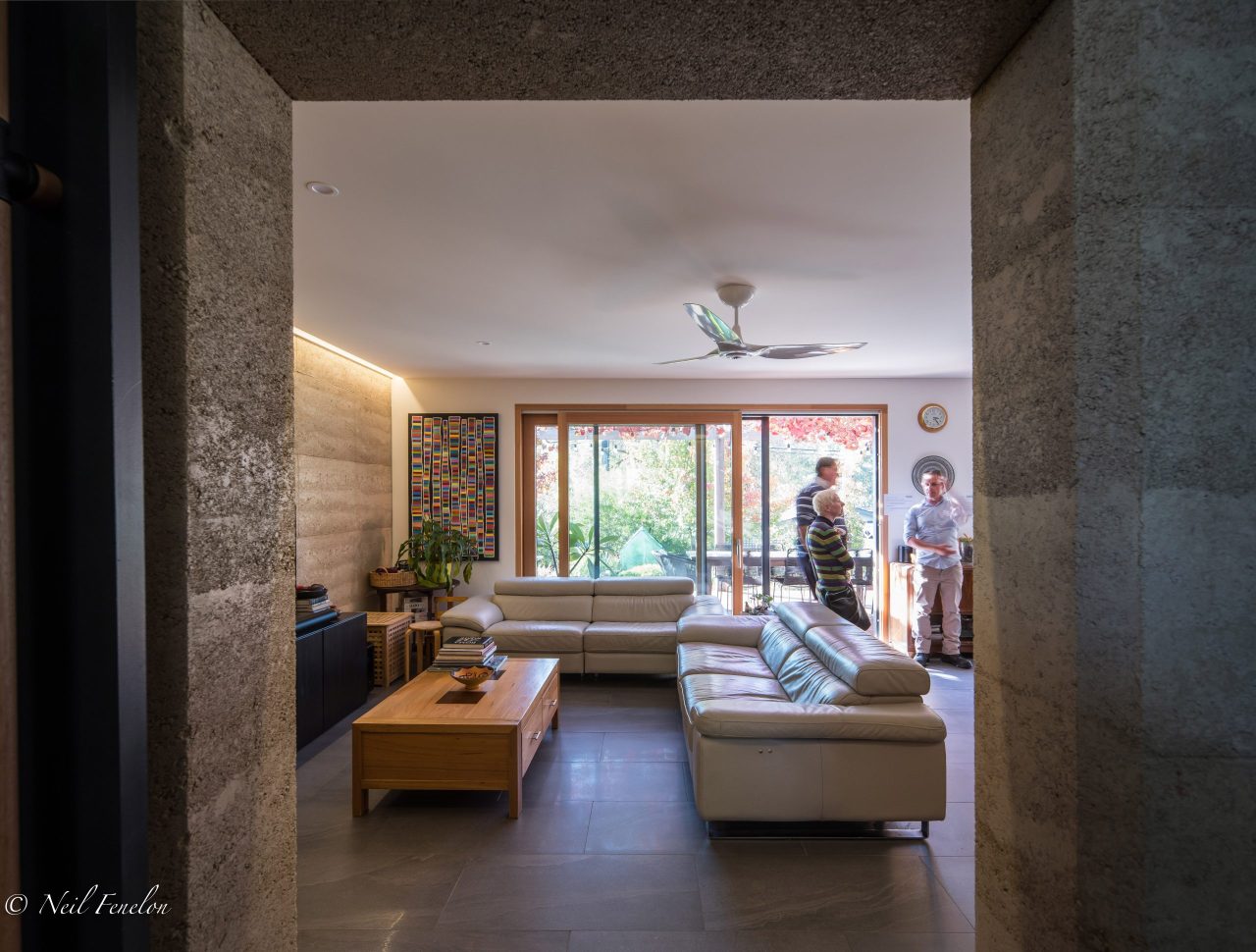
Rammed Earth Feature Walls
Rammed earth offers similar thermal benefits with a more contemporary aesthetic.
Many high-performance homes incorporate a single rammed earth internal wall as a thermal battery, particularly where passive solar design allows winter sun to strike the surface.
Unlike lightweight partitions, rammed earth stores large amounts of energy, helping stabilise indoor temperatures across day and night.
Although it requires additional engineering and increases construction costs, its durability and visual impact often make it a worthwhile investment.
Compressed Earth Blocks (CEBs)
Compressed earth blocks provide another option for internal walls.
Because they are modular, they can be easier to construct than cob or rammed earth while still providing excellent thermal mass and acoustic performance.
Rendered or left exposed, they suit both traditional and contemporary interiors.
Some systems can even be structural when properly engineered.
Hemp, Straw and Bio-Based Panels
New products continue to emerge that bridge the gap between conventional and natural construction.
Compressed straw panels, hemp panels and other bio-based wall systems provide improved insulation, excellent sound absorption and compatibility with clay or lime renders.
These products install much like conventional sheet materials while retaining many of the moisture-regulating benefits of natural materials.
For builders seeking speed without sacrificing healthy wall systems, these can offer an attractive compromise.
Don’t Forget the Finish
Sometimes the finish matters more than the wall behind it.
Clay plaster and lime plaster can be applied over a wide range of substrates, transforming standard framed walls into surfaces that visually match straw bale construction.
Natural plasters regulate indoor humidity, reduce static electricity, soften acoustics and create the warm tactile qualities many people love about natural homes.
Even a conventional wall can feel completely different when finished with earth instead of paint.
So Which Option Is Best?
The answer depends on your priorities.
If you’re building on a tight budget, conventional framing with clay plaster may provide the best balance between cost and appearance.
If thermal performance is your priority, introducing internal cob, rammed earth or compressed earth block feature walls can dramatically improve the performance of an already well-insulated straw bale home.
If you value natural materials and handcrafted aesthetics, light earth, slip straw or straw-filled stud walls create beautiful breathable interiors that feel consistent with the rest of the building.
Perhaps the best approach is to combine several systems.
A home might include conventional framed bedrooms, a central rammed earth wall for thermal storage, clay plaster throughout, and a sculptural cob feature around a fireplace or kitchen.
Natural building has never been about following one recipe. It’s about understanding how different materials behave and using each where it performs best.
When insulation, thermal mass, passive solar design and breathable finishes work together, the result is a home that is not only beautiful but healthier, more comfortable and remarkably efficient throughout the year.
To get involved in the original fb discussion head here
Photo courtesy of Integrated Biotecture CBE home in Narrarra.