The Craft of Natural Building: A Guide to Tools, Techniques, and Where to Find Them
2025-07-14
Can natural materials work in an air-tight passive house?
2025-07-28
In the Barkly, history is never far from the surface.
You can feel it in the red dust, the way it clings to skin and memory. It’s in the old cattle yards, the dry creeks, the rusted tanks that once rationed life on the stations. This is a place where Aboriginal people have survived wave after wave of displacement — first pushed off their lands by cattle in the 1930s, then conscripted into pastoral servitude, then again evicted when equal wages arrived in 1968 and white station owners refused to pay.
To find out more or to follow this awesome project head over to wilyajanta.org and find them on instagram at @wilya_janta:
That’s how most Wumpurrarni families came to live on the fringes of Tennant Creek, in camps built from tin and shadecloth, where culture held on in the cracks of a broken system.
Since then, public housing has often been another form of control. Standardised, concrete boxes dropped onto Country with no thought to sun, wind, or kinship. No room to cook outside, no verandas to gather, no breeze paths to cool the house in summer. No choice. No voice.
So here we are, nearly a century on from that first wave of removals — and we’re still asking: What would it look like to build something with Aboriginal people instead of for them?
Driven by the community and with deep engagement from architects from OFFICE and Troppo, and with Prof. Paul Memmott also deeply engaged in getting this process right, Wilya Janta is challenging a profoundly unrecognised aspect of colonisation – that the way housing has been delivered has oppressed culture, families and communities, and that it doesn’t need to be this way any more.
That question is at the heart of Wilya Janta, which means “standing strong together” in Warumungu. It’s a collaboration of Elders, designers, builders, and researchers working to create a new generation of remote housing: homes shaped by culture, climate, and community, not bureaucracy.
At the centre of this work are the Explain Homes — prototypes designed by and for the three families starting with Norman Frank Jupurrurla, a Warumungu lawman I met nearly two decades ago when I was a doctor in Utopia and he was the ambulance driver and handyman. Our friendship has been the foundation of everything since. He invited me into his world, and together we’ve been rethinking what it means to create safe, healthy, culturally grounded homes in the Tanami.
The Explain Home isn’t just a one-off. It’s the first of a display village, a living, working example of what happens when Aboriginal design knowledge is taken seriously. Each home in the village is designed in partnership with local families, drawing on their lived experience, cultural protocols, and environmental wisdom.
In Norm and Serena’s case, the design responds to a lifetime of housing that didn’t fit. The bedrooms are aligned so feet face west and heads face east — consistent with Warumungu spiritual beliefs. There are multiple entrances and exits to respect avoidance relationships. An outdoor kitchen sits alongside an indoor one, so kangaroo tails can be cooked on a fire in the open air, while still having the option of an oven when rain comes. Wide verandahs run along both the northern and southern edges of the house to catch the breeze, and the fire pit is placed to allow smoke to pass through the home, as part of cultural cleansing practices.
But this isn’t just a cultural project. It’s a technical one too.

Norm Frank Jupururrla, a Warumungu elder, surveys a satellite image of the block of land (on which this photo was taken) where the first three homes of the Wilya Junta (Standing Strong) Housing Collaboration project that Frank and other local elders, as well as architects and tradesmen from around Australia are collaborating on, will be built.
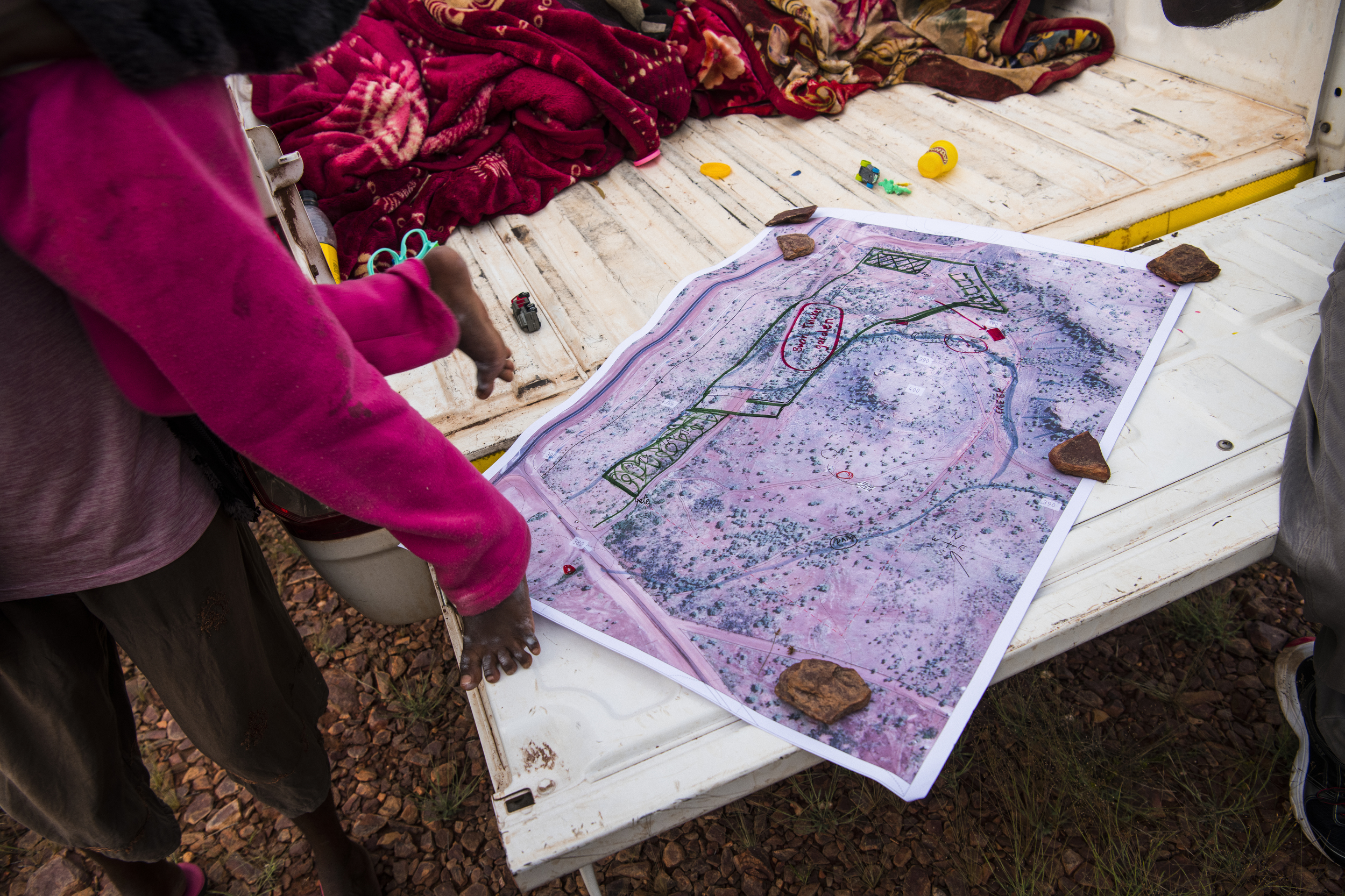
The collaboration aims to build homes “the Warumungu way – to disrupt the paradigm by engaging with communities to build beautiful, climate-appropriate, sustainable homes” than those currently available.
The Explain Homes are highly thermally performing, with passive cooling, insulation, and optional solar integration. They’re being built to NatHERS 7+ standards — a significant leap from the 5.0 rating typical of most NT Government housing. They’re cost-competitive, modular, and designed for efficient construction using a mix of local materials, including mud bricks made on-site by community members. These are not abstract ideals. These are practical solutions that respect both budgets and bodies.
We see these homes as a demonstration of what’s possible when design is treated as investment, not decoration. Good design doesn’t just make a home more beautiful. It reduces overcrowding, lowers power bills, improves health outcomes, preserves culture, and builds pride. It closes the gap not in theory, but in walls and windows, in cool nights and shared meals, in kids who sleep better because their house is finally the right temperature.
The Explain Homes are the first houses ever to be designed entirely by Aboriginal people for Aboriginal families in remote Australia in the past 30 years (we have learned from the only other examples we know of around Bulman in Central Arnhemland), with architects playing a supporting role. That’s significant. Because for too long, “consultation” has meant a checkbox. We’re doing something different — making space for Aboriginal leadership at every level, and treating culture not as a constraint, but as a design principle.
We believe this model is scalable across the NT and beyond. We’re already working with partners across the country — including CSIRO, SHAPE Australia, Troppo Architects, and Aboriginal Housing NT — to map out pathways for wider uptake. And we’re building the evidence base to prove its worth: better thermal data, health impact metrics, employment outcomes.
But just as importantly, we’re telling a new story. One in which Aboriginal people are not “housing clients” or “service recipients”, but designers, builders, and owners of homes that reflect who they are.
Wilya Janta will stay small and specific — that’s our strength. We’re not trying to become a construction company. We’re a design and evaluation platform, rooted in Country, culture, and care. Our goal is to grow capacity in community so that housing becomes not just shelter, but an expression of identity, sovereignty, and possibility.
So when people visit the display village and ask, “Can we do this in our community?”, we say: You already can. Let us show you how.
Photos and words provided with permission by Simon Quilty – you can reach out directly here