Wilya Janta – a challenge to the way housing has been delivered in central Australia
2025-07-21
Do You Really Need Strapping in Straw Bale Construction? Exploring the Debate
2025-08-03Who says that you have to use conventional pre-fab materials with high carbon footprints in order to achieve passive house standards?
Our friends over at Envirotecture recently compiled a blog that highlights the use of innovative strawbale Sit-Up panels in the construction of the Huff’n’Puff Haus. We’ve summarised it here.
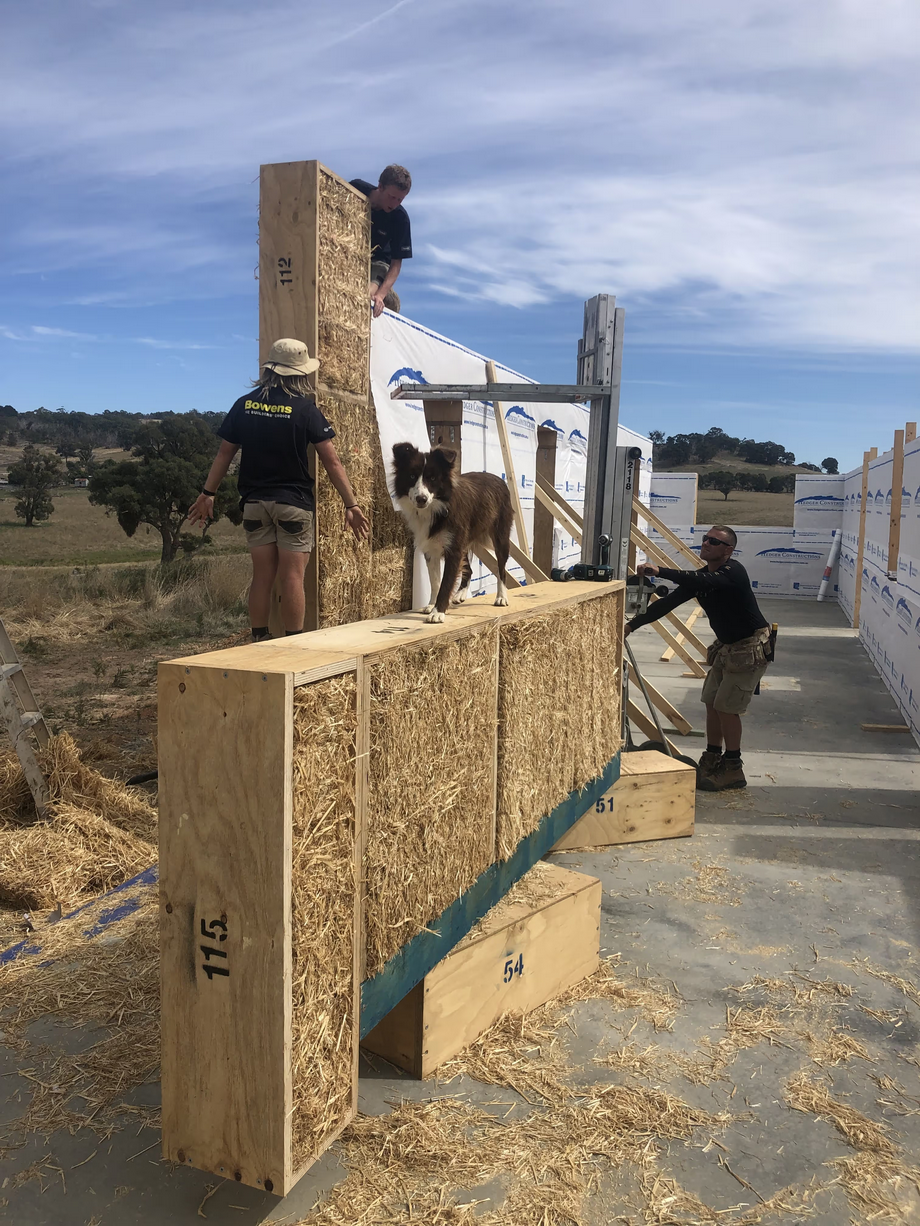
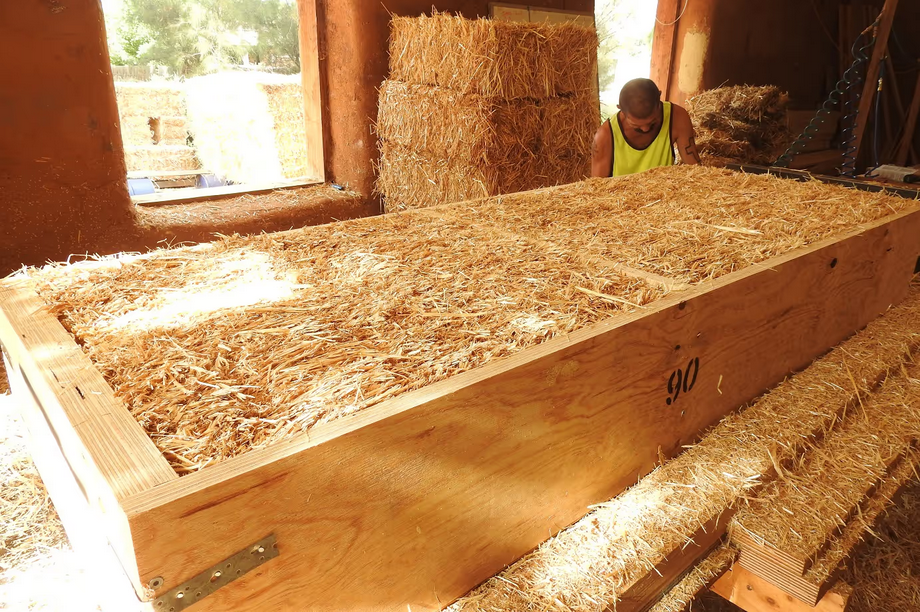
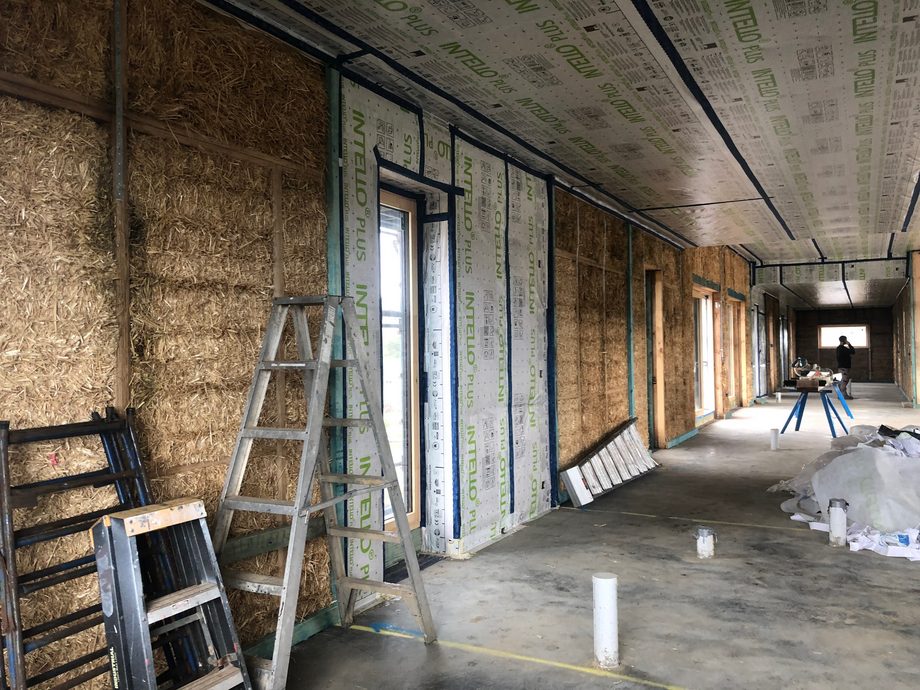
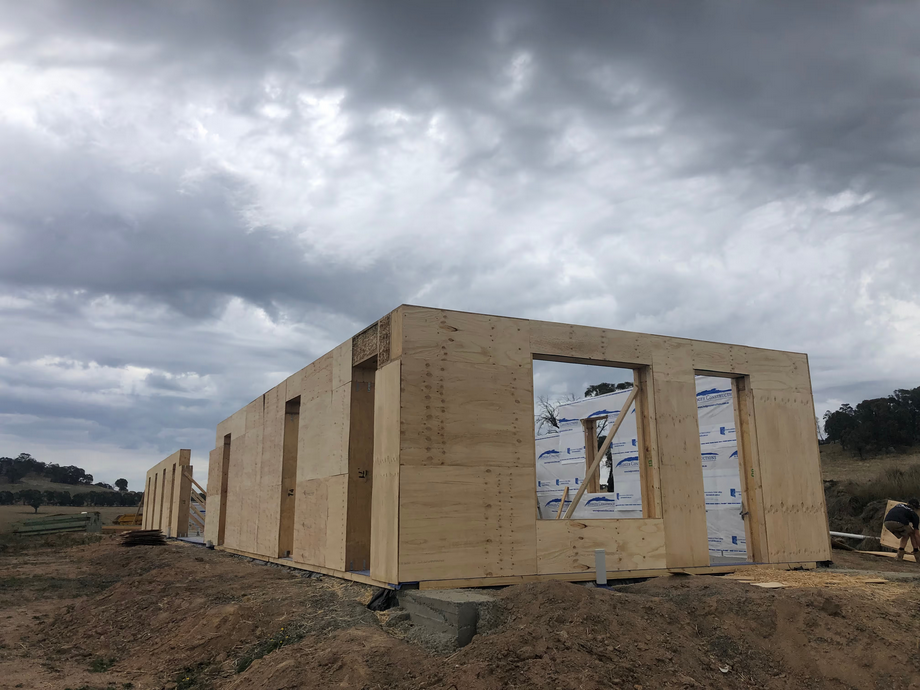
These prefabricated panels were manufactured off-site by Huff ‘n’ Puff Constructions based on precise shop drawings. Each panel was wrapped in plywood for safe transport and erected on-site like vertical modules, then sealed with breathable builder’s wrap. Internally, lime render was applied to enhance airtightness, with Intello membrane used in wet areas. The construction sequence allowed for a clean and efficient build, installing external walls and roof first, followed by internal systems.
Huff’n’Puff Haus — Finished Project
When we think about high-performance, energy-efficient homes, high-tech materials and complex systems might come to mind. But the Huff’n’Puff Haus challenges that assumption—proving that natural, bio-based materials like straw can meet, and even exceed, world-leading energy and sustainability standards.
The Huff’n’Puff Haus is Australia’s first Certified Passivhaus Premium strawbale home, designed by Envirotecture and built by Hedger Constructions. Located on 55 acres in Ruffy, Victoria, the home is fully off-grid and all-electric.
It’s an inspiring example of how thoughtful design, innovative prefabrication, and regenerative principles can come together to create a comfortable, resilient, and truly sustainable home.
Prefabricated Strawbale Panels: Innovation Meets Tradition
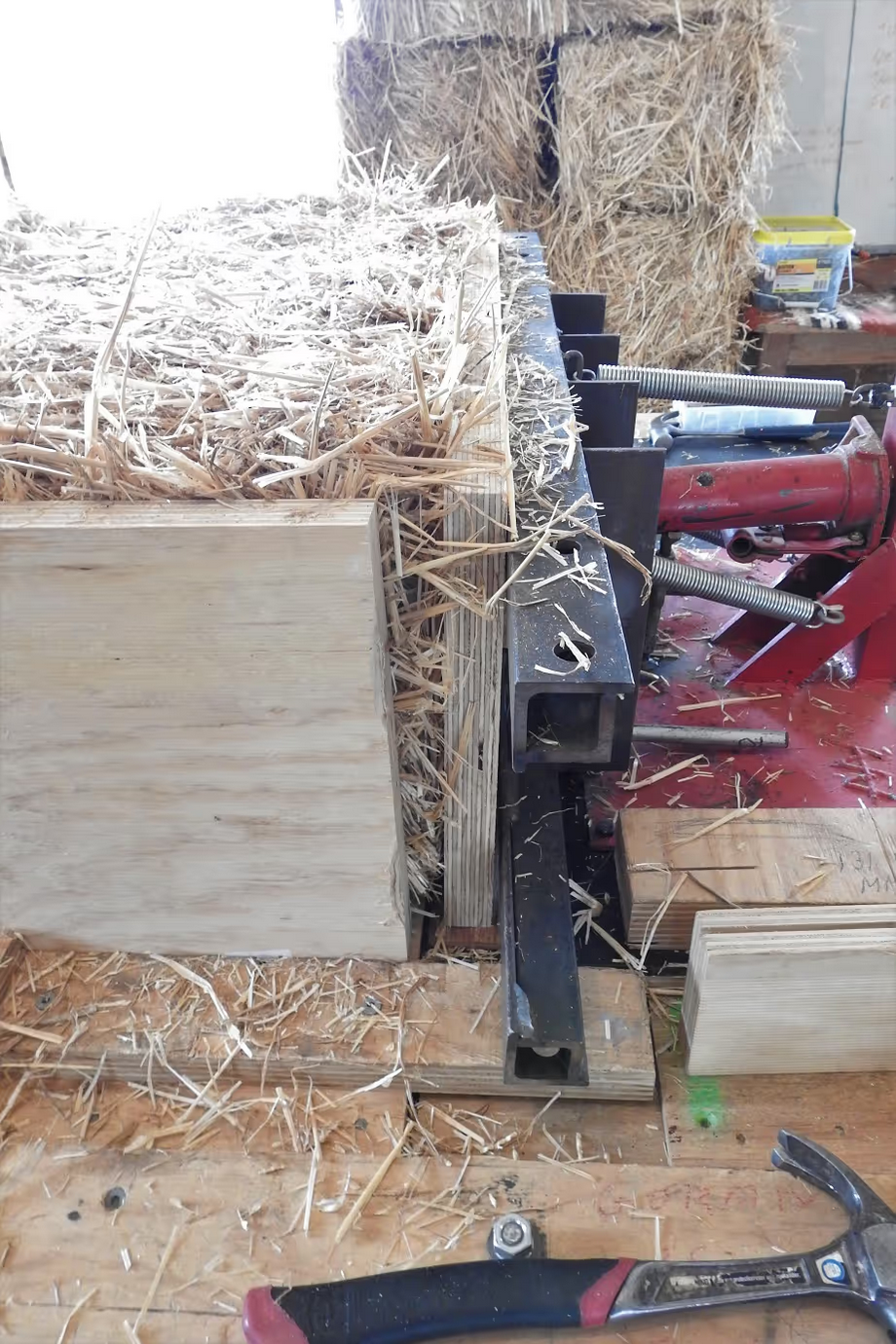
The build began with a unique construction system—Sit-Up strawbale panels. These were manufactured off-site by Huff ‘n’ Puff Constructions based on detailed shop drawings, ensuring precision and consistency. Each panel was essentially a large vertical module: strawbales compressed and fixed between timber frames, then wrapped in plywood for transport.
Once on-site, the panels were stood upright, fixed into place, and sealed with a breathable builder’s wrap. This prefabrication approach made the building process faster, cleaner, and more efficient, particularly for maintaining airtightness—a key requirement of Passivhaus standards.
Internally, most surfaces were rendered with lime plaster, chosen for its breathability and longevity. In wet areas, a smart Intello membrane was used to ensure moisture control without compromising airtightness. The result was a tight building envelope that still allows the home to “breathe”—a perfect pairing with natural materials like straw and timber.
What Makes Huff’n’Puff Haus Unique?
This home isn’t just an experiment—it’s a fully realised, off-grid, future-facing residence.
Here’s what sets it apart:
1. Certified Passivhaus Premium
The Passivhaus Premium certification is the highest standard of energy performance. To achieve it, a home must generate significantly more energy than it consumes. Thanks to a robust solar PV and battery system, the Huff’n’Puff Haus not only meets its own energy needs—it exports surplus power too.
2. Energy-Efficient, Climate-Responsive Design
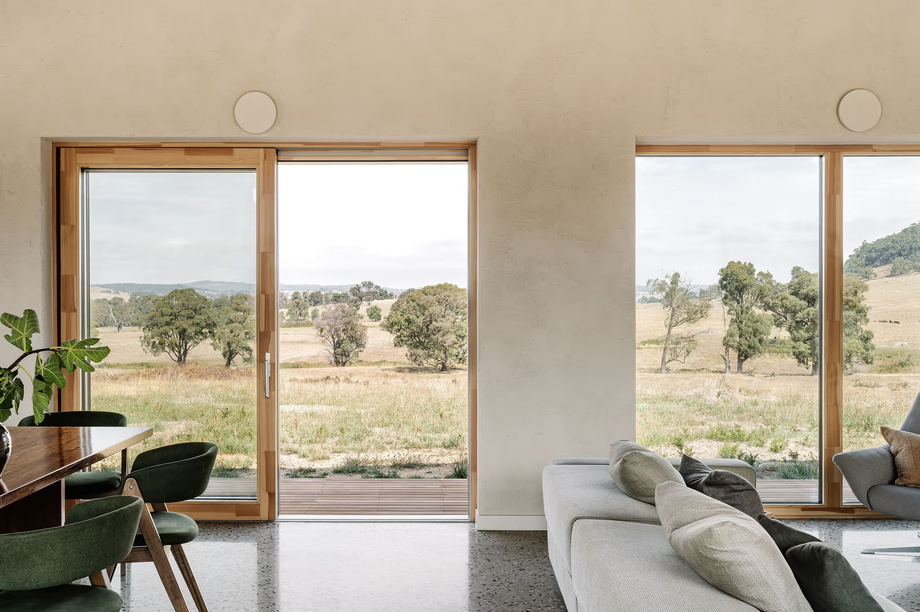
The home’s form is long and narrow—37 metres in length—strategically oriented to the north to optimise passive solar heating in winter and shading in summer. Triple-glazed windows and deep eaves work in harmony with the sun’s path, while polished concrete floors provide thermal mass that stores and releases warmth as needed.
3. High-Performance Envelope
The straw panels offer exceptional insulation (R7–R9), while airtight detailing ensures minimal heat loss. Air changes per hour (ACH) were tested at under 0.6 ACH50—meaning very little conditioned air escapes, drastically reducing heating and cooling demand. Mechanical ventilation with heat recovery ensures fresh, filtered air circulates year-round.
4. Natural, Regenerative Materials
Strawbales are a renewable agricultural by-product, locking up carbon during growth and continuing to store it for the life of the building. Paired with lime render, timber detailing, and low-toxicity finishes, the home prioritises indoor air quality and environmental performance.
5. Bushfire and Off-Grid Resilience
Straw may seem flammable, but when densely packed and rendered, it achieves excellent fire resistance. The outer layer of fibre cement sheeting adds extra protection. Off-grid systems include solar panels, battery storage, rainwater harvesting, and on-site wastewater treatment—supporting self-sufficiency and disaster resilience.
Thoughtful Living, Room to Grow
The house was designed for flexibility as well as performance. A timber-lined breezeway separates the owner’s wing from guest or future family space, allowing for multigenerational living or adaptable zoning over time. Expansive windows frame views of the surrounding bushland and bring the outdoors in, enhancing connection to place and seasons.
Natural materials continue throughout the interiors: timber-lined ceilings add warmth and acoustic softness, while window seats set into deep reveals offer cozy spots to sit and soak in the sun.
Lessons From the Huff’n’Puff Haus
This project proves that prefabrication doesn’t have to mean plastic and steel. With care, craftsmanship, and collaboration, it’s possible to combine natural materials with high-tech design principles to produce homes that are not only energy-positive but deeply connected to their environment.
The Huff’n’Puff Haus is more than a house—it’s a case study in how we can build differently. It invites us to rethink what high-performance homes look like and reminds us that sustainability starts with design—long before the first panel is lifted into place.
Final Thoughts
Strawbale building has been around for over a century, but projects like this show it has a bright future. When paired with modern standards like Passivhaus, prefabricated straw panels offer a powerful solution for climate-resilient, healthy, and beautiful homes.
Whether you’re an architect, owner-builder, or simply dreaming of a more sustainable lifestyle, the Huff’n’Puff Haus stands as a compelling example of what’s possible when innovation meets intention.
Thanks to Envirotecture for kindly sharing their blog and working pics with us.
You can get in touch with them here.