Cob, Straw Bale, Hempcrete or Rammed Earth: Which Natural Building Material Is Right for You?
2026-10-12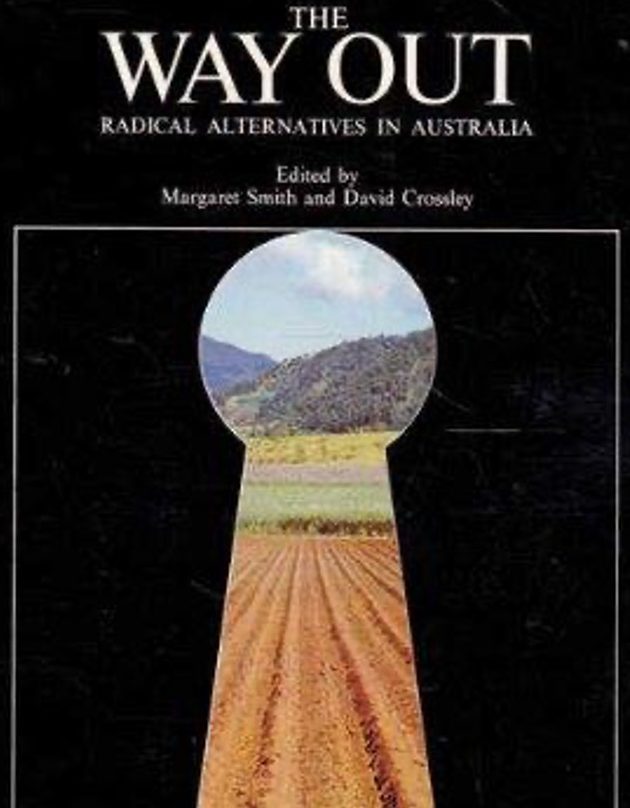
In the late 1960s and early 1970s, thousands of young people across the United States began leaving cities in search of a different way of life. Drawn by ideas of self-sufficiency, environmental responsibility and independence from mainstream consumer culture, they headed into forests and rural landscapes, where they attempted to build a new world from the ground up. Armed with books, hand tools and publications such as the Whole Earth Catalog, they experimented with alternative homes, communal living, growing food and living more closely with the land.
Their handmade houses were more than places to live. They were expressions of a broader desire to change how people related to each other, to the environment and to the systems that shaped everyday life. The recently documented homes featured in Handmade Utopia: Back-to-the-Land Architecture in Northern California, by David Jacob Kramer and photographer Michael Schmelling, capture this distinctive period of experimentation. The book brings together photographs, oral histories and archival material to tell the stories of people who built homes that reflected their values, skills and aspirations.
But this impulse to build differently was not confined to North America. Australia had its own version of the back-to-the-land movement, with a particularly distinctive story unfolding around Melbourne from the 1940s onwards. Here, a growing interest in earth building, environmental living and self-sufficiency helped shape a generation of homes and communities that continue to influence natural building today.
Australia’s mudbrick movement: building a different kind of home
In post-war Australia, conventional housing increasingly reflected the priorities of a modernising nation, with standardised suburban development, manufactured materials and an emphasis on progress through industrialisation. Yet some architects, builders, artists and aspiring owner-builders began exploring alternatives, looking to the landscape itself for inspiration and materials.
One of the most influential figures was Alistair Knox, a Melbourne-based draftsman and builder who helped popularise mudbrick construction in the decades following the Second World War. Influenced by architects such as Frank Lloyd Wright and Walter Burley Griffin, Knox believed buildings should respond to their natural surroundings rather than impose themselves upon them. Earth, timber, stone and other locally available materials offered a way to create homes that felt connected to the Australian landscape, particularly the eucalypt forests and rolling hills around Eltham and the Yarra Valley.
Knox’s approach was about more than choosing mudbrick instead of conventional brick. His philosophy, which he described as “living in the environment”, connected building with a broader set of social, ethical and environmental ideas. The home could be a creative expression of the people who lived in it, a response to the character of a place and a practical demonstration that a different way of living was possible.
By the 1950s and 1960s, mudbrick houses were becoming an increasingly visible feature of communities around Melbourne’s north-eastern fringe. Often built by their owners, these homes drew on traditional earth-building techniques while reflecting contemporary ideas about architecture, landscape and domestic life. What later became known as natural building was taking shape through practical experimentation, local knowledge and a willingness to do things differently.
Bend of Islands: when building became environmental action
One of the clearest examples of this relationship between housing and environmental values emerged at Bend of Islands, east of Melbourne.
In the mid-1960s, aspiring artists Neil Douglas and Abbie Heathcote were drawn to the red box forests along the Yarra River. After living in basic shelters that offered little protection from the weather, they began planning a cottage-style mudbrick home using natural materials and colours that would blend with the surrounding gum trees. Their experiences, later recorded in Abbie Heathcote’s The Book of Earthly Delights, describe a process in which a home gradually emerged from experimentation, hard work and a close relationship with the landscape.
Their story was not simply about building a house. The area they had chosen to call home was threatened by proposals for dams to meet Melbourne’s growing water needs. Residents and supporters campaigned against the plans, and the struggle helped establish a different vision for the area: one that sought to protect its environmental values while allowing low-impact residential living.
Bend of Islands subsequently became the first Environmental Living Zone in Victoria, creating a planning framework intended to balance residential development with environmental protection. This was a significant moment because it recognised that the relationship between homes and landscapes could be reflected in formal planning controls, rather than left entirely to individual landowners.
The story also reveals an important distinction between simply building with natural materials and practising environmental living. A mudbrick house might use local resources and sit comfortably within its surroundings, but the wider questions concern how land is occupied, how vegetation and biodiversity are protected, and how development affects the ecological systems on which communities depend.
At Bend of Islands, these questions became part of the identity of the place itself.
The Australian back-to-the-land movement
By the early 1970s, the desire to leave urban life behind was becoming more widespread across Australia. People moved to rural and semi-rural areas seeking greater autonomy, a closer connection with nature and a way of life less dependent on consumer culture. Some established communal settlements, while many others bought small acreages and attempted to build homes, grow food and provide for themselves.
The 1973 Aquarius Festival in Nimbin became an important symbol of this broader cultural shift. Bringing together alternative ideas about art, community, spirituality and environmental living, it helped make the search for different ways of living more visible. Two years later, Margaret Smith and David Crossley’s book The Way Out: Radical Alternatives in Australia brought together ideas about alternative lifestyles, reduced material consumption, ecological awareness and more fulfilling creative lives.
The movement was diverse, and its participants did not all share the same motivations. For some, the appeal was self-sufficiency and practical independence; for others, it was environmental concern, creative freedom, community or a rejection of the expectations of conventional suburban life. Many were learning as they went, with limited money, few specialist skills and an idealistic belief that they could build much of what they needed from the resources around them.
Jaki and Jon Lockyer’s experience illustrates this spirit. In 1971, they left their comfortable lives in Sydney and purchased 180 acres of former pasture and rainforest on the mid-north coast of New South Wales. They arrived with little money, few resources and limited practical experience, but with a determination to learn how to live on the land. Jon later described the property as a collection of resources they could gradually understand and use, given enough time, energy and thought.
For the Lockyers, building a home was part of a much larger process of learning how to live differently. It involved developing practical skills, adapting to the landscape and reconsidering everyday relationships with work, resources and other people. Their experience also unfolded alongside broader social changes, including the women’s liberation movement, which opened up new possibilities for women to challenge established expectations and shape their own lives.
This history complicates the familiar image of the back-to-the-land movement as simply a group of young people retreating from society. For many, the move was an attempt to gain greater control over their lives and to put different values into practice.
Building your own home as an act of independence
For those who joined the back-to-the-land movement, building a house was often one of the most tangible ways to put their beliefs into action. Rather than relying entirely on commercial housing markets, conventional building materials and specialist contractors, people experimented with what they could make, gather, salvage or learn to construct themselves.
Mudbrick was particularly suited to this approach in parts of Victoria. Earth could often be sourced locally, the basic techniques were accessible to people willing to learn, and building could take place gradually as time and resources allowed. The process also encouraged a different relationship with materials. Soil was no longer simply something to excavate or move out of the way; under the right conditions, it could become the walls of a home.
This did not mean that every owner-built earth house was cheap, easy or technically successful. Building with earth requires an understanding of materials, structural requirements, moisture management and construction detailing. Owner-builders also had to contend with limited experience, long hours and the challenges of creating durable homes with whatever knowledge and resources they could access.
Yet the process carried meaning beyond the finished building. Learning to build could be a way to reduce dependence on the marketplace, develop practical confidence and create a home that reflected personal priorities rather than standardised expectations. The house became what historian Meredith Fletcher has described in her work on the movement as a powerful expression of self: a physical record of the decisions, labour and values that shaped its creation.
In this sense, the Australian mudbrick movement and the American homes documented in Handmade Utopia share a common thread. Both reveal how architecture can become part of a wider search for autonomy, authenticity and a more deliberate relationship with the world.
From handmade homes to environmental living
The legacy of these experiments extends beyond individual buildings. In Australia, the early mudbrick movement helped establish natural building as a recognised architectural and cultural alternative, while places such as Bend of Islands demonstrated how housing, conservation and planning could be considered together.
The ideas that emerged during this period also sit within a longer history of earth building across Australia and New Zealand. Earth construction had been used for generations, including in regional settlements, before falling out of favour as industrial materials and modern construction methods became more dominant. The renewed interest in mudbrick during the post-war decades was therefore not simply the invention of a new technique. It was a re-engagement with older building knowledge, reshaped by contemporary architectural ideas and changing social values.
Today, natural building encompasses a much wider range of approaches, including straw bale, hemp-lime, light straw clay, rammed earth, cob, stone, earthbag and the creative reuse of existing materials. Some methods draw directly on traditional practices; others combine natural materials with contemporary structural systems, engineering and building science.
The questions remain remarkably familiar. How can a home respond to its climate and landscape? What materials are available locally? How can buildings be durable, comfortable and resource-efficient? How much can people do themselves, and what knowledge or professional support do they need? And how might the design of homes contribute to healthier environments and more resilient communities?
These are practical questions, but they are also questions about the kind of lives we want our homes to support.
What can we learn from the back-to-the-land builders?
It is tempting to romanticise the back-to-the-land era as a time when people simply left the city, found a patch of land and built their dream home. The reality was more complicated. Many people faced difficult living conditions, limited resources, technical challenges and tensions between their ideals and the demands of everyday life. Their experiments were not all successful, and the circumstances that made them possible were not equally available to everyone.
But their stories offer valuable lessons for contemporary natural building. They show that building differently often begins with questioning assumptions about what a home should be, how it should be made and what it means to live well. They remind us that practical skills, local resources and shared knowledge can open up possibilities that are easy to overlook when conventional construction is treated as the only option.
They also demonstrate that a building is never just a collection of materials. It is connected to land, planning, ecology, economics, relationships and the daily practices of the people who inhabit it. The most meaningful examples of environmental building emerge when these elements are considered together.
Perhaps the most enduring lesson is that the search for a different way of living has always been about more than the house itself. From the mudbrick homes of Victoria to the handmade dwellings of Northern California, people have used building as a way to explore questions of independence, creativity, community and environmental responsibility.
Half a century later, those questions have not disappeared. If anything, the challenges of climate change, housing affordability, resource use and energy efficiency make them increasingly relevant. We may have new materials, better building science and different regulatory frameworks, but the underlying challenge remains: how do we create homes that work better for people and the places they inhabit?
The back-to-the-land builders did not provide one answer. They showed that there are many ways to begin asking the question.
Further reading
- David Jacob Kramer and Michael Schmelling, Handmade Utopia: Back-to-the-Land Architecture in Northern California, published by Edition Patrick Frey and D.A.P.
- Abbie Heathcote, The Book of Earthly Delights: Living in the Bush with Neil Douglas and Abbie Heathcote (1976).
- Alistair Knox, Living in the Environment (1975).
- Margaret Smith and David John Crossley, The Way Out: Radical Alternatives in Australia (1975).
- Ted Howard, Mud and Man: A History of Earth Buildings in Australasia (1992).
- Jeffrey Jacob, New Pioneers: The Back-to-the-Land Movement and the Search for a Sustainable Future (1997).