Tadelakt: The Ancient Moroccan Finish That Still Breathes Beauty
2025-11-03
Let’s talk: Vapour Permeability vs. “Breathability” in Clay & Lime Surfaces for Natural Homes
2025-11-17
With Kyle Holzhueter & Pamimomi Permaculture, in partnership with Somakosha School
Kumenan, Okayama Prefecture — October 25 – November 2, 2025
Nestled in the green folds of Okayama’s mountainous countryside, the Pamimomi Permaculture Center is more than a farm — it’s a living classroom. Here, under the guidance of classically trained plasterer, natural builder. permaculturist and educator Kyle Holzhueter, a group of eager learners came together to explore the fine art of traditional Japanese plastering — a craft that balances structure and spirit, patience and precision. I was lucky enough to be able to join as a student, and experience this immersive and intensive introduction into the thinking, philosophy and community building that is Kamimomi.
The workshop, held in collaboration with Somakosha School, offered nine days of hands-on immersion in the language of earth, lime, bamboo, and water. Each day brought new textures, lessons, and quiet discoveries — all rooted in the rhythm of the land.

Day 1: Arrival and the Living Classroom
Participants arrived in the Morning, driving up the windy rural roads deep into traditional farmland of Okayama. After an introduction, the first gathering began not with plaster, but with a tour of Pamimomi — a working organic permaculture farm where every structure, garden bed, and water channel speaks of design in harmony with nature.
Kyle led us through existing dwellings and outbuildings, pointing out walls and finishes created by previous workshop participants. Some shone with the smooth, pearly glow of shikkui lime plaster; others revealed the rich textures of earthen and bamboo construction. In one traditional farmhouse, we examined a variety of plaster types — lime, earth, and polished finishes — each showing a different way that natural materials breathe and age. We learnt about the practice of earth in relation to grain stores, or Kura, and how that thinking combined with practical efficiency and can be seen throughout Japan.
After the first of many local organic lunches prepared with love by Mika-San, Yuka and crew, the orientation gave way to conversation — about the history of plastering in Japan, the philosophy behind natural building, and the deeper lesson of craft as care. Tools were passed out, names exchanged, and a quiet excitement filled the air for the week ahead.
Day 2: Harvesting Bamboo and Building the Lattice
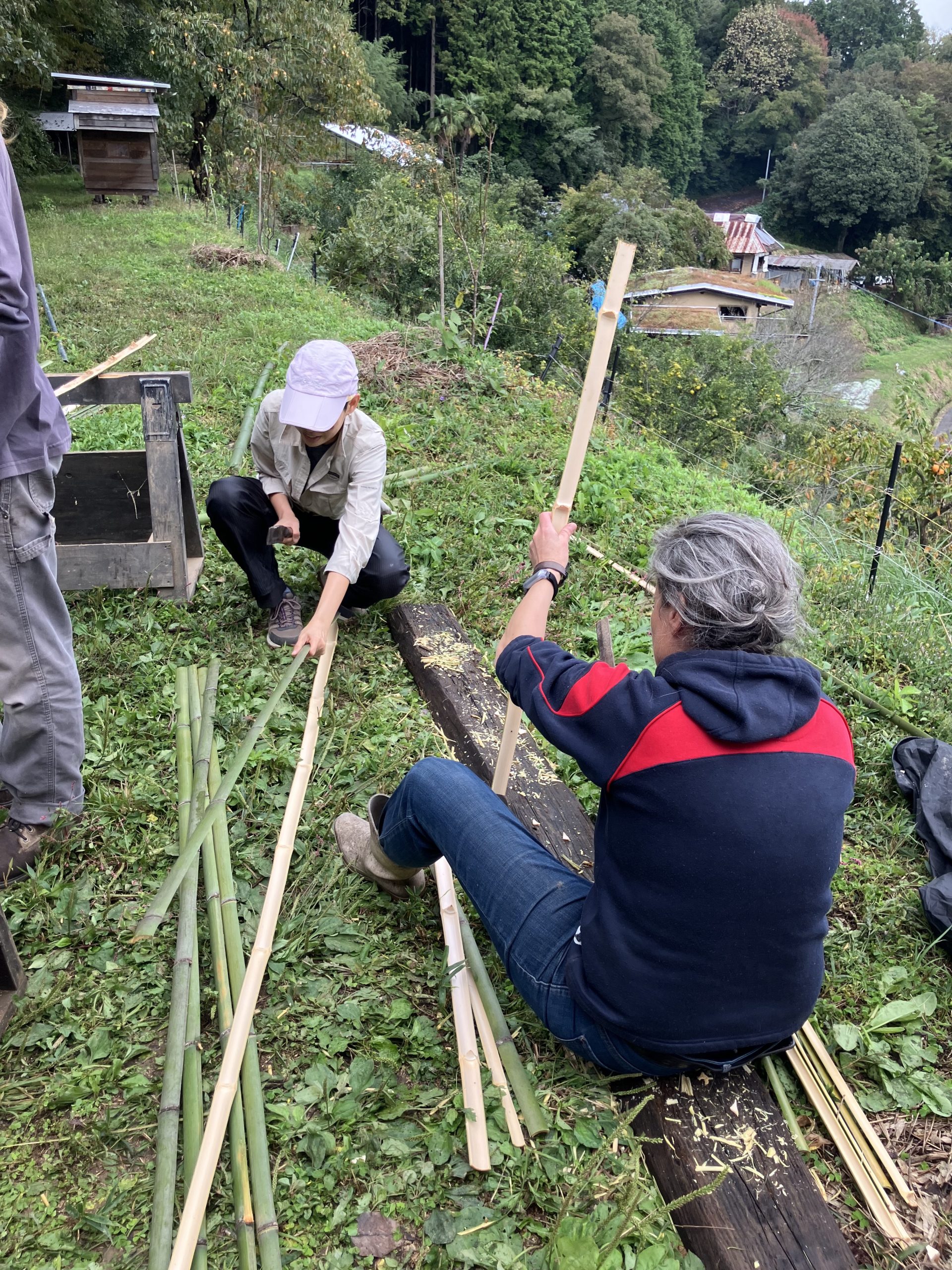
Morning began in the forest and as the previous night’s rain still clung to the undergrowth we learned how to harvest bamboo — selecting strong, straight culms, cutting them by hand, sizing them down to the lengths we needed and hauling them from the grove. Back at the site, the bamboo was split and shaped, its inner fibers gleaming pale gold in the morning sun.
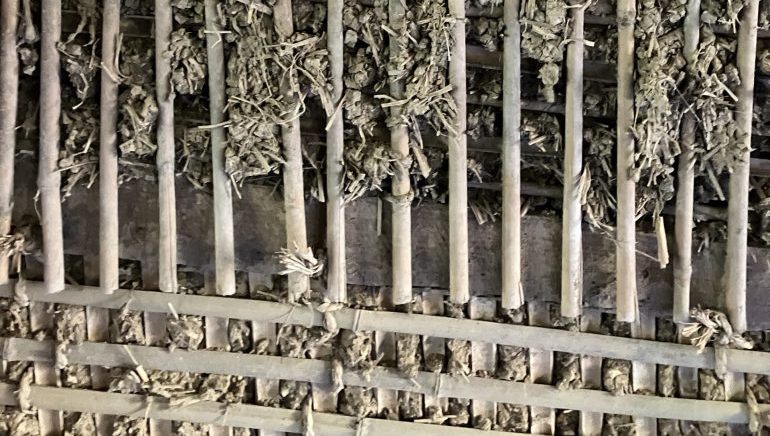
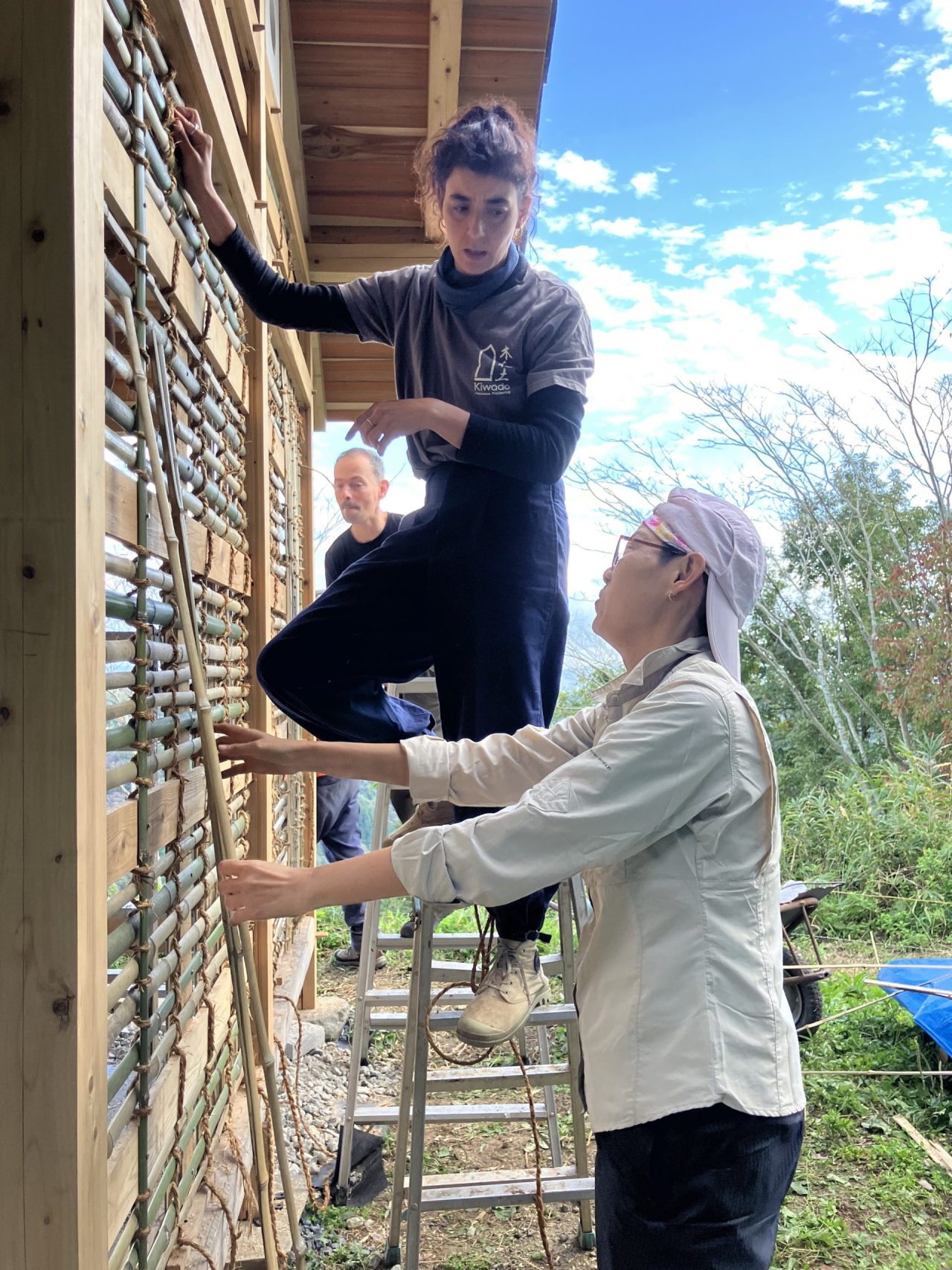
Using hemp rope and traditional tying methods, we began weaving the bamboo lattice, or takekomai, that forms the foundation for earthen walls. Wetting down the bamboo made it supple, easier to bend and secure. The rhythm of tying — pull, loop, twist, knot — became almost meditative.
By afternoon, the skeletal frames began to take form, each one a web of golden bamboo ready to receive its first layers of earth. As the day ended, our hands were sticky with clay and rope fibers, and our minds full of new respect for this ancient collaboration between plant and wall.
Day 3: The Base Coat – Earth and Structure
With the lattice complete, it was time to bring in the earth. Buckets of local soil were mixed with sand, straw, and water — stirred, folded in the hopper until the mixture reached the right consistency: soft yet firm, sticky but not wet.
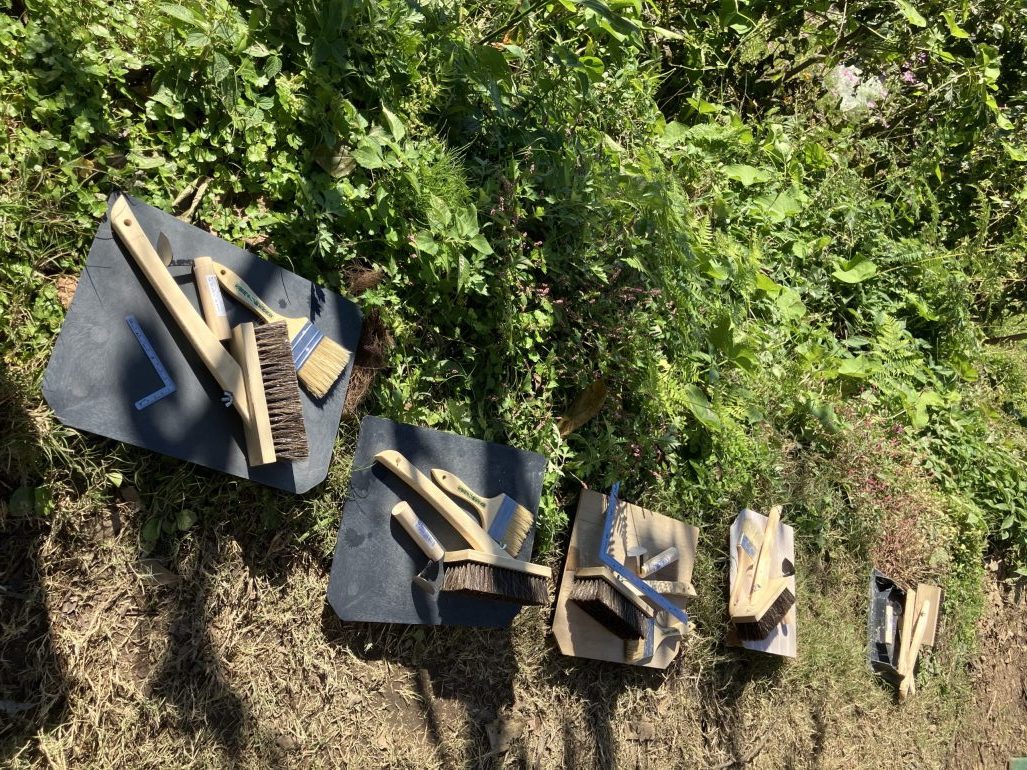
The first layer, or base coat plaster, was pressed into the lattice, filling the gaps and building structure. This rough coat, often overlooked, is what gives the wall its breath and strength. The work was slow, rhythmic, and deeply grounding — like working bread dough or clay pottery. For many it was their first experience using hawks and trowels, and we all needed guidance on hand position and method to get as much as we could on the lattice and not on the beams and frames below.
In the afternoon, we refined our technique, learning to read the wall by touch and sound — the subtle scrape of the trowel, the dull thud of a patch too thick, the gentle give of a layer just right. With help from Maria the experienced intern, we felt supported to learn as we went. We finished with inserting mesh to give more structure and strength to the next coat.
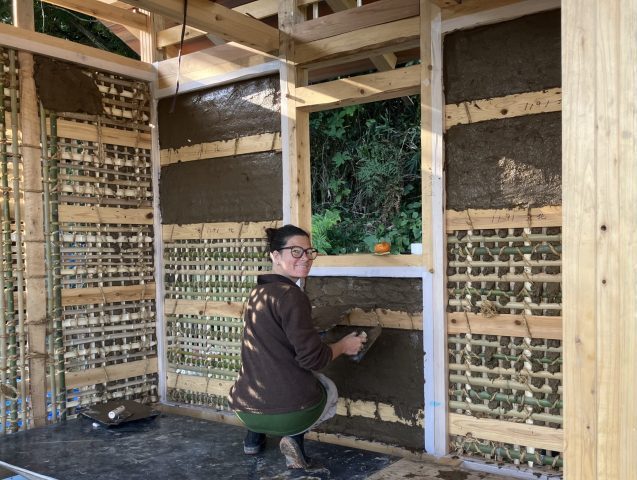
Day 4: The Arakabe – Go-Around Coat
The next morning began with a demonstration of the arakabe (荒壁) — sometimes called the “go-around coat.” This transitional layer bridges the rough earth and the smooth finish coats, uniting strength with beauty.
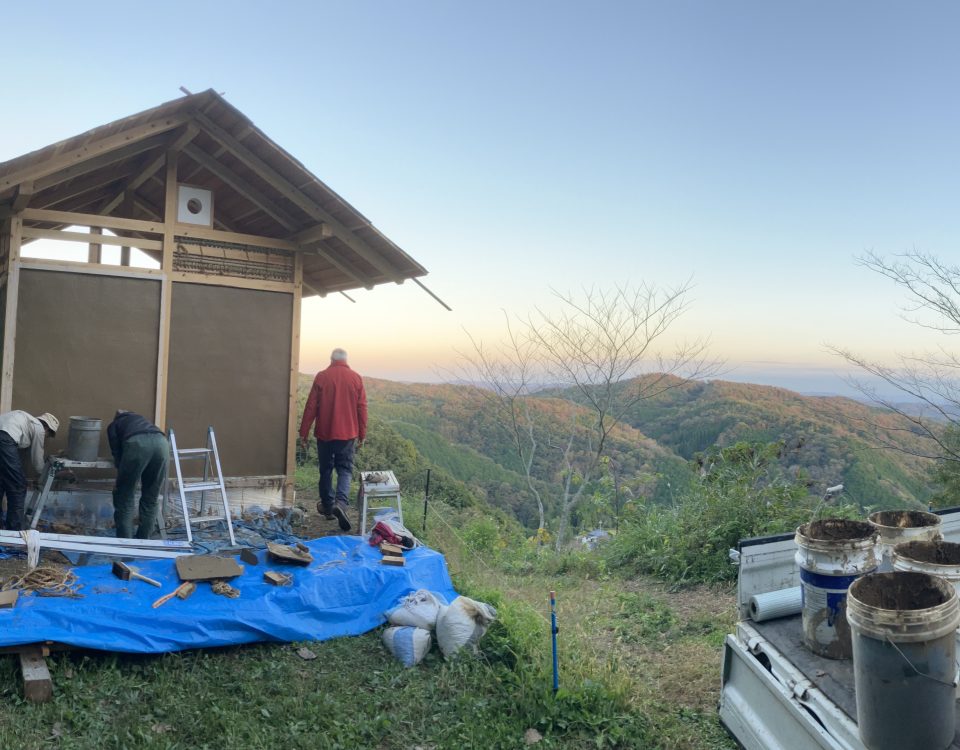
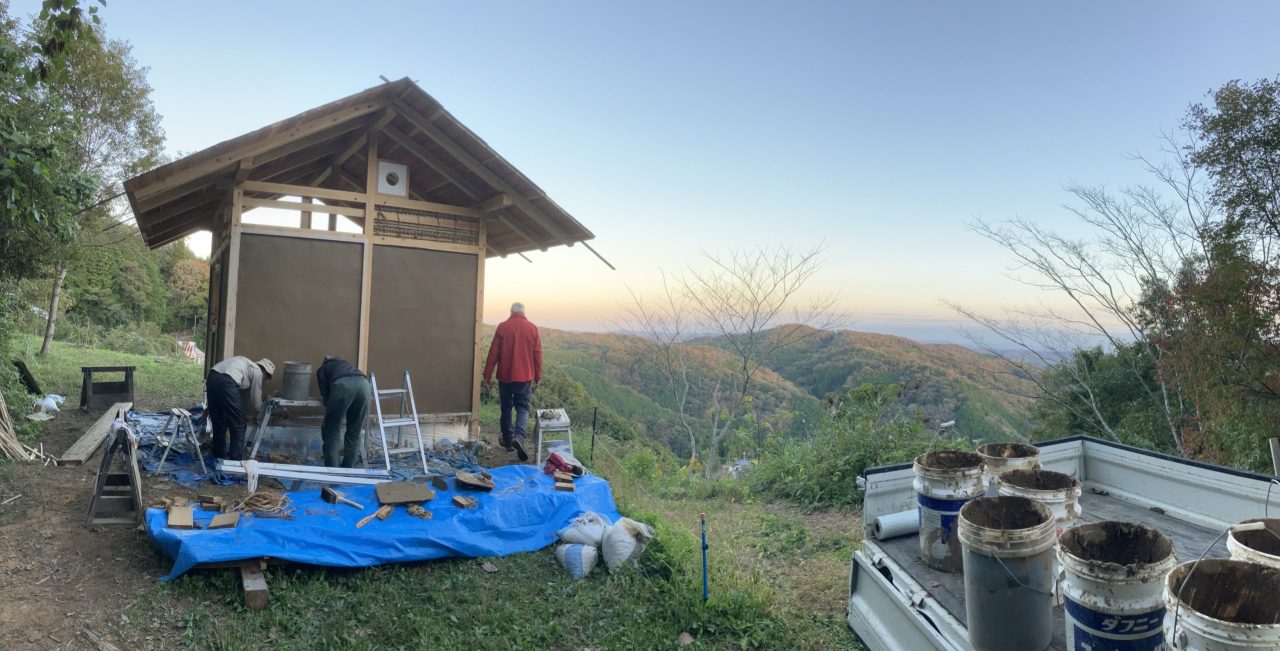
Kyle showed how to mix the materials — earth, sand, and chopped straw — with just the right moisture, then apply it in sweeping motions that both compress and caress the surface. The group worked in pairs, moving around the walls, passing tools, and learning to trust their instincts. The walls began to change character — from rough and rustic to softly sculpted, glowing with potential. It was a pleasure to take what had been a beautiful timber frame on the tiny house, take shape into walls and a solid and beautiful home for their new carpenter in residence, Co He San.
Day 5: The Brown Coat – Depth and Texture
By the fifth day, we’d developed a rhythm — materials mixed, walls tended through the day, tools cleaned at sunset. This session focused on the brown coat, another intermediate layer that deepens the wall’s texture and stability.
Hands had grown surer, and movements slower, more deliberate. As each layer dried, the wall began to breathe, taking on subtle undulations that caught the shifting light. What once seemed like mere technique now revealed itself as quiet artistry. For most participants, seeing the structure take place and evolve using materials taken from the ground around us was a total revelation.
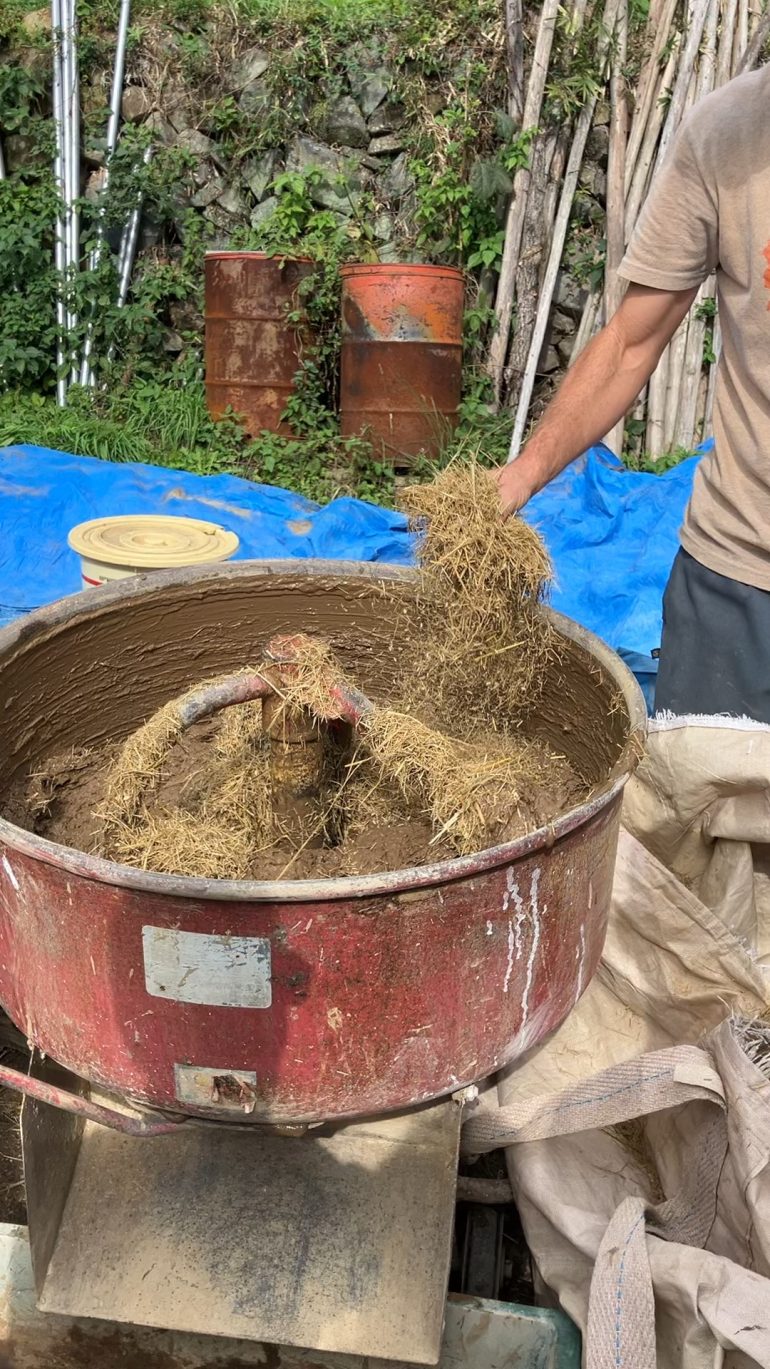
Days 6–8: Tadelakt, Exposed Aggregate, and Earth Bag Finishes
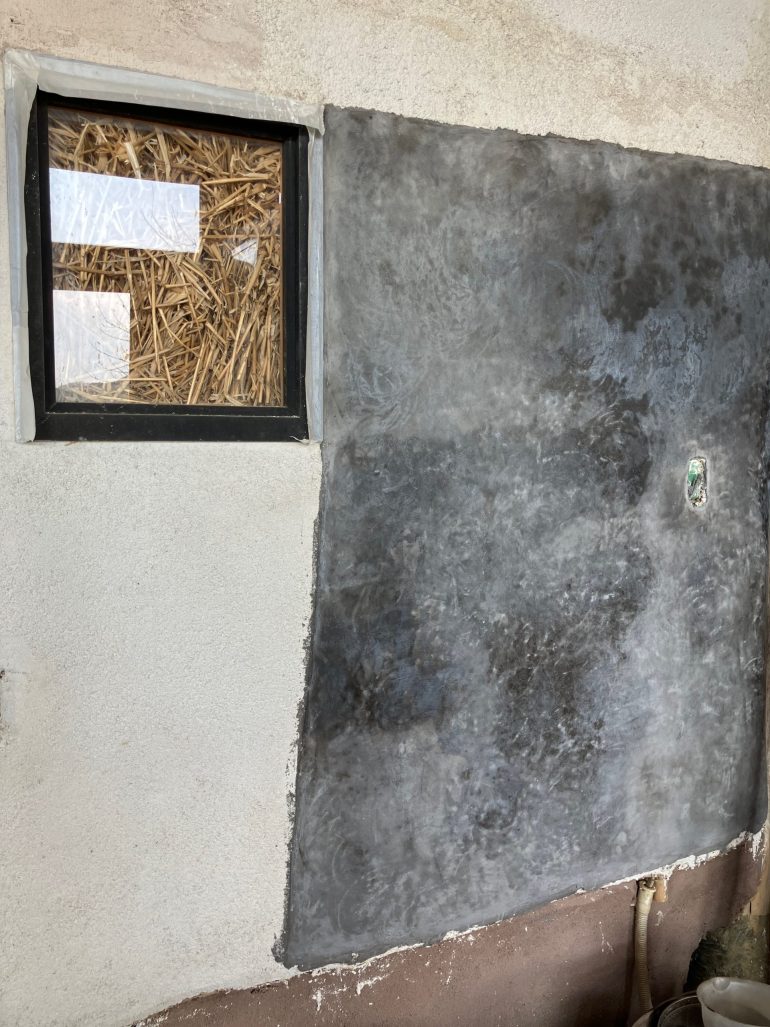
The final stretch of the workshop brought a fusion of techniques., we experimented with tadelakt, the Moroccan lime plaster known for its smooth, water-resistant sheen — polished with stones until it gleamed like marble. We created exposed aggregate surfaces and cow-manure earth finishes, testing the tactile range of natural materials.
One team applied base coats over earthbag walls, while others worked on bathroom finishes — spaces where beauty and function meet. Each task offered new lessons: patience in polishing, awareness of drying times, the importance of timing between layers.
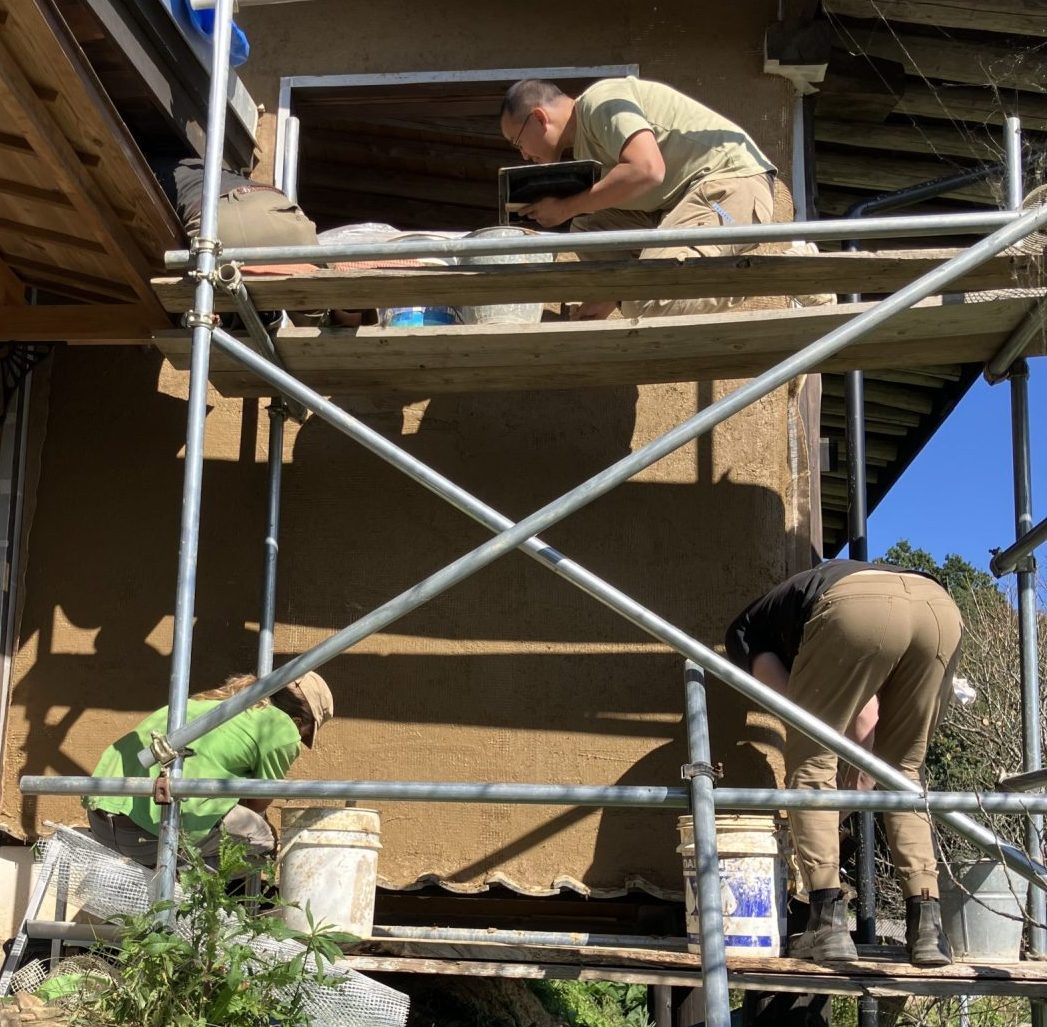
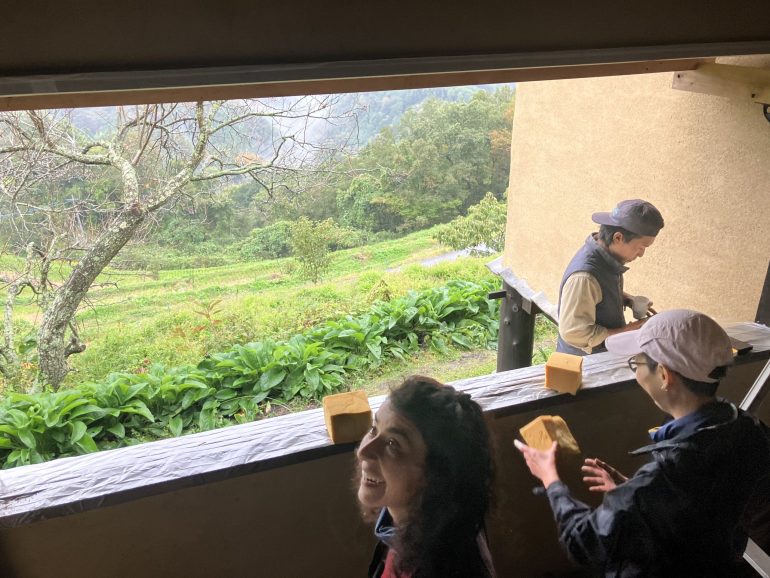
As the sun dipped behind the hills, the group gathered for shared meals and laughter. On the final evening, the earthen oven roared to life, baking pizzas as stars shimmered overhead — a celebration of all that had been shaped by hand, heart, and soil.
A Living Craft
By week’s end, the walls on multiple spaces stood complete — textured, luminous, and alive. What had begun as bamboo and earth was now architecture imbued with intention.
Through Kyle’s teaching — blending the scientific precision of his research with the quiet wisdom of Japanese craftsmanship — participants learned not only how to plaster a wall, but how to listen: to materials, to each other, and to the land itself.
In a world driven by speed and surface, traditional Japanese plastering reminds us that true beauty lives in the layers — of wall, of time, and of touch.
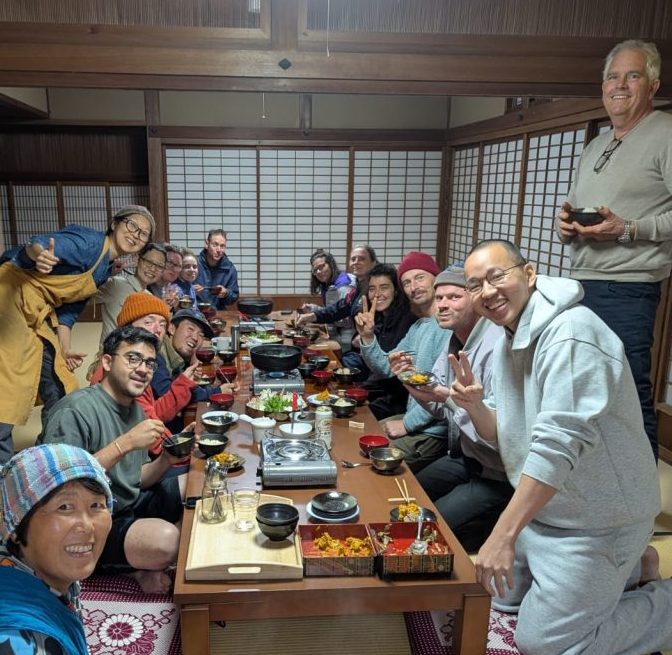
i am both grateful and humbled to have the opportunity to join this amazing group and experience, one I will cherish as I move forward in my building journey.I appreciate that what I thought I knew about plastering was only the tip of a giant cow dung mound of learning refining and understanding that is needed to improve both choice, application and ensure longevity for potential clients and myself.
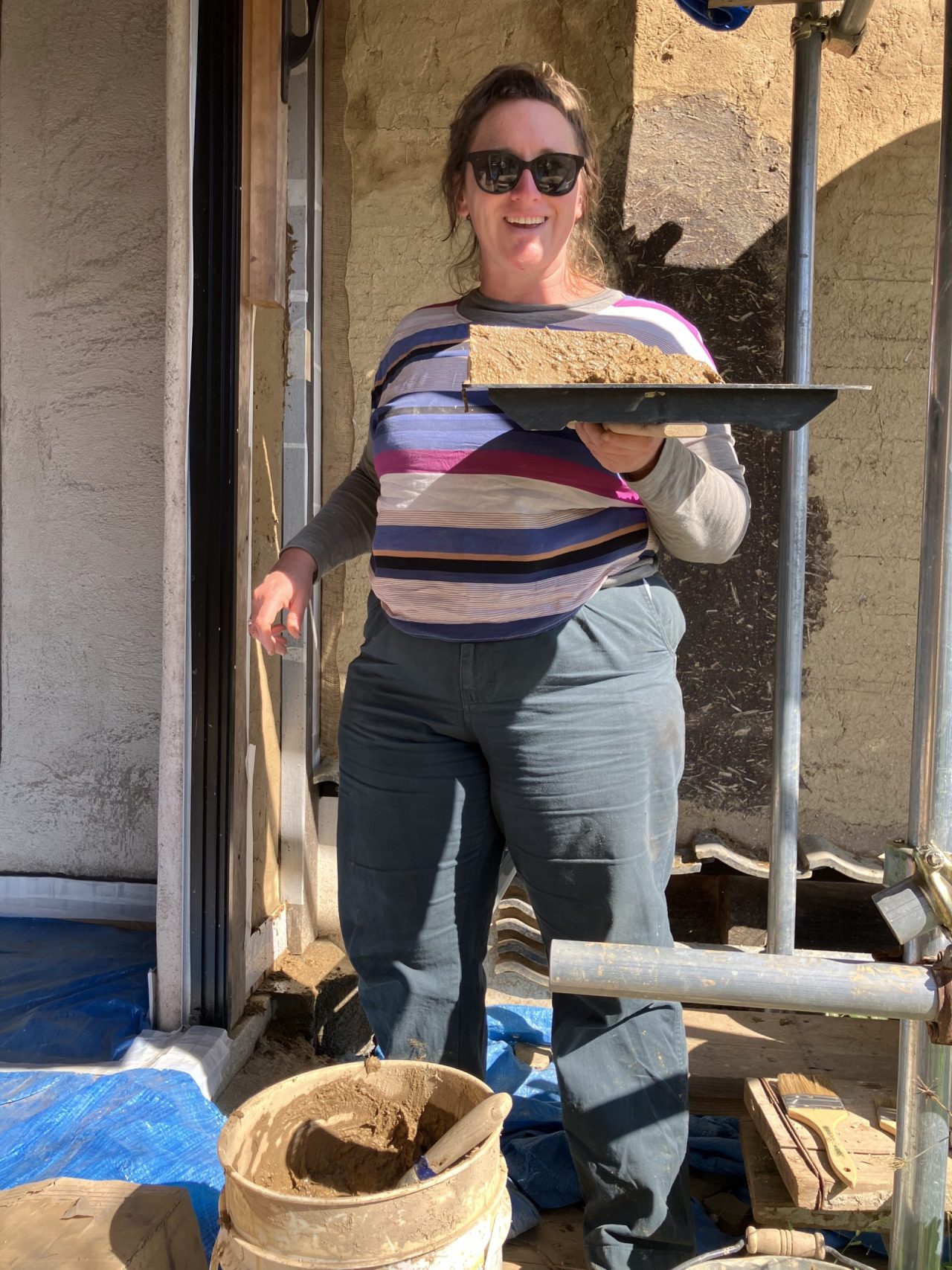 The teachings will be with me more many years to come and a new network of global natural builders has been made and connections will continue through our work and travels.
You can check out the work and opportunities of Permaculture Kamimomi here and the Somakosha school here.
Kyle also has a website devoted to all things plaster and earth here.
Our social media will be watching for further opportunities to learn with Kyle so check us out and follow here.
Arigatō gozaimasu