Rammed Earth Building – a long legacy in Australia
2025-09-04
Empowering Public Servants: The 2025 Passivhaus Incubator Course
2025-09-10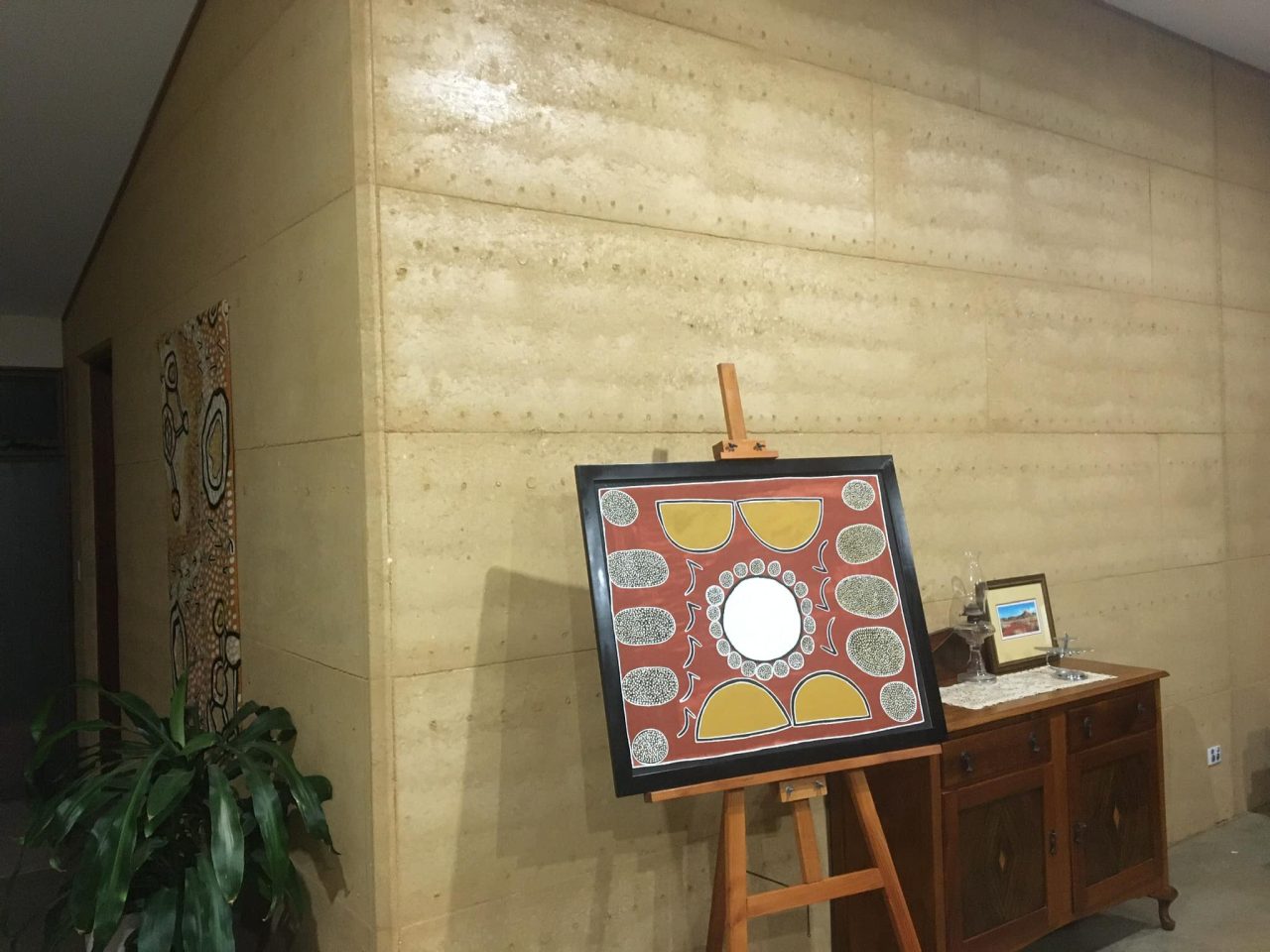
Rammed earth is gaining fresh momentum in Australia as a sustainable, durable, and visually striking building method.
Though not yet formally codified in the National Construction Code, it continues to thrive—especially in Western Australia. With deep roots and growing modern relevance, rammed earth blends tradition with performance. Here’s what you need to know about current standards, challenges, and the WA advantage.
1. National Construction Code (NCC) / Building Code of Australia (BCA)
-
No specific national code for rammed earth
The NCC (or BCA), which governs building standards across Australia, does not include a dedicated or prescriptive standard for rammed earth construction. This absence discourages some professionals due to uncertainty around compliance -
Performance-based compliance required
To meet NCC requirements (structural integrity, weather resistance, fire safety, energy efficiency), rammed earth must typically be addressed via Performance Solutions, involving engineering validation, precedent case studies, or testing Intertek Inform
2. CSIRO Bulletin 5: Earth‑Wall Construction
-
Historically referenced in the BCA, CSIRO Bulletin 5 (Earth‑Wall Construction, 4th Edition) provided early design and testing guidance:
-
A 250 mm earth block wall achieved a 4-hour fire resistance rating;
-
300 mm monolithic walls offered enhanced strength and durability while avoiding mortar joint weaknesses Rammed Earth
-
-
But note: Bulletin 5 was removed from the BCA in 2008 and is no longer current South Australia Government.
3. Australian Earth Building Handbook (HB 195)
-
HB 195, titled The Australian Earth Building Handbook (published by Standards Australia, Committee BD‑083), is a current and authoritative reference offering best practices on:
-
Soil selection, preparation, and mix design
-
Construction detailing, formwork, movement joints, and maintenance
-
Durability, strength design, footings (including guidance referencing AS 2870), testing, and even seismic considerations for lightly-loaded buildings (single- and two-storey)
-
This handbook is widely recognised among building professionals for rammed earth design and detailing.
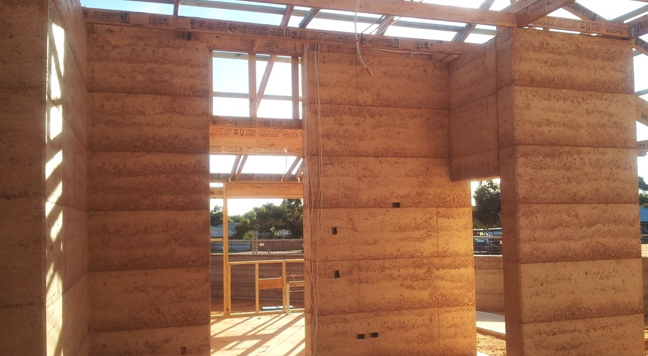
4. Structural Standards & Other Guidelines
-
Compression strength requirement
Building codes require rammed earth walls to meet a characteristic compressive strength of at least 2 MPa. Many modern constructions exceed this significantly -
Bushfire (AS 3959) compliance
Rammed earth walls can achieve up to BAL‑FZ (Flame Zone) rating and typically have a 4‑hour fire resistance level, making them suitable for bushfire-prone areas Rammed Earth Enterprises+2Rammed Earth Enterprises+2. -
Termite resistance
Rammed earth walls are generally considered termite-resistant, though additional measures (like concrete slabs) are often used to satisfy BCA requirements Rammed Earth Constructionsolneerammedearth.com.au.
5. Western Australia (WA) – Special Context
-
WA is the heartland of modern rammed earth construction
The technique gained strong popularity in WA starting from the 1970s, especially in the southwest and Margaret River region. The state has deep experience with residential, educational, commercial, and community rammed earth buildings ScienceDirectdesignforseasons.com.auWikipediaebaa.asn.au. -
Economic viability
Because of local familiarity, material availability, and established practitioner networks, rammed earth is often more cost-effective in WA than in other states yourhome.gov.auHome Base. -
Performance criticism and research
Three key challenges have been noted: poor thermal modeling performance in energy simulations, lack of official code recognition, and limited thermal compliance in NCC’s star-rating system. This has led to decreased uptake despite the material’s real-world comfort ABCsourceable.netportal.engineersaustralia.org.au. -
Call for standardized code
Researchers and engineers—like Assoc Prof Daniela Ciancio—have highlighted the need for a formal standard for rammed earth to guide designers and simplify approvals portal.engineersaustralia.org.au.
Summary Table
| Category | Standard / Guidance | Notes |
|---|---|---|
| National Code (NCC/BCA) | Performance-based (no prescriptive path) | Structural, energy, fire, termite |
| CSIRO Bulletin 5 | Historical guidance (fire rating, wall thickness) | Removed from BCA in 2008 |
| HB 195 (Earth Building Handbook) | Recommended design guidelines (current) | Best-practice reference |
| Structural Standards | ≥ 2 MPa compressive strength; AS 3959 for fire | High performance achievable |
| Western Australia context | Deep expertise, cost-effective, research-active | Leading jurisdiction for rammed earth |
You can locate rammed earth professionals on our Directory