Revisiting Natural Building Methods: A Performance Based Approach
2025-08-29
Rammed Earth Building – a long legacy in Australia
2025-09-04
As climate concerns intensify, architects and builders across Australia are seeking materials that not only perform well but also tread lightly on the planet.
There’s long been competition between styles as to which is the most ‘natural’ and sustainable.
But how do these techniques stack up in terms of carbon footprint and lifecycle impact?
In this post, we break down seven key natural building methods—mud brick, strawbale, hempcrete, earthship, superadobe, rammed earth, and cob—through the lens of lifecycle analysis (LCA) and carbon performance.
🧱 1. Mud Brick (Adobe)
Mud brick is one of the oldest and most accessible natural building methods. Bricks are made from clay-rich soil, sand, straw, and water, then sun-dried rather than kiln-fired.
✅ Carbon Footprint Highlights
-
Embodied Carbon: ~15–50 kg CO₂e/m³
-
Thermal Performance: High thermal mass; excellent passive heating/cooling
-
Operational Energy: Low—comfortable interiors without mechanical systems
-
End of Life: Fully biodegradable and recyclable
Key Advantage: Extremely low embodied carbon due to zero firing and local material use.
🌾 2. Strawbale
Strawbale construction uses tightly packed bales of straw—an agricultural waste product—as insulation within a timber or post-and-beam frame.
✅ Carbon Footprint Highlights
-
Embodied Carbon: -100 to +50 kg CO₂e/m³
(Often net-negative due to carbon sequestration in the straw) -
Thermal Performance: Excellent (R5–R7); reduces HVAC needs
-
End of Life: Compostable and fully biodegradable
Key Advantage: Carbon-sequestering material with top-tier insulation performance—especially suited to Australian hot/cold climates.
🌿 3. Hempcrete
A bio-composite of hemp hurd, lime, and water, hempcrete creates a breathable, insulating wall that stores carbon during hemp growth.
✅ Carbon Footprint Highlights
-
Embodied Carbon: -100 to +50 kg CO₂e/m³
-
Thermal Performance: Moderate insulation + high thermal mass
-
Operational Energy: Low—helps regulate temperature and humidity
-
End of Life: Biodegradable and recyclable
Key Advantage: Carbon-negative potential when locally sourced, with health and moisture benefits indoors.
🌍 4. Earthship
Earthships are off-grid homes built using recycled materials like tyres, bottles, and cans, filled and covered with earth to create thermal mass and insulation.
✅ Carbon Footprint Highlights
-
Embodied Carbon: ~70–150 kg CO₂e/m²
-
Thermal Performance: Excellent thermal mass; passive solar design
-
Operational Energy: Often net-zero or negative—off-grid solar, rainwater, greywater systems
-
End of Life: Low-impact, though tyres are not biodegradable
Key Advantage: Integrates recycled waste and renewables for ultra-low operational carbon.
🌀 5. Superadobe (Earthbag)
Superadobe, or earthbag building, uses soil-filled polypropylene bags stacked in layers, compacted, and reinforced with barbed wire—great for domes, vaults, and low-cost builds.
✅ Carbon Footprint Highlights
-
Embodied Carbon: ~50–100 kg CO₂e/m³
-
Thermal Performance: High thermal mass, but needs insulation in cool climates
-
End of Life: Earth reusable; minor plastic waste
Key Advantage: Minimal materials with low embodied energy; ideal for remote or DIY builds.
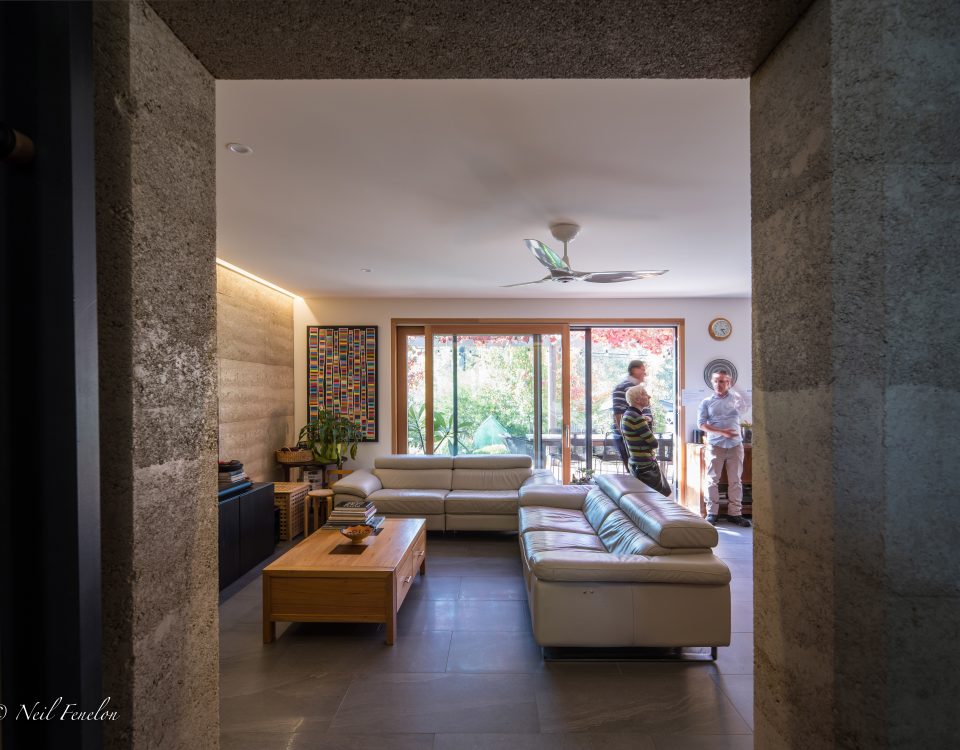
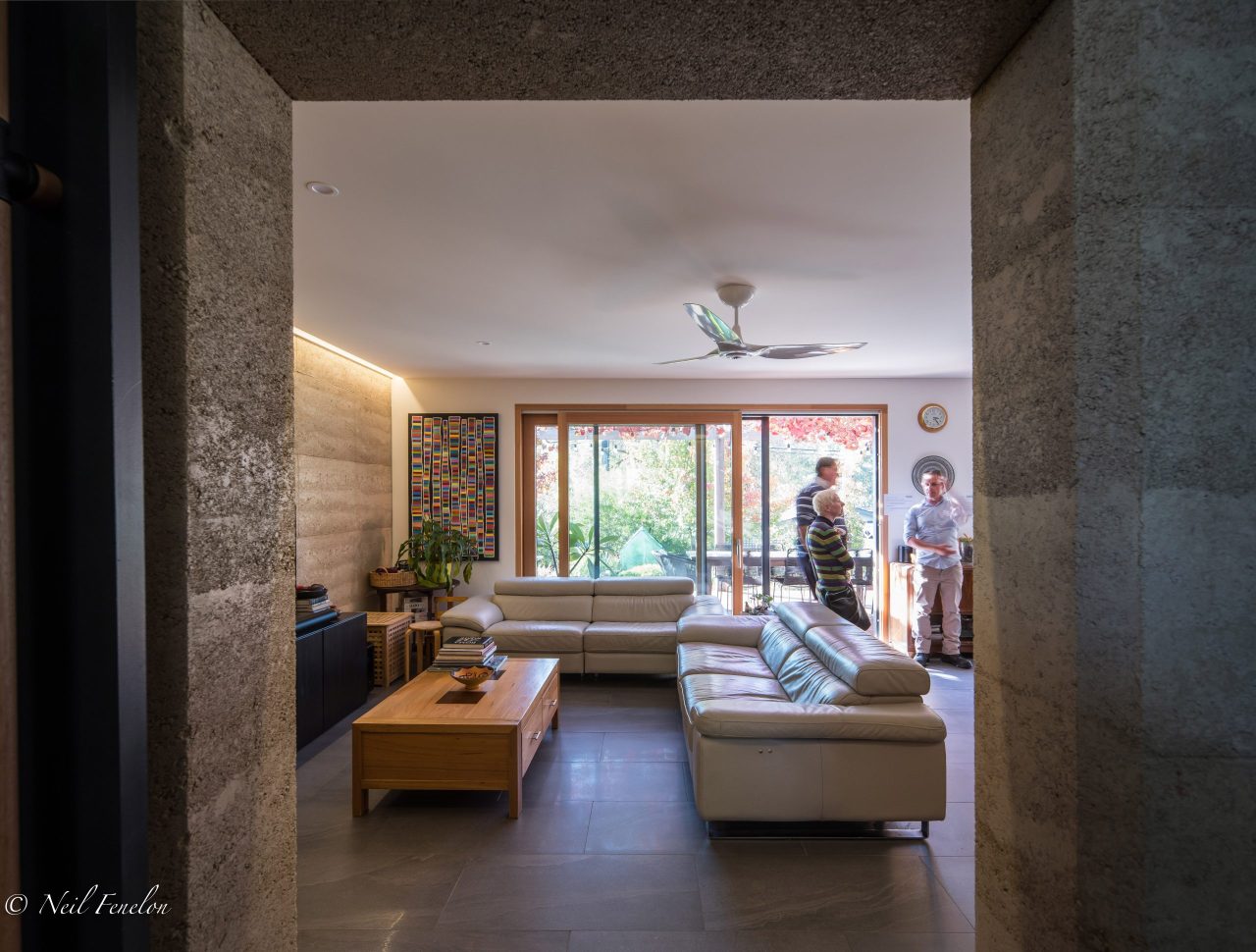
🏗️ 6. Rammed Earth
A timeless building technique, rammed earth involves compressing damp earth (often with a small percentage of cement or lime) into formwork.
✅ Carbon Footprint Highlights
-
Unstabilised: ~40–70 kg CO₂e/m³
-
Stabilised (with cement/lime): ~80–150 kg CO₂e/m³
-
Thermal Performance: High thermal mass = excellent passive energy regulation
-
End of Life: Fully recyclable; returns to soil
Key Advantage: Aesthetic, durable, and thermally efficient—with long-term environmental payoffs.
🧱 7. Cob
Cob is a mix of clay, sand, straw, and water—built by hand into thick sculptural walls. It’s one of the simplest and most artistic natural building methods.
✅ Carbon Footprint Highlights
-
Embodied Carbon: ~15–60 kg CO₂e/m³
-
Thermal Performance: High mass, low insulation; best in moderate climates
-
End of Life: 100% natural and compostable
Key Advantage: Near-zero embodied carbon with community-friendly, creative construction.
Final Thoughts: Choosing Wisely
Natural building methods aren’t just about aesthetics or tradition—they offer real carbon reductions and circular lifecycle performance. When combined with good passive design and local sourcing, these materials can dramatically shrink a building’s environmental footprint while improving occupant wellbeing.
Whether you’re working on a rural retreat, a suburban eco-home, or a regenerative community project, these materials provide sustainable, ethical alternatives to conventional construction—and they tell a story of care for land, climate, and people.
Side-by-Side Carbon Comparison (Approximate Embodied Carbon per m³)
| Material | Embodied Carbon (kg CO₂e/m³) | Thermal Performance | End of Life |
|---|---|---|---|
| Mud Brick | 15–50 | High mass, low insulation | Biodegradable |
| Strawbale | -100 to +50 | Excellent insulation | Compostable |
| Hempcrete | -100 to +50 | Moderate insulation + mass | Biodegradable |
| Earthship | 70–150 (varies widely) | High mass, off-grid systems | Low-waste, some plastic |
| Superadobe | 50–100 | High mass, low insulation | Mostly biodegradable |
| Rammed Earth | 40–150 | Excellent thermal mass | Fully recyclable |
| Cob | 15–60 | High mass, low insulation | Compostable |