Windows and Passive Design: Getting the Basics Right
2025-12-08
Rammed Earth Construction in the Himalayas: A Living Vernacular
2025-12-22
When people hear the term permaculture, they often picture thriving gardens, productive backyards, community orchards, or regenerative farms.
While these are all part of permaculture, the concept reaches far beyond what grows in the soil. At its core, permaculture is a system for designing whole, interconnected environments—places where natural landscapes, human communities, and built structures all work together.
In Australia especially, where climate variation is vast and ecological resilience is increasingly important, the integration of permaculture and building design is becoming a powerful movement. Architects, planners, landscape designers, and everyday Australians are recognising that you cannot create a sustainable landscape without also considering the buildings within it. Just as importantly, a building cannot be truly efficient or future-ready unless it is integrated into its surroundings.
The intersection of permaculture and building design is not simply a trend—it is an essential step toward creating resilient, regenerative living systems.
What Is Permaculture?
Permaculture was developed in the 1970s by Australians Bill Mollison and David Holmgren. The word itself blends “permanent agriculture” with “permanent culture,” reflecting the belief that lasting human systems depend on healthy, productive natural systems.
At its foundation are three ethics:
Earth Care – Protecting and regenerating land, water, biodiversity, and ecosystems.
People Care – Ensuring that individuals and communities can live healthy, fulfilling lives.
Fair Share – Managing consumption responsibly and sharing excess to strengthen the whole system.
Beneath these ethics sit a set of design principles that focus on understanding natural patterns, maximising energy efficiency, valuing diversity, reducing waste, and building systems that improve over time. While often associated with food production, these principles can be applied to neighbourhoods, businesses, community projects—and crucially, to buildings.
Why the Built Environment Is Vital in Holistic Systems
Permaculture is fundamentally about flows: the flow of sunlight, wind, water, heat, nutrients, people, and energy. Buildings significantly influence all of these flows.
Structures affect:
local microclimates
water movement and absorption
energy use and generation
airflow and temperature
human behaviour and circulation
material consumption and waste
In other words, buildings are not passive objects placed on a landscape. They actively shape that landscape—and can either strengthen or weaken the system around them.
A poorly designed building forces the broader landscape to work harder. It may require more heating and cooling, increase runoff, or disrupt beneficial airflow. Conversely, a well-designed building reduces environmental load, captures resources, and supports regeneration.
This is why, within permaculture design, buildings aren’t an afterthought. They sit at the heart of the system and must be carefully integrated into it.
Where Permaculture and Building Design Intersect
1. Site Analysis and Building Placement
Permaculture begins with observation: watching the movement of sun, wind, water, animals, and people across a site. Good building design does exactly the same. When combined, these disciplines ensure structures are placed where they can:
- capture winter sun
- avoid intense summer heat
- take advantage of cooling breezes
- minimise exposure to strong winds
- collect rainwater efficiently
- reduce flood risk
- support comfortable outdoor living areas
In the Australian climate—where sun and water are both precious resources—these factors can dramatically improve energy efficiency and liveability.
2. Passive Solar and Climate-Responsive Design
Before considering mechanical systems, both permaculture and sustainable architecture aim to work with natural forces. This includes:
- orienting buildings for optimal solar gain
- using thermal mass to regulate indoor temperatures
- providing shading through eaves, pergolas, or deciduous vines
- designing for cross-ventilation
- selecting materials suited to local conditions
These strategies reduce reliance on artificial heating and cooling, making homes and buildings more resilient in the face of rising energy costs and climate extremes.
3. Water Harvesting and Reuse
Water is a central focus of permaculture—and buildings offer ideal surfaces for collection and reuse. In Australia, rainwater harvesting is not only practical but, in many regions, essential.
- Integrating water-wise building design might include:
- rooflines optimised for water capture
- rainwater tanks connected to gardens or household use
- greywater systems feeding orchard or garden areas
- landscaping that infiltrates runoff rather than shedding it
- swales and contour features linked directly to downpipes
Here, the building becomes a source of water security rather than a contributor to stormwater problems.
4. Natural, Local, and Low-Impact Materials
Permaculture encourages the use of resources that are local, renewable, and low in embodied energy. Applied to building design, this can mean:
- earth building methods such as cob, rammed earth, or mudbrick
- sustainably sourced Australian timbers
- recycled materials
- non-toxic paints and finishes
- These choices support healthier indoor environments while reducing environmental impact.
5. Food Production and Edges
The areas immediately surrounding buildings—paths, patios, courtyards, verandahs—are ideal for food production when designed with intention. Examples include:
- herb gardens outside the kitchen door (often called Zone 1 in permaculture)
- espaliered fruit trees along warm walls
- greenhouses attached to buildings for shared heat
- shaded outdoor living areas combined with edible plantings
- Buildings and gardens interact, creating productive microclimates that support year-round growing.
6. Community, Social Design, and Resilience
Permaculture isn’t only about landscapes—it’s also about people. Buildings play a crucial social role in fostering connection, collaboration, and community resilience. Community centres, shared gardens, tool libraries, workshops, and co-housing developments all integrate people care with ecological design.
A well-designed built environment encourages interaction, resource-sharing, and learning—strengthening the social fabric as much as the ecological one.
Conclusion: A Truly Integrated Approach
Permaculture and building design are natural partners. When they work together, they create more than just efficient structures or productive gardens—they create living, adaptive systems that support both people and the planet.
Buildings shape the landscapes they occupy, and landscapes shape the buildings within them. A holistic approach recognises this relationship and uses it to design environments that are functional, beautiful, and regeneratively aligned with nature.
In Australia’s diverse and evolving climate, integrating permaculture principles into building design isn’t just a good idea—it’s a pathway to resilience, sustainability, and a healthier future for all.
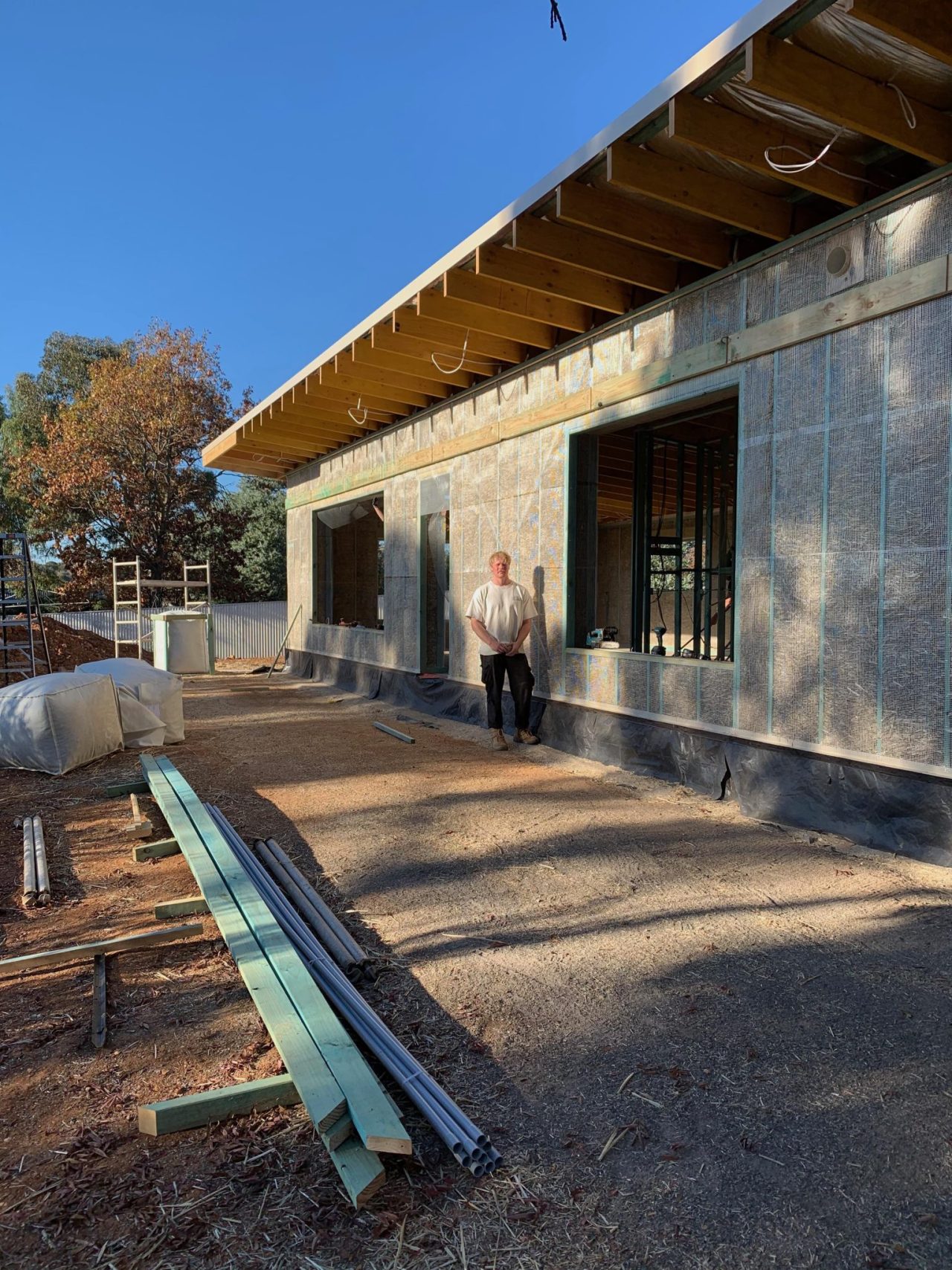
Photo attributed to our friends over at Open Field Co-Living.
Check out the green building resources here and at the Permaculture Australia site