Empowering Public Servants: The 2025 Passivhaus Incubator Course
2025-09-10
Are Rodents a Problem in Natural Homes? Let’s Talk Straw, Hemp, and Cob
2025-09-22
Thankfully we are living in an era where architecture that is increasingly unsustainable, digital, fast-paced, and disconnected to nature is coming into question. The Earth Building course at the University of Newcastle offers a refreshing and grounding alternative.
This hands-on program, showcased through the vibrant Earth Building UON Instagram, invites students, particularly architecture students, to engage directly with the earth beneath their feet. It’s not just about building walls; it’s about building understanding, resilience, and wellbeing.
The course was carried out in 2024 with Peter Hickson from Earth Building Solutions in Shoalhaven NSW, and in 2025 with Kenney Le Mire and William Eastlake from Mudtec in Somersby NSW. This article explores the cognitive, experiential, wellbeing, and collaborative benefits of learning through making, particularly for architects, and how the Earth Building course exemplifies this approach.
Cognitive Benefits: Learning by Doing Enhances Understanding
Architectural education often leans heavily on abstract design thinking, digital modelling, and theoretical knowledge. While these are essential, material literacy and spatial intuition can often be overlooked. Earth building rectifies this by engaging the brain in a different way through embodied cognition.
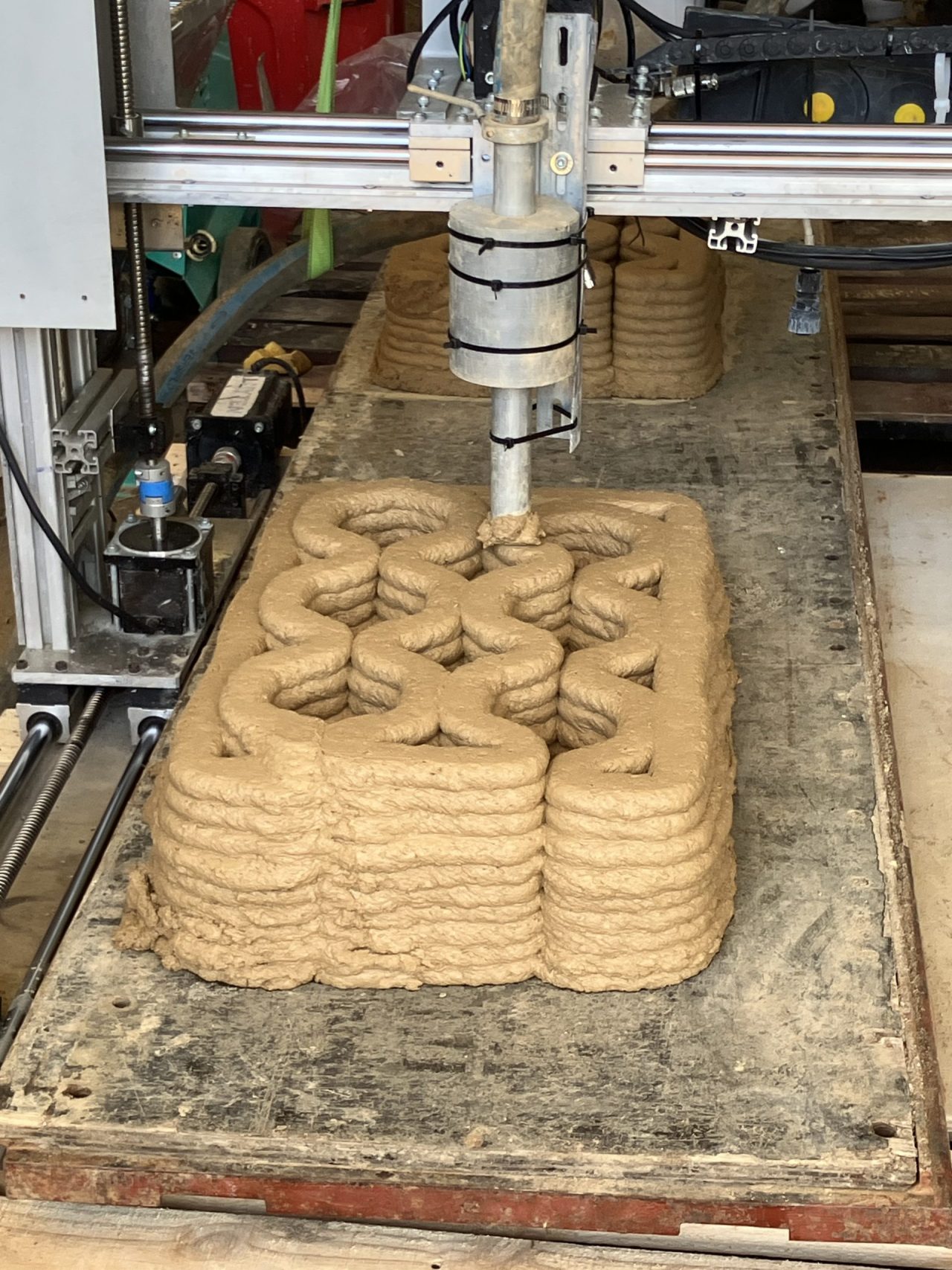
When students mix clay, sand, and straw with their hands, they’re not just learning about materials they’re internalizing their properties. They begin to understand how moisture content affects workability, how different soils behave, and how structural integrity is achieved through form and composition. The students also need to problem solve while on site. These are lessons that no textbook, design studio session or CAD model can fully convey.
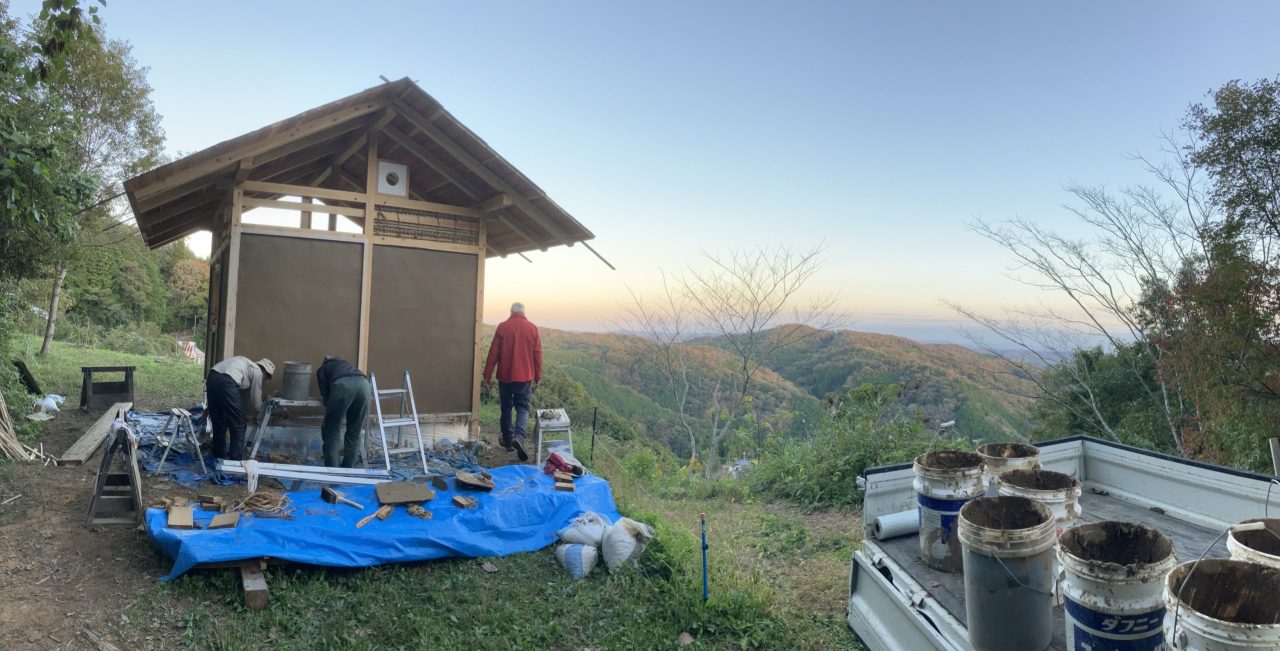
The Earth Building course at UON in 2024 with Earth Building Solutions included working on a Wattle and Daub structure, with hempclay, light straw, cob and earth flooring and render. While, in 2025, with Mudtec it included making a bamboo structure, infill with light straw and earth render, as well as working on a new ecoply prefab kit system for infill with earth materials. Each course combined introductory lectures with hands-on sessions, and follow up design and documentation exercises, allowing students to immediately apply what they’ve learned. This active learning approach improves retention, deepens comprehension, and fosters a more intuitive approach to architecture.
Experiential Learning: Bridging the Gap Between Design and Construction
For architects, the ability to design is only part of the equation. Understanding how a building is made, how materials are sourced, shaped, and assembled is crucial to creating structures that are not only beautiful but also buildable, sustainable, and contextually appropriate.
The Earth Building course bridges this gap by immersing students in the full lifecycle of natural construction. From soil testing, sifting and processing to mixing with various insulator materials depending upon orientation, to wall construction and finishing techniques, students experience the entire process. This experiential learning cultivates a respect for making and a realistic sense of what it takes to bring a design to life.
Moreover, the course emphasizes local materials and vernacular techniques, encouraging students to think critically about sustainability, climate responsiveness, and cultural relevance. In doing so, it nurtures a generation of architects who are not only technically competent but also socially and environmentally conscious.
Wellbeing Benefits: Reconnecting with Nature and Self
In addition to its educational value, earth building offers profound benefits for mental and physical wellbeing. The act of working with natural materials, feeling the texture of clay, hemp and clay, and the rhythm of manual labour can be deeply therapeutic. It slows the mind, grounds the body, and fosters a sense of presence that is often missing in traditional materials, model making or screen-based work.
Students in the Earth Building course frequently report a sense of calm and satisfaction after a day of hands-on work. There’s a meditative quality to the process, a return to something primal and nourishing. This aligns with growing research on the mental health benefits of biophilic engagement, interacting with natural elements in meaningful ways.
Community and Collaboration: Building Together, Learning Together
One of the most powerful aspects of the Earth Building course is its emphasis on community and collaboration. In a discipline that often celebrates individual creativity and solitary design work, this course reminds students that architecture is, at its heart, a collective endeavour.
From the moment students step into the Earth Building course, they are immersed in a shared learning environment. Tasks like mixing materials and applying natural plasters are inherently collaborative. They require coordination, communication, and mutual respect. This fosters a sense of camaraderie and trust that is difficult to replicate in traditional classroom settings. Learning turns to joy and playfulness when covered in mud and working together to flip a giant ball of cob!
Students learn not only from instructors but also from each other sharing techniques, troubleshooting problems, and celebrating successes together. This peer-to-peer learning strengthens understanding and builds interpersonal skills that are essential in architectural practice.
The course also connects students with a broader network of natural builders, craftspeople, and community members. Guest facilitators bring diverse perspectives and expertise, while site-based projects often involve partnerships with local organizations or communities. These interactions expose students to real-world challenges and collaborative problem-solving, enriching their educational experience.
Empowerment Through Skill-Building
One of the most empowering aspects of the Earth Building course is the confidence it instils in students. Many come in with little to no construction experience, and leave with the ability to build a wall, apply a plaster, or even design a small structure using natural materials.
This empowerment is especially important for architecture students, who often feel distanced from the physical act of building. By gaining practical skills, they begin to see themselves not just as designers, but as makers capable of shaping the built environment with their own hands.
The course also introduces students to regulatory frameworks and structural design principles, particularly those relevant to earth construction in Australia. This knowledge is invaluable for those who wish to pursue careers in sustainable architecture, heritage conservation, or community-based design.
A Model for Future Architectural Education
The Earth Building course at UON is more than a niche elective it’s a model for how architectural education can evolve to meet the challenges of the 21st century. As we face climate change, resource scarcity, and a growing need for affordable housing, the skills and values taught in this course are becoming increasingly relevant.
By integrating making, thinking, and feeling, the course cultivates architects who are not only technically skilled but also emotionally intelligent and ecologically aware. It challenges the notion that architecture is purely cerebral, and instead embraces a holistic approach that honours the body, the earth, and the community.
In a world where architecture can sometimes feel disconnected from the realities of construction and the needs of people, the Earth Building course at the University of Newcastle offers a powerful counter-narrative. It reminds us that architecture is, at its core, a human endeavour rooted in place, shaped by hands, and enriched by experience.
For students, especially those in architecture, learning through making is not just a pedagogical strategy it’s a transformative journey. It cultivates deeper understanding, fosters wellbeing, and empowers future professionals to build not just structures, but a more sustainable and compassionate world.
To find out more about this wonderful opportunity get in touch with Dr Sarah Breen Lovett at Newcastle University Sarah.BreenLovett@newcastle.edu.au