Let’s talk: Vapour Permeability vs. “Breathability” in Clay & Lime Surfaces for Natural Homes
2025-11-17
Windows and Passive Design: Getting the Basics Right
2025-12-08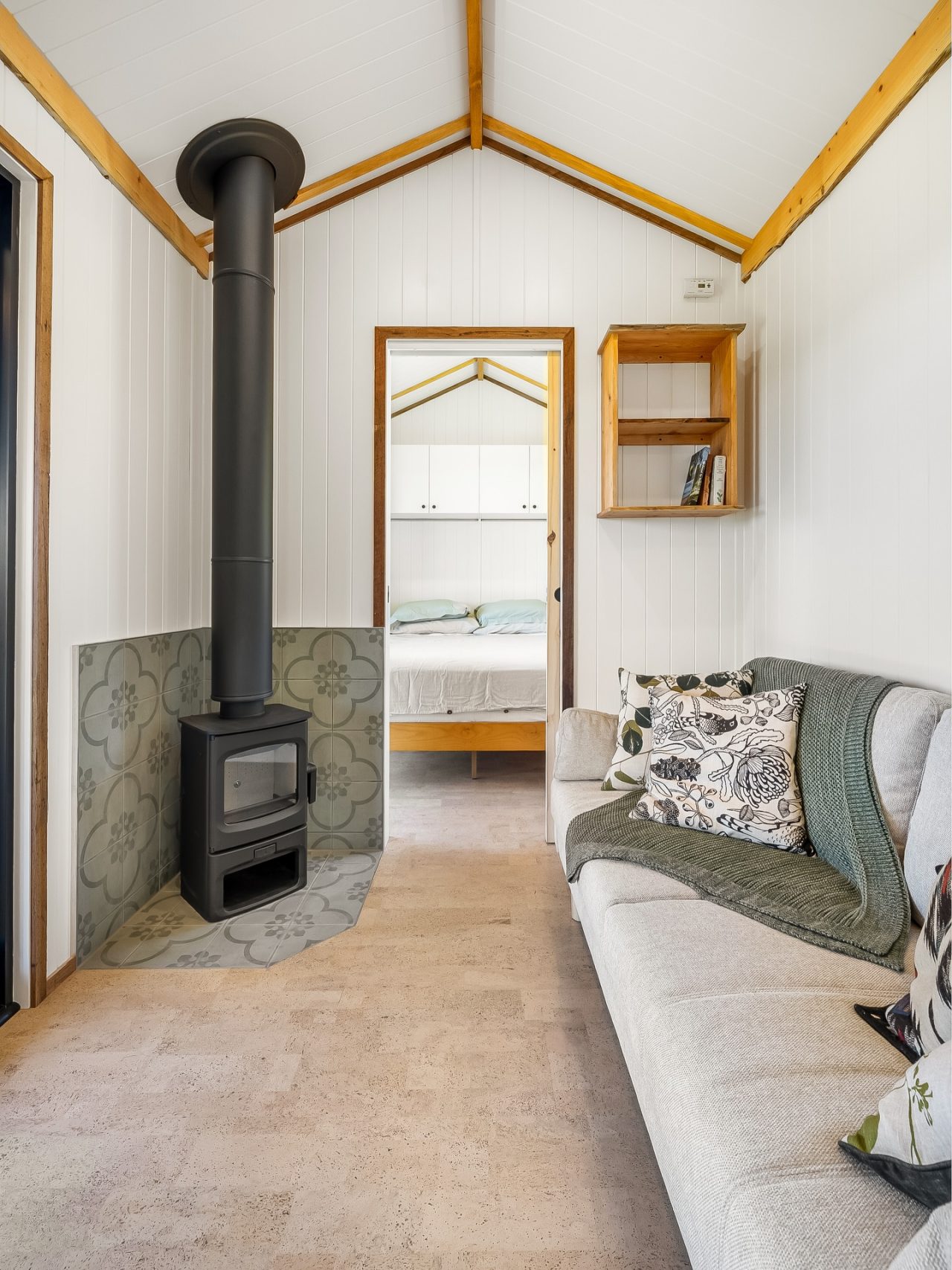
Tiny houses aren’t just a novelty anymore. Across Australia, they’re becoming a genuine alternative to conventional housing, offering people a way to live more lightly, affordably and intentionally. And within the tiny-house world, a quiet revolution is happening: a shift toward natural, healthy, low-impact materials.
Let’s explore what’s happening in Australia, the materials people are choosing, how tiny homes can be built more sustainably, and what to think about if you’re planning to buy or build one.
Why Tiny Houses Are Booming in Australia
The appeal is clear: tiny homes offer affordability in a difficult housing market, flexibility for people who want to move or live modularly, and a drastically smaller environmental footprint. Many Australians are choosing tiny living because it allows them to step away from the mortgage treadmill and reconnect with land, lifestyle and simplicity.
At the same time, the policy landscape is slowly shifting. Tiny house laws are evolving—at different speeds in different states—and many councils are beginning to allow tiny homes as secondary dwellings if there is already a primary residence on the property. Others permit long-term living under certain conditions, while some still treat them strictly as caravans. It’s patchy, but heading in the right direction as demand grows and local governments recognise tiny homes as part of the housing solution.
But tiny houses aren’t automatically “eco-friendly.” That depends on what they’re made of, and increasingly, the conversation is turning toward natural materials.
Natural Materials Leading the Movement
In Australia, builders and DIY tiny-house creators are gravitating toward materials that feel good to live with, tread lightly on the planet, and perform exceptionally well in small spaces.
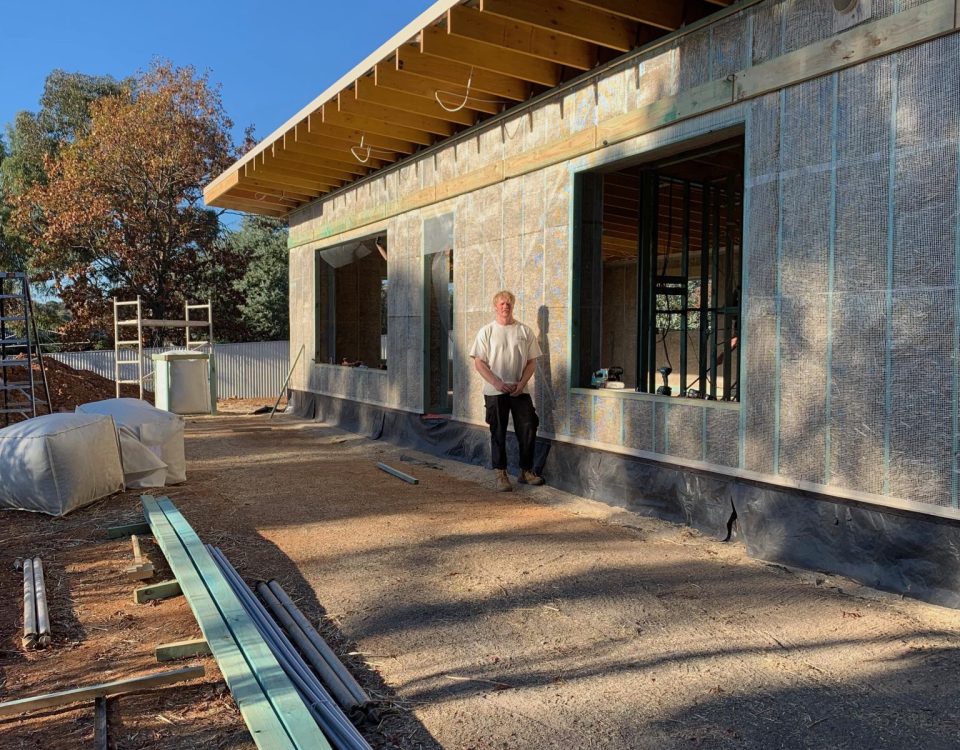
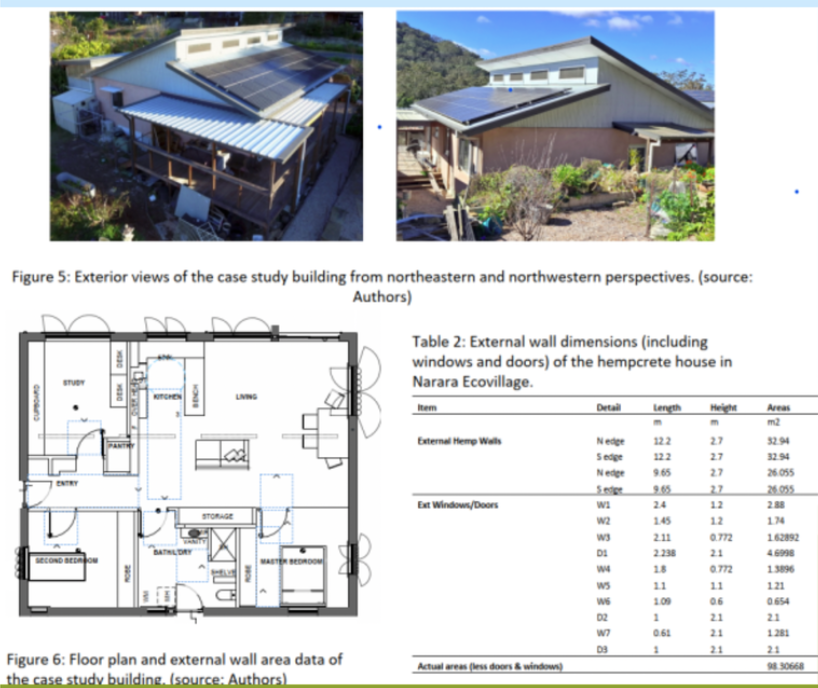
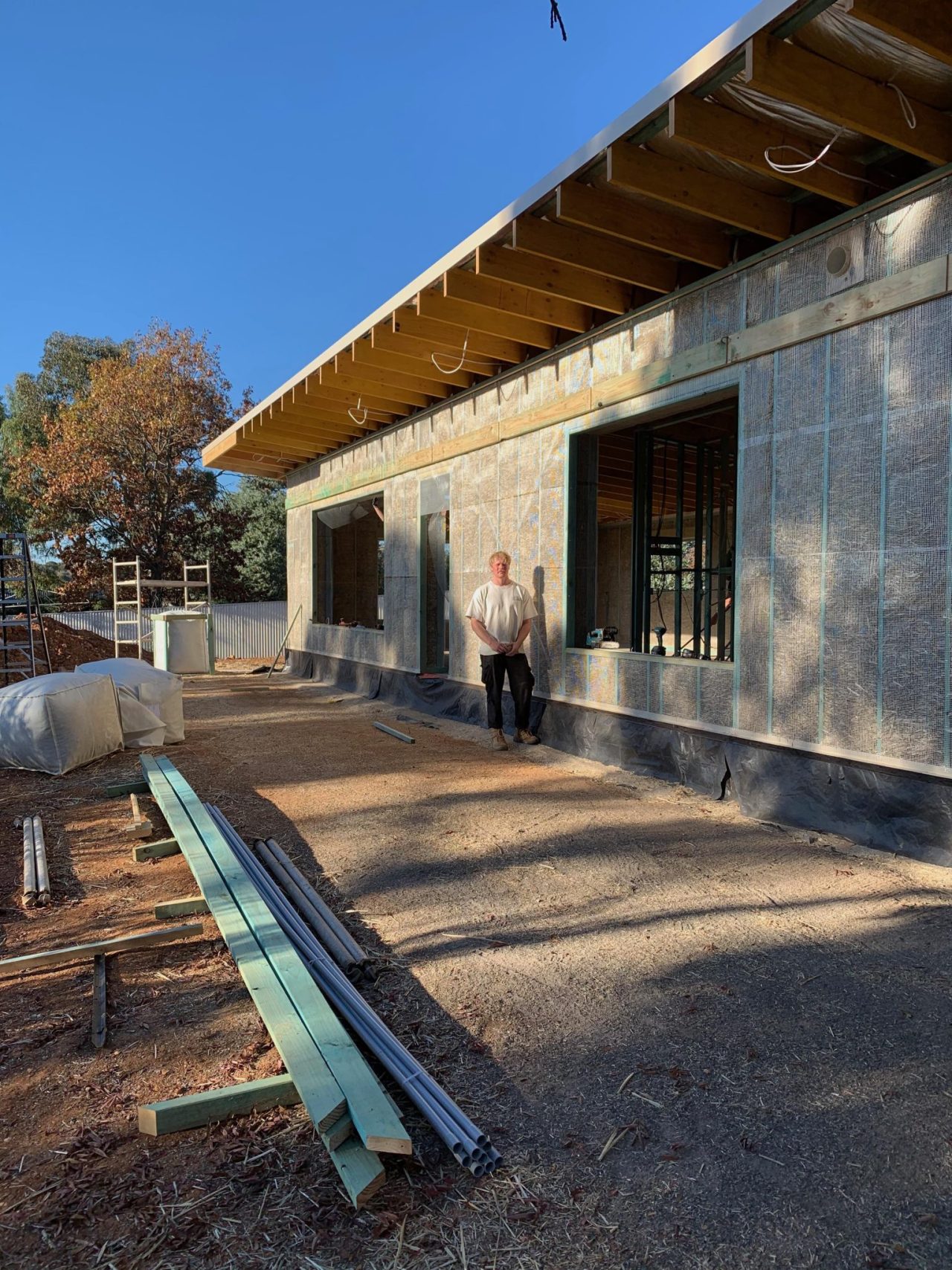
Hempcrete is one of the most interesting materials making its way into tiny homes. Because it’s made from hemp hurd and lime, it forms a breathable, non-toxic wall system that regulates humidity and temperature beautifully. For a tiny home—where moisture and heat can build up quickly—hempcrete creates a stable, comfortable environment without relying heavily on mechanical heating or cooling.
Timber, especially reclaimed or sustainably certified sources, is still at the heart of most tiny home construction. It keeps the structure light but strong, adds warmth and character, and can be sourced locally to reduce environmental impact.
Wool insulation is another favourite in tiny homes. It’s natural, breathable, mould-resistant and much healthier than synthetic batts. Paired with natural plasters like lime or clay—which add gorgeous texture and help maintain even humidity—tiny homes become surprisingly refined from the inside out.
People are also turning to cork for flooring because it’s soft, warm, renewable and antimicrobial, and to straw-based boards for acoustic comfort and sustainability. Recycled windows, reused fixtures, timber offcuts, and repurposed cabinetry are also common, creating homes with personality and much lower embodied carbon.
The overall shift is away from plastic-lined, glue-heavy, mass-produced caravan-style interiors toward natural, breathable, human-friendly materials that make tiny living not just possible, but pleasurable.
What’s Happening in Australia Right Now
Across the country, tiny homes are becoming more sophisticated and more sustainable. Off-grid tiny houses are particularly popular in Victoria, New South Wales and Tasmania, where people are using solar, rainwater collection, composting toilets and natural materials to create complete self-sufficient micro-homes.
Eco-retreats and farm stays are integrating naturally-built tiny houses as low-impact accommodation, and community groups are exploring tiny homes as clustered, village-style living. Meanwhile builders are experimenting with durable, breathable wall systems, low-tox finishes, wool and hemp insulation, sustainable cladding, and locally sourced materials that suit the Australian climate.
The shift is gradual but noticeable: tiny homes are moving away from their caravan heritage and becoming small, beautiful, healthy houses in their own right.
How Tiny Homes Can Become Even More Sustainable
The biggest opportunities lie in better design and material choices. Tiny homes benefit enormously from breathable wall systems instead of plastics and synthetic foams. Good orientation, shading and ventilation can drastically reduce heating and cooling needs, and even tiny houses can incorporate airtightness and small-scale heat recovery ventilation to manage humidity and improve year-round comfort.
Using local materials, or at least Australian-made products, reduces embodied carbon and strengthens regional industries. Designing with repairability in mind—screws rather than adhesives, replaceable components, and modular layouts—keeps tiny homes adaptable and long-lasting. And because weight matters, especially for homes on wheels, choosing lightweight natural systems like wool, cork, timber and hemp composites allows homes to remain road-legal without sacrificing performance.
What to Think About If You’re Building or Buying One
First, consider where the tiny home will live. Land access, zoning, council laws and utility connections vary region by region, and you need to know whether your home will sit on footings, a trailer, or a registered site.
Decide how off-grid you want to be. Solar power, greywater systems, rainwater storage and composting toilets can make a tiny home extremely independent, but they require planning and sometimes permits.
Material health matters a lot in a small space. Ask builders about VOCs, insulation type, breathability, sourcing of timbers and the use of natural finishes. Ventilation is critical too, as moisture can build up quickly in such compact living.
Practicality matters just as much: the flow of movement, the ergonomics of daily tasks, storage solutions, and how well the space suits your lifestyle. If possible, spend time inside a few tiny homes before committing.
The Future of Tiny Houses in Australia
The movement has matured beyond minimalism or cost-saving alone. It’s becoming a conversation about wellbeing, thoughtful design and conscious living. Natural materials are playing a major role in that shift, helping create tiny homes that are healthier, more efficient, longer-lasting and much kinder to the environment.
In a world that often feels overstretched and overbuilt, tiny houses offer a refreshing counterpoint: living small, living lightly, and living well.
NBA member Evergreen Homes Australia has just released a beautifully designed 45m² tiny home with a spacious bedroom, galley kitchen, fireplace, and a dedicated office pod, all customisable to suit your lifestyle.